

WASHINGTON (BN24)— After 43 days, the longest government shutdown in U.S. history officially ended, restoring pay to federal employees, reopening national parks, and resuming government services that had been delayed or suspended. Air travel, which had descended into chaos for many Americans, is returning to more familiar levels of disruption.
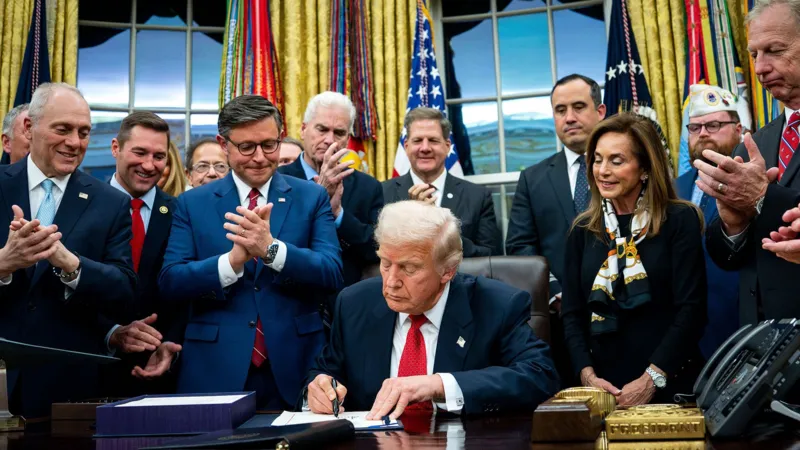
For President Donald Trump, the conclusion of the shutdown marked a political triumph. Speaking at Arlington Cemetery during a Veteran’s Day commemoration on Tuesday, Trump praised congressional Republicans for their role in reopening the government, calling the vote “a very big victory.” He emphasized the symbolic importance of restoring operations. “We’re opening up our country. It should have never been closed,” he said, portraying himself as a leader who had stood firm throughout the impasse.
The shutdown, which began when Senate Democrats used the parliamentary filibuster to block a temporary funding measure, was triggered by their demand that Republicans extend health insurance subsidies for low-income Americans. These subsidies, which are set to expire at the end of the year, had become the focal point of a bitter partisan standoff.
When a small number of Democrats broke ranks on Sunday to vote in favor of reopening the government, they received few concessions in return. The agreement included only a promise of a future Senate vote on the subsidies, with no guarantee of Republican cooperation or subsequent approval in the House. Many Democratic lawmakers expressed frustration at Senate Minority Leader Chuck Schumer, accusing him of failing to secure tangible benefits despite the party’s leverage.
The political fallout has been significant within the Democratic Party. California Governor Gavin Newsom, a possible 2028 presidential contender, called the shutdown resolution “pathetic” and a “surrender,” criticizing the party for capitulating to Trump without achieving legislative gains. “I’m not coming in to punch anybody in the face,” he said, “but I’m not pleased that, in the face of this invasive species that is Donald Trump, who’s completely changed the rules of the game, we’re still playing by the old rules of the game.”
For Trump, the days following the Senate deadlock allowed him to shift from cautious optimism to public celebration. In a Fox News interview Monday night, he further attacked Schumer, saying, “He thought he could break the Republican Party, and the Republicans broke him.” While Trump at times appeared frustrated, publicly berating Senate Republicans last week for refusing to eliminate the filibuster to reopen government, he ultimately emerged from the shutdown with no significant concessions made to the Democrats.
While Trump’s national approval ratings dipped over the 43-day impasse, the timing of the shutdown means the former president faces little immediate electoral risk, with over a year remaining before the midterm elections and no personal reelection obligations under current constitutional rules.
As government functions resume, Congress now faces the challenge of addressing routine legislation. Several departments were funded through September under the shutdown-ending deal, but full-year funding must be approved by the end of January to avoid another standoff. Republicans hope to leverage this period to pass substantive legislation before the next election cycle.
The shutdown’s resolution also exposes ongoing political vulnerabilities for Democrats. Healthcare subsidies, the central issue in the standoff, could become a pressing concern for tens of millions of Americans as premium costs are expected to rise sharply at year’s end. Failure to secure these subsidies risks voter dissatisfaction in upcoming elections, highlighting the stakes for the party.
Meanwhile, the political landscape remains complex as Congress faces other high-profile matters. On Wednesday, newly sworn-in Congresswoman Adelita Grijalva became the 218th signatory on a petition requiring a House vote to demand the Justice Department release all files on the late convicted sex offender Jeffrey Epstein. Trump criticized the focus on Epstein, posting on Truth Social that Democrats were attempting to distract from their “failure” during the shutdown.
The end of the record-setting shutdown underscores the unpredictable nature of U.S. politics, where well-laid plans can collapse suddenly. Democrats are left facing internal divisions, political blame, and potential backlash from voters, while Trump emerges largely unscathed, using the outcome to reinforce his image as a decisive political player.
The shutdown, while technically over, may leave lingering consequences for federal employees, ordinary Americans, and partisan relations in Congress. The healthcare debate, in particular, promises to remain a flashpoint, with millions of Americans potentially impacted by expiring subsidies and rising insurance costs. For both parties, the 43-day shutdown will be remembered as a stark example of the high stakes and human costs of political brinkmanship.





