

WASHINGTON (BN24) — President Donald Trump signed a proclamation Friday imposing a $100,000 fee requirement for companies seeking to obtain H-1B worker visas, escalating his administration’s comprehensive immigration crackdown that includes widespread raids and massive deportation efforts across American cities.
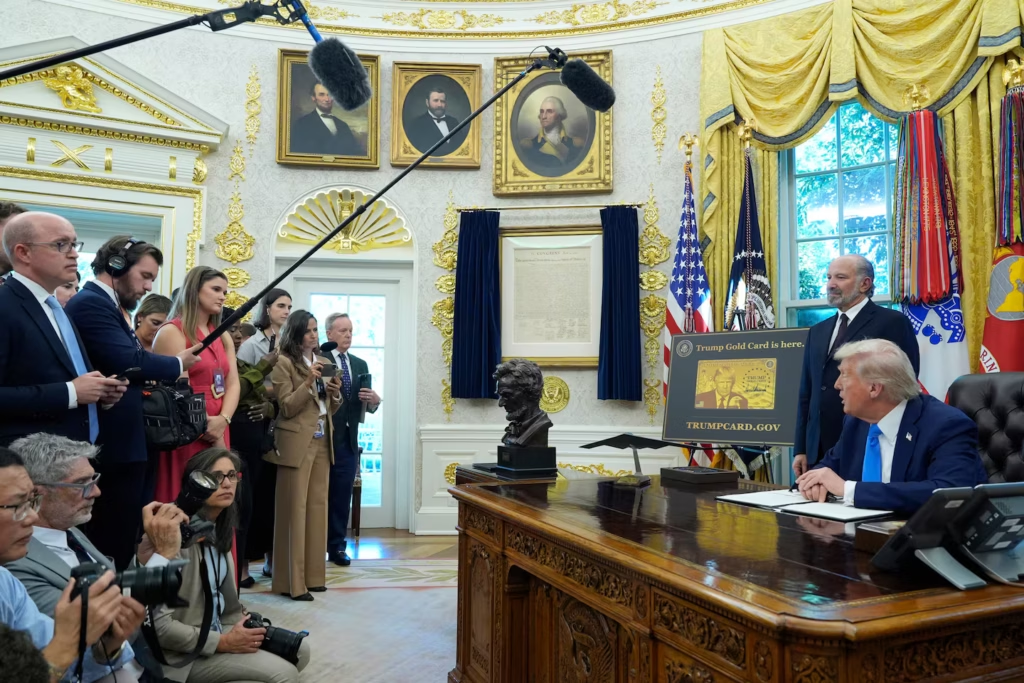
The proclamation represents a significant victory for immigration hardliners on Capitol Hill while creating potential conflicts with technology executives who depend on qualified workers from overseas to fill critical positions in their companies.
The H-1B visa program, originally signed into law by President George H.W. Bush in 1990, enables skilled workers from foreign countries to work temporarily in the United States. Major technology corporations including Amazon and Microsoft have relied extensively on program approvals to hire employees from international markets.
Aaron Reichlin-Melnick, a senior fellow at the American Immigration Council, characterized the move as “almost certainly illegal and likely to be struck down in court” in a social media post responding to the proclamation. He argued that Congress has authorized the government only to establish fees sufficient to recover costs associated with processing visa applications.
“There is no statutory authority to impose fees designed to limit the use of a visa,” Reichlin-Melnick wrote, highlighting potential legal vulnerabilities in the administration’s approach.
Bloomberg Law first reported Trump’s intentions to sign the proclamation Friday, providing advance notice of the significant policy change affecting skilled worker immigration.
Congress maintains annual limits on the H-1B program, setting a cap of 65,000 new visas each fiscal year with an additional 20,000 reserved for individuals who have earned master’s degrees or higher educational credentials. The program includes additional exemptions specifically for universities and research organizations.
During his first presidential term, Trump attempted to implement regulations that would have dramatically restricted the issuance of new skilled-worker visas. The administration cited economic disruption caused by the Covid-19 pandemic and efforts to preserve employment opportunities for American workers as justification for the proposed limitations. However, a federal court ultimately struck down those rules.
Trump’s position on the H-1B program has shown notable evolution over time. In December comments to the New York Post before taking office, Trump defended the visa program, stating his support for the initiative.
“I have many H-1B visas on my properties. I’ve been a believer in H-1B. I have used it many times. It’s a great program,” Trump told the outlet, indicating his personal familiarity with and previous support for the system.
The $100,000 fee represents a substantial increase from current H-1B application costs, potentially creating significant financial barriers for companies seeking to hire skilled international workers. The dramatic fee increase could fundamentally alter the economics of hiring foreign workers under the program.
Technology industry leaders have consistently advocated for maintaining robust skilled worker visa programs, arguing that access to international talent remains essential for American competitiveness in global markets. The substantial fee increase may force companies to reconsider their hiring strategies and potentially relocate operations to countries with more accessible immigration policies.
The proclamation arrives amid the Trump administration’s broader immigration enforcement campaign, which has featured high-profile raids in multiple cities and expanded deportation operations targeting individuals in the country illegally. Immigration advocates have characterized the overall approach as the most aggressive enforcement effort in recent memory.
Legal challenges to the proclamation appear likely given the statutory questions raised by immigration law experts. Federal courts have previously intervened when executive actions on immigration policy exceed authorized congressional mandates or conflict with established legal frameworks.
The timing of the proclamation, issued on a Friday, follows a common administrative practice for controversial policy announcements that may generate significant public reaction. The weekend timing potentially limits immediate media coverage while allowing the administration to shape initial narrative responses.
Industry groups representing technology companies have not yet issued formal responses to the proclamation, though previous statements have emphasized the importance of skilled worker visa programs for maintaining American leadership in innovation and technology development.
The economic implications of the fee increase extend beyond individual companies to broader questions about American competitiveness in attracting global talent. Countries including Canada and Australia have positioned themselves as alternative destinations for skilled workers who might otherwise seek opportunities in the United States.
Congressional reaction to the proclamation will likely divide along partisan lines, with Republicans generally supporting stricter immigration enforcement while Democrats criticize measures they view as harmful to economic growth and innovation. The legal authority questions raised by immigration experts may prompt legislative scrutiny regardless of partisan positions.




