

President Donald Trump delivered a scathing denunciation Friday of the Supreme Court’s decision invalidating his tariff regime, expressing shame toward justices he personally appointed who joined the majority while vowing to implement alternative trade restrictions he characterized as potentially more powerful than those the court rejected.
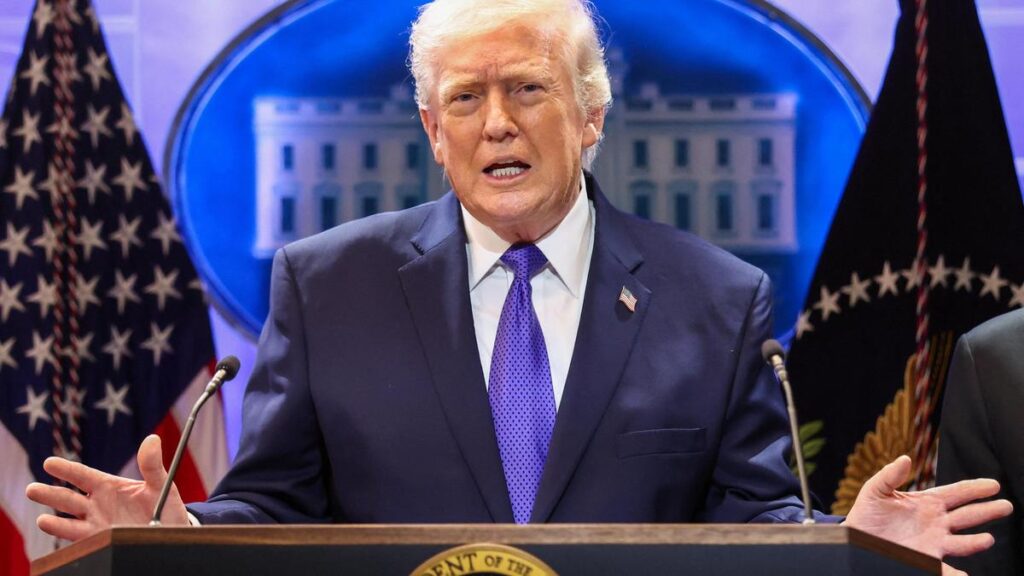
“The Supreme Court’s ruling on tariffs is deeply disappointing, and I’m ashamed of certain members of the court, absolutely ashamed for not having the courage to do what’s right for our country,” Trump declared from the White House briefing room podium, unleashing an extraordinary presidential attack on the judicial branch whose independence forms a cornerstone of American constitutional governance.
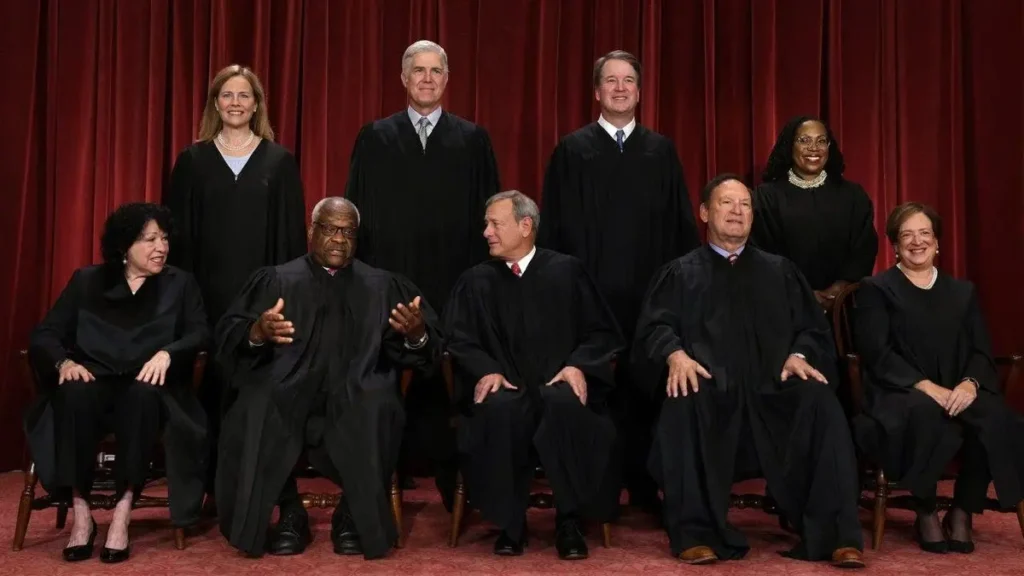
The 6-3 Supreme Court decision struck down Trump’s emergency tariff declarations, determining the president exceeded his constitutional and statutory authority by imposing sweeping trade restrictions without congressional authorization. The ruling represents a significant judicial check on executive power and a major setback for Trump’s protectionist trade agenda, which he has consistently promoted as essential to American economic sovereignty and national security.
Chief Justice John Roberts joined with the court’s three liberal justices along with two Trump appointees—Justice Amy Coney Barrett and Justice Neil Gorsuch—to form the majority invalidating the tariffs. The alignment of Trump’s own nominees against his signature policy initiative particularly inflamed the president, who clearly expected loyalty from justices he elevated to the nation’s highest court.
“They’re against anything that makes America strong, healthy and great again. They also are frankly a disgrace to our nation, those justices,” Trump fumed, abandoning any pretense of respecting judicial independence or the separation of powers doctrine that prevents presidents from pressuring judges on pending cases or attacking them for adverse rulings.
Trump lavished praise on the three dissenting justices—Clarence Thomas, Samuel Alito, and Brett Kavanaugh—who would have upheld his tariff authority. “I’d like to thank and congratulate Justices Thomas, Alito and Kavanaugh for their strength and wisdom and love of our country,” he said. “When you read the dissenting opinions, there is no way that anyone can argue against them.”
The president’s explicit preference for justices who rule in his favor regardless of legal reasoning illuminates his transactional approach to the judiciary—viewing judges as political allies or adversaries rather than neutral arbiters applying law to facts. This perspective fundamentally misunderstands or deliberately rejects the judicial role in American democracy, where courts serve as constitutional guardians independent of executive preferences.
Despite his anger at the ruling, Trump quickly pivoted to announcing alternative legal mechanisms he claimed would enable him to impose trade restrictions potentially generating even greater revenue than the invalidated tariffs. “Other alternatives will now be used to replace the ones that the court incorrectly rejected. We have alternatives,” he told assembled reporters.
Trump suggested the Supreme Court’s decision paradoxically strengthened presidential trade authority by clarifying which statutory provisions support tariff imposition. “Now I’m going to go in a different direction, probably the direction I should have gone the first time,” he said, describing the alternative approach as “even stronger than our original choice.”
The president specifically cited the 1974 Trade Act and the Trade Expansion Act of 1962 as statutory foundations for future tariff actions, though he acknowledged these legal pathways require more extended procedural timelines than the emergency authorities he previously invoked. Both statutes mandate investigations and findings before tariffs can be lawfully implemented—safeguards designed to prevent arbitrary or politically motivated trade restrictions.
Trump argued counterintuitively that the court’s rejection of his emergency tariff authority actually “made a president’s ability to both regulate trade and impose tariffs more powerful and more crystal clear.” Legal scholars will likely dispute this characterization, viewing the ruling instead as establishing meaningful constraints on unilateral presidential trade actions.
The immediate practical consequence of the Supreme Court decision involves potentially massive financial liability for the federal government. Trump acknowledged Friday that the ruling will likely trigger extensive litigation over whether his administration must refund billions of dollars in tariff revenues already collected from corporations that imported goods subject to the now-invalidated duties.
“Wouldn’t you think they would have put one sentence in there saying, keep the money or don’t keep the money, right?” Trump complained during the press briefing. “It’s not discussed. We’ll end up being in court for the next five years.”
The court’s silence on retroactive remedy creates immediate uncertainty for companies that paid tariffs under protest, maintaining throughout that the president lacked constitutional authority to impose the charges. Corporate legal departments are expected to flood federal courts with refund claims potentially totaling tens of billions of dollars—money the Treasury Department has already spent and cannot easily recover.
Trump has consistently promoted tariff revenues as evidence his trade policies benefit America, insisting the collected funds enriched the nation and improved citizens’ economic wellbeing. “The revenue generated by his tariffs” served as a central talking point in his defense of protectionist measures that economists broadly criticized as counterproductive.
However, critics have emphasized that American consumers and businesses ultimately bear tariff costs through higher prices on imported goods and retaliatory tariffs foreign nations impose on U.S. exports. The anticipated legal scramble to secure refunds of tariff payments made over the past year will test whether companies can recover money they argue was illegally extracted through executive overreach.
The legal foundation Trump previously invoked for his tariffs centered on national security and economic emergency authorities granted to presidents under various statutes. The Supreme Court majority determined these provisions did not authorize the sweeping global tariff regime Trump implemented, finding his national security justifications pretextual and his emergency declarations insufficiently supported by evidence.
The ruling constrains future presidential trade authority by establishing that emergency powers cannot serve as blank checks for protectionist policies lacking genuine crisis justification. Presidents retain substantial trade negotiation authority and can impose targeted tariffs under specific statutory conditions, but cannot unilaterally restructure American trade relationships through emergency declarations disconnected from actual emergencies.
Trump’s denunciation of justices who ruled against him continues a pattern of presidential norm-breaking that includes attacking judges handling cases involving his interests, questioning judicial legitimacy based on ethnic heritage or political party of appointing presidents, and suggesting courts lack authority to constrain executive action. These attacks erode public confidence in judicial independence and imply that legitimate judicial decisions depend on reaching conclusions the president favors.
The constitutional structure deliberately insulates federal judges from political pressure through lifetime tenure and salary protections, enabling them to rule according to law and constitution rather than executive preferences. Trump’s explicit criticism of justices for “not having the courage to do what’s right for our country”—meaning rule in his favor—fundamentally misconstrues judicial duty, which requires applying legal principles regardless of policy outcomes.
The alternative tariff authorities Trump now proposes invoking include Section 301 of the 1974 Trade Act, which authorizes retaliation against unfair foreign trade practices following investigation, and Section 232 of the Trade Expansion Act of 1962, which permits tariffs when imports threaten national security. Both provisions have been extensively litigated, with courts establishing that presidents must follow statutory procedures and substantiate their determinations with credible evidence.
Implementing tariffs under these authorities will prove substantially more cumbersome than Trump’s previous approach. The required investigations typically consume months, involve extensive agency proceedings, provide opportunities for industry input and legal challenges, and demand factual records supporting presidential determinations. These procedural requirements exist precisely to prevent arbitrary trade restrictions that could provoke retaliatory cycles harming American economic interests.
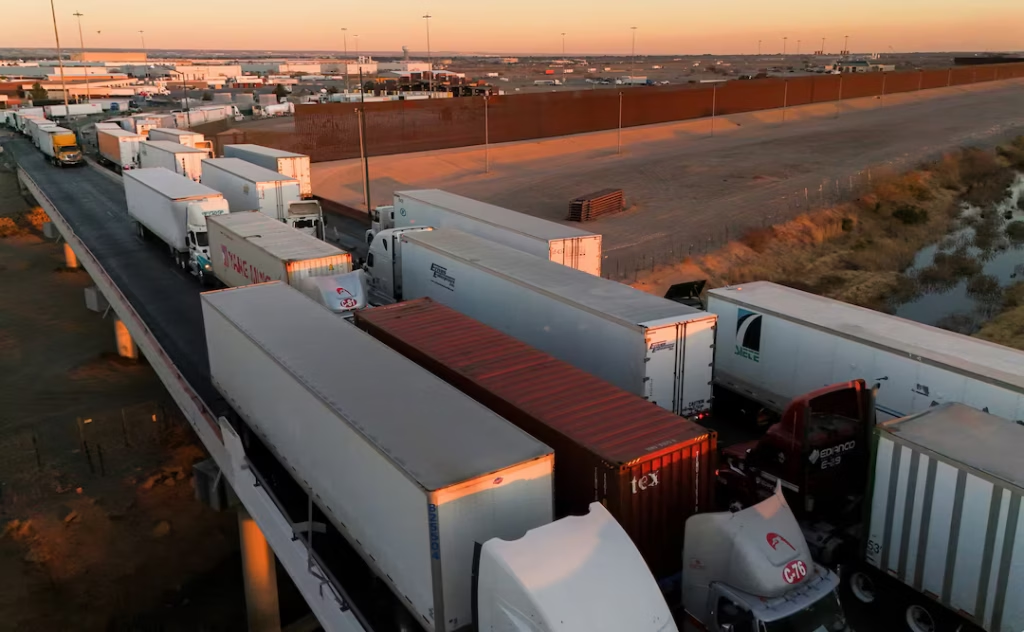
International trading partners will scrutinize any new tariff actions for compliance with World Trade Organization commitments and bilateral trade agreements limiting unilateral American trade restrictions. The invalidated tariffs already prompted retaliation from major trading partners including the European Union, China, and Canada—countries that may respond similarly to replacement tariffs depending on their legal justifications and scope.
The Supreme Court decision and Trump’s defiant response ensure trade policy remains a defining controversy throughout his administration. His determination to pursue alternative tariff mechanisms guarantees continued litigation testing the boundaries of presidential trade authority, while his attacks on justices who constrained that authority further poison relationships between the executive and judicial branches.
For American businesses that have operated for the past year under tariff uncertainty, the ruling provides limited immediate clarity while creating new complications. Companies that paid billions in tariffs now face decisions about whether to pursue refunds through litigation—expensive, time-consuming processes with uncertain outcomes. Meanwhile, threats of replacement tariffs under different legal authorities prevent businesses from confidently planning international supply chains and investment strategies.
Consumers who absorbed higher prices due to tariffs on imported goods may see limited relief, as companies that successfully recover tariff payments face no obligation to pass savings to customers who originally bore the costs. The economic disruption from trade policy volatility—tariffs imposed, invalidated, then potentially reimposed under different authorities—creates inefficiencies that harm American competitiveness regardless of specific policy outcomes.
The collision between Trump’s protectionist instincts and constitutional constraints on unilateral executive action illuminates broader tensions in American governance. Presidents naturally seek maximum flexibility to implement their policy agendas, while separation of powers doctrine requires congressional authorization for major policy initiatives and judicial review ensuring executive actions conform to constitutional and statutory limits.
As litigation over tariff refunds proceeds and Trump pursues alternative trade restrictions, the Supreme Court’s decision will be remembered as a significant assertion of judicial authority constraining presidential overreach. Whether Trump’s promised alternative approaches survive legal challenges remains uncertain, but Friday’s ruling established that emergency powers cannot substitute for proper legislative authorization when presidents seek to fundamentally restructure American economic policy.
CNN original




