

President Donald Trump said the United States military carried out airstrikes against Islamic State targets in Nigeria, describing the operation as a decisive response to extremist violence that he said has disproportionately targeted Christian communities.
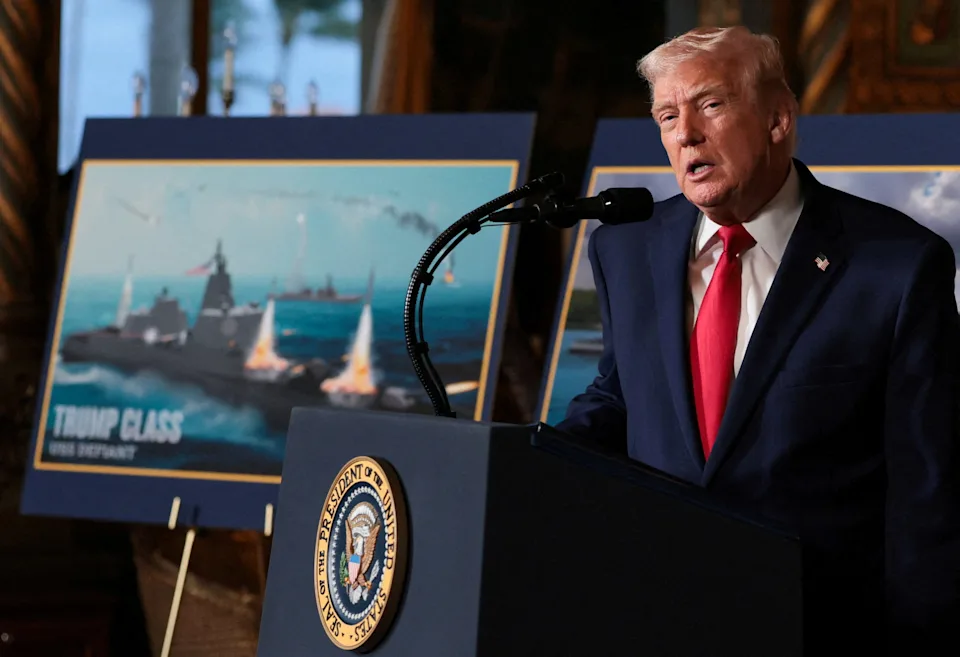
In a Christmas Day post on his Truth Social platform, Trump said he ordered what he called a “powerful and deadly strike” against ISIS militants operating in northwest Nigeria. He said the Pentagon executed “numerous” strikes aimed at degrading the group’s capabilities in the region.
Trump said the operation followed repeated warnings to extremists whom he accused of carrying out mass killings. “I have previously warned these terrorists that if they did not stop the slaughtering of Christians, there would be hell to pay,” he wrote, adding that the strikes were carried out under his direction as commander in chief.
U.S. officials have not released independent confirmation or operational details of the strikes, including targets hit or assessments of casualties. The Pentagon did not immediately respond to requests for comment.
The announcement came days after U.S. forces carried out airstrikes against ISIS positions in Syria on Dec. 19, following the deaths of two U.S. service members and a civilian interpreter, underscoring what the administration portrays as a broader campaign against Islamic State affiliates across multiple regions.
Trump’s remarks also followed weeks of escalating rhetoric toward Nigeria. On Nov. 1, he accused the Nigerian government of failing to protect Christians and said he had instructed what he called the “Department of War” to prepare for possible action. In that post, Trump said the United States could suspend aid to Nigeria and warned of potential military intervention if violence continued.
Those comments coincided with his administration’s decision on Oct. 31 to designate Nigeria a “Country of Particular Concern” under the International Religious Freedom Act, citing what officials described as evidence of “systematic, ongoing and egregious violations of religious freedom,” as reported by CNN and The Associated Press.
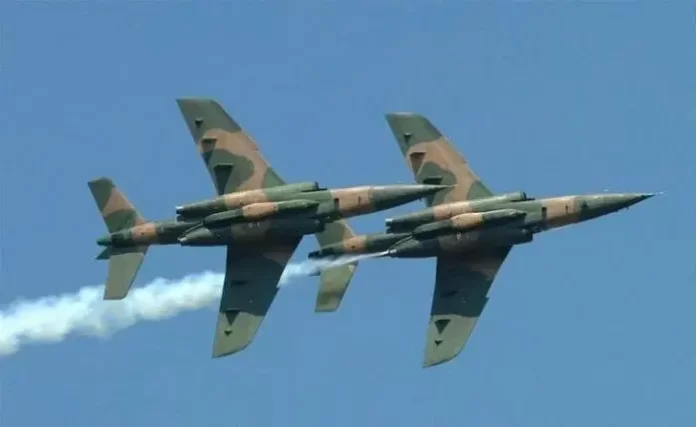
Nigeria’s government has strongly rejected that characterization. President Bola Ahmed Tinubu said Nigeria is a secular country with constitutional protections for all faiths and does not condone religious persecution. In a Nov. 1 post on X, Tinubu said the designation did not reflect Nigeria’s reality or the government’s efforts to safeguard religious freedom.
“Religious freedom and tolerance have been a core tenet of our collective identity and shall always remain so,” Tinubu wrote, adding that his administration remains committed to cooperation with the United States and the international community.
Bayo Onanuga, Tinubu’s press secretary, also pushed back against U.S. criticism after Secretary of State Marco Rubio condemned what he described as the “slaughter of thousands of Christians.” Onanuga called that description “a gross exaggeration,” saying violence in Nigeria affects Christians, Muslims, churches and mosques alike. He said Nigeria needs military support to combat extremist groups, not punitive designations.
The violence in Nigeria has been driven by a complex mix of factors, including jihadist insurgencies linked to Islamic State and Boko Haram, criminal banditry, land and resource disputes, and long-running tensions between farming and herding communities. Security analysts say religious identity is often intertwined with broader political and economic grievances, complicating efforts to assign singular motives to attacks.
Trump’s decision to publicly frame the strikes around the protection of Christians signals a sharper linkage between U.S. counterterrorism policy and religious freedom advocacy. Supporters say such messaging sends a strong deterrent signal to extremist groups, while critics warn it risks oversimplifying Nigeria’s conflict dynamics and straining diplomatic ties with a key regional partner.
As of Thursday, Nigerian authorities had not publicly commented on Trump’s claim that U.S. forces carried out strikes on Nigerian territory, and it remained unclear whether the operation was coordinated with Abuja.
USAToday/Foxnews




