

WASHINGTON — President Donald Trump escalated his rhetorical claims over Venezuela on Sunday, sharing a manipulated image on Truth Social that depicted him as the South American nation’s “Acting President,” a provocative gesture that underscores Washington’s unprecedented intervention in Caracas following the dramatic arrest of Nicolás Maduro earlier this month.
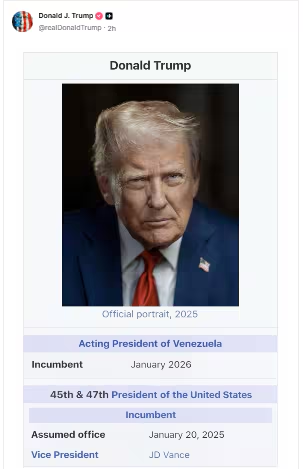
The fabricated Wikipedia screenshot, posted to Trump’s social media platform Sunday evening, appears designed to needle Venezuela’s actual interim leader, Delcy Rodríguez, who assumed power after U.S. military forces extracted Maduro and his wife, Cilia Flores, from Venezuela in a predawn operation on Jan. 3. Trump’s authentic Wikipedia profile contains no such designation.
The post represents the latest salvo in what has become an increasingly complex and controversial American engagement with Venezuela, one that has drawn sharp questions about the limits of U.S. intervention and the administration’s long-term intentions for the oil-rich nation.
Rodríguez, formerly Maduro’s vice president and oil minister, took the oath of office on Jan. 5, two days after the operation that brought her predecessor to New York to face narco-terrorism charges.
Maduro pleaded not guilty in Manhattan federal court and maintained his claim to Venezuela’s presidency, setting up a legal and diplomatic confrontation that continues to reverberate across Latin America.
Trump, surrounded by senior cabinet officials, announced in the operation’s aftermath that the United States would “run” Venezuela until conditions permitted free and fair presidential elections. The declaration marked an extraordinary assertion of American authority over a sovereign nation, even one long considered an adversary.
The administration’s approach to governing Venezuela has centered on what officials describe as “a small committee” led by Secretary of State Marco Rubio, who has simultaneously taken on acting roles as USAID administrator, national archivist and national security adviser.
The committee also includes Defense Secretary Pete Hegseth, Joint Chiefs Chairman Dan Caine, CIA Director John Ratcliffe, White House adviser Stephen Miller, Energy Secretary Chris Wright and Interior Secretary Doug Burgum.
This governance structure raises fundamental questions about the precedent being set for American involvement in the internal affairs of other nations, particularly in Latin America, where memories of past U.S. interventions remain fresh and contentious.
The arrangement essentially establishes a form of American protectorate over Venezuela, with Trump describing himself as “heavily engaged” in the committee’s decision-making.
Rodríguez initially condemned the arrests but has since adopted a more conciliatory posture toward Washington, apparently heeding warnings from the Trump administration that she would face consequences exceeding those confronting Maduro if she failed to cooperate with U.S. demands.
The interim government announced on Jan. 9 that it had begun exploring a process to restore diplomatic relations with Washington, which were severed during Trump’s first presidential term in 2019.
The State Department confirmed that a small diplomatic delegation traveled to Venezuela to conduct preliminary assessments for reopening the U.S. Embassy in Caracas, a significant step toward normalizing relations under terms favorable to American interests.
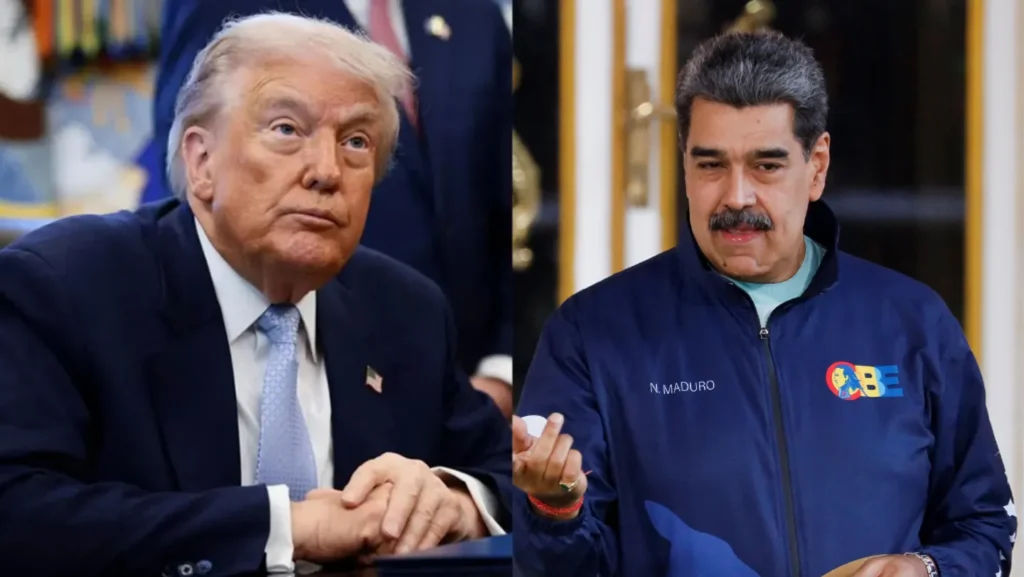
Trump’s focus on Venezuela reflects his administration’s determination to assert control over the country’s oil industry. Venezuela possesses the world’s largest proven oil reserves, making it a strategic prize for U.S. energy interests despite decades of mismanagement and underinvestment that have crippled production.
The president has indicated he expects to secure up to 50 million barrels of Venezuelan crude under the Rodríguez government, though his outreach to American oil executives has encountered unexpected resistance.
During a meeting with leaders from the nation’s top petroleum companies, ExxonMobil CEO Darren Woods informed Trump that his corporation considers Venezuela “uninvestable” under current conditions.
Woods cited the seizure of Exxon assets during former President Hugo Chávez’s nationalization campaign between 2004 and 2007, noting that “to re-enter a third time would require some pretty significant changes from what we’ve historically seen.” The executive told Trump that Venezuela’s existing legal and commercial frameworks make the country unsuitable for major investments.
Trump’s reaction to Woods’s assessment revealed his frustration with corporate caution. Speaking to reporters aboard Air Force One on Sunday as he returned from Mar-a-Lago, the president suggested he might exclude ExxonMobil from future Venezuelan opportunities. “I’ll probably be inclined to keep Exxon out,” Trump said. “I didn’t like their response. They’re playing too cute.”
The president’s irritation highlights a tension at the heart of his Venezuela strategy: While the administration has moved aggressively to establish control over the country, American energy companies remain skeptical that conditions have improved sufficiently to justify the risks of major investments.
Trump has also turned his attention to Cuba, threatening to cut off Venezuelan support that has sustained the island nation for decades. “Cuba lived, for many years, on large amounts of OIL and MONEY from Venezuela,” Trump wrote on Truth Social on Sunday. “In return, Cuba provided ‘Security Services’ for the last two Venezuelan dictators, BUT NOT ANYMORE!”
The president joked that Rubio, whose parents emigrated from Cuba, could be installed as the island’s next leader, a comment that reflects both the administration’s confidence and the provocative tone that has characterized its Latin American policy.
Rubio issued his own warning to Havana during an appearance on NBC’s “Meet the Press” the day after the Maduro operation, stating, “I don’t think it’s any mystery that we are not big fans of the Cuban regime, who, by the way, are the ones that were propping up Maduro.”
The secretary’s comments underscore the administration’s view that Cuba’s decades-long support for Venezuelan socialist governments represents a significant factor in the region’s instability.
Trump’s assertion last week that the U.S. has called off a “second wave of attacks” on Venezuela suggests military planners had prepared additional operations beyond the initial extraction of Maduro. The president cited increased cooperation from Rodríguez, particularly on energy matters, as the reason for standing down.
“The U.S.A. and Venezuela are working well together, especially as it pertains to rebuilding, in a much bigger, better, and more modern form, their oil and gas infrastructure,” Trump posted on Truth Social on Friday.
However, the president acknowledged uncertainty about the arrangement’s durability. In comments to The New York Times, Trump said that while the interim government is “giving us everything that we feel is necessary,” he added that “only time will tell” when Washington will relinquish direct oversight of Caracas.
This ambiguity raises critical questions about American intentions and the timeline for Venezuelan sovereignty. The administration has not specified benchmarks for concluding U.S. involvement or detailed plans for the promised free elections, leaving observers uncertain about whether Washington envisions a months-long transition or a more extended period of American supervision.
The meme Trump shared on Sunday, depicting himself as Venezuela’s acting president, may have been intended as humor directed at Rodríguez, but it also reflects the extraordinary scope of American influence over Venezuela’s current government.
Whether posted in jest or as a signal of deeper ambitions, the image captured a reality in which U.S. officials exercise unprecedented authority over Venezuelan affairs.
The administration’s approach has generated debate about the legal and ethical foundations for such intervention, even against a government widely criticized for authoritarianism and corruption. International law experts have questioned whether the operation against Maduro and the subsequent assertion of American control over Venezuelan governance can be reconciled with principles of national sovereignty that have governed international relations since World War II.
For Trump, the Venezuela intervention represents an opportunity to demonstrate decisive action against a long-standing adversary while potentially securing access to energy resources that could benefit American consumers and companies.
Yet the resistance from firms like ExxonMobil suggests that translating military and political dominance into economic success may prove more challenging than the administration anticipated.
As the situation continues to unfold, the question remains whether Trump’s bold assertions of American authority — including his jest about serving as Venezuela’s acting president — will ultimately yield the stability and cooperation necessary to achieve the administration’s objectives, or whether they will deepen resentments and complicate the path toward genuine Venezuelan self-governance.
Times/Hindutimes/Independent




