

ISTANBUL — Turkish security forces detained 115 suspects affiliated with the Islamic State terrorist organization following intelligence indicating planned attacks on Christmas and New Year celebrations targeting non-Muslim individuals in Istanbul, security sources announced Wednesday.
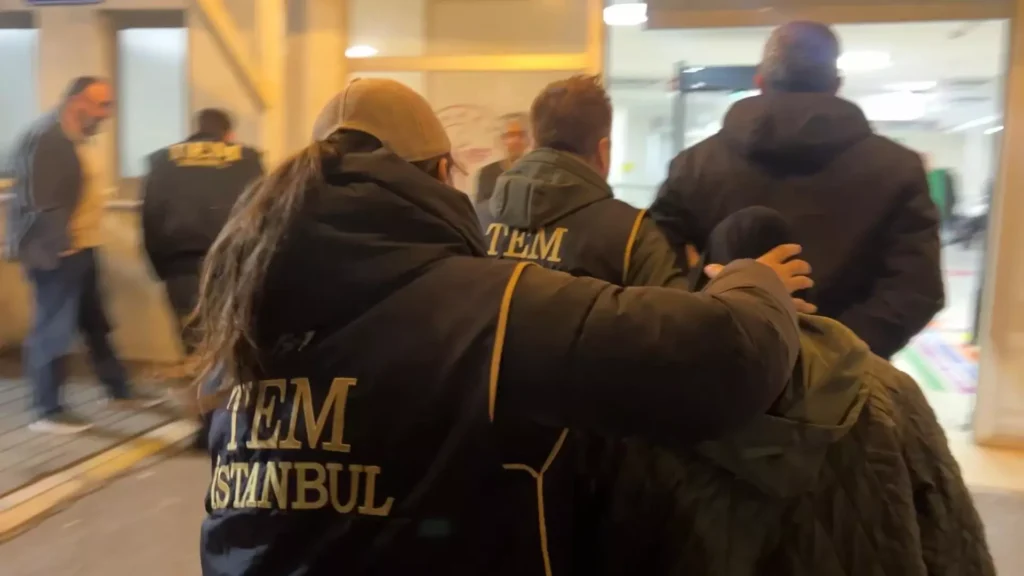
Prosecutors and police in Istanbul stated that intelligence revealed ISIS members were planning assaults coinciding with Christmas and New Year’s events, specifically targeting non-Muslim residents and visitors in Turkey. Authorities issued arrest warrants for 137 suspects believed connected to ISIS conflict zones, with some already wanted on terrorism charges at national and international levels.
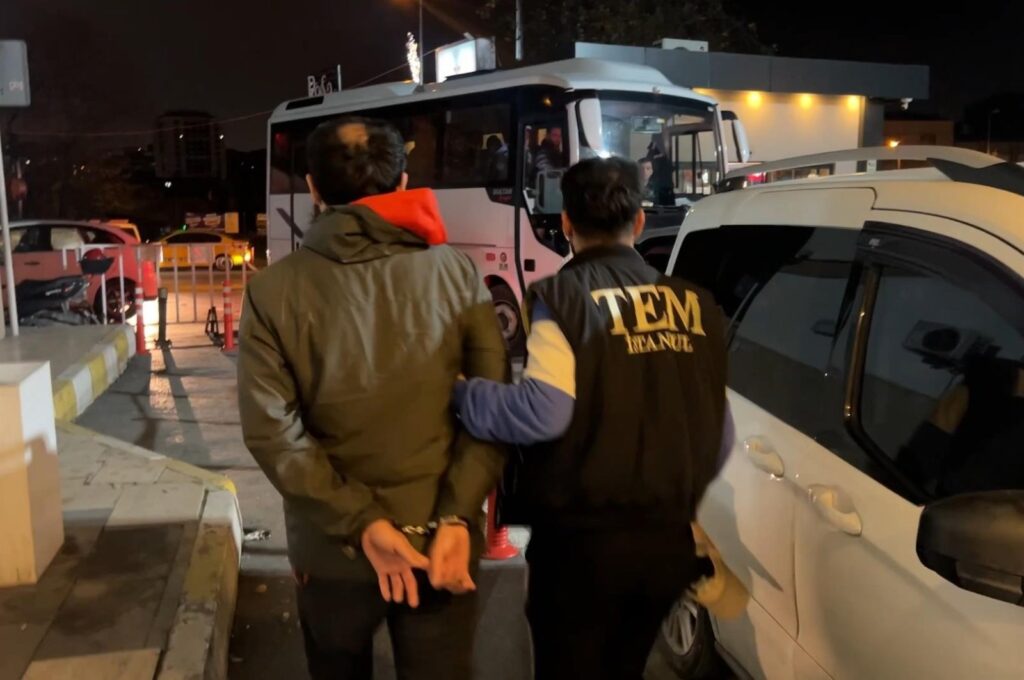
Simultaneous raids conducted at 124 locations across Istanbul resulted in the seizure of numerous firearms, ammunition and organizational documents, according to the Istanbul Chief Prosecutor’s Office announcement Thursday. A total of 115 suspects were taken into custody, with operations continuing to apprehend remaining suspects.
The December 25 operation followed days after a major intelligence-led operation along the Afghanistan-Pakistan border, where Turkey’s National Intelligence Organization captured a Turkish national accused of serving in a senior ISIS role. The suspect, identified as Mehmet Gören, allegedly helped plan suicide attacks targeting civilians in Turkey, Afghanistan, Pakistan and Europe, security sources stated Monday.
Intelligence officials determined that Gören had traveled from Turkey to the Afghanistan-Pakistan region, where he operated in ISIS camps and ascended through the group’s hierarchy. The suspect, operating under the code name “Yahya,” had been assigned by the terrorist organization to conduct suicide operations, according to National Intelligence Organization findings.
Investigations revealed that Gören worked alongside Özgür Altun, code-named “Abu Yasir al-Turki,” who previously played an active role transferring ISIS elements from Turkey to the Afghanistan-Pakistan region before being captured, returned to Turkey and arrested. Intelligence findings indicated Gören had agreed to carry out suicide attacks targeting civilians living in Afghanistan, Pakistan, Turkey and Europe.
Assessments showed Gören survived airstrikes targeting ISIS elements in Pakistan, Daily Sabah reported. The National Intelligence Organization identified him as a senior figure within ISIS-Khorasan after extensive intelligence work along the Afghanistan-Pakistan border.
On Wednesday, security forces in central Turkey’s Kırşehir province captured 10 suspects in an operation against ISIS, including a suspect identified as a relative of slain ISIS leader Abu Bakr al-Baghdadi, according to reports.
Turkish authorities maintain heightened alert status against potential ISIS attacks during Christmas and New Year celebrations, reflecting lessons learned from previous terrorist incidents. On January 1, 2017, an ISIS gunman stormed a popular Bosporus nightclub and killed 39 people during New Year’s celebrations. This followed the October 2015 suicide bombings at an Ankara train station that killed more than 100 people.
In January 2024, two gunmen attacked a Catholic church in Istanbul, killing one man during Sunday Mass. The incident reinforced concerns about targeting of religious minorities and non-Muslim communities within Turkey.
Turkey has intensified intelligence and counterterrorism operations in recent years against ISIS networks operating both domestically and internationally. The comprehensive approach reflects recognition that preventing attacks requires disrupting terrorist infrastructure, intercepting operatives before they strike, and maintaining robust intelligence sharing with international partners.
The Istanbul operation demonstrates several key elements of Turkey’s counterterrorism strategy. First, the reliance on actionable intelligence to identify specific threats and potential perpetrators before attacks materialize. Second, the coordination between different security agencies including police, prosecutors and the National Intelligence Organization. Third, the willingness to conduct large-scale simultaneous operations across multiple locations to maximize suspect apprehension while minimizing escape opportunities.
The timing of the arrests—immediately before major holiday celebrations when large crowds gather in public spaces—reflects both the heightened threat period and security forces’ efforts to preempt attacks when they appear most likely. ISIS and similar extremist groups have historically targeted holiday celebrations, viewing them as opportunities to maximize casualties, generate media attention and terrorize populations through attacks on moments of gathering and celebration.
The specific focus on protecting non-Muslim individuals highlights a concerning aspect of ISIS ideology and targeting priorities. While the group has killed Muslims in far greater numbers globally, its propaganda and operational guidance have emphasized attacks on Christians, Jews and other religious minorities. In Turkey’s context as a Muslim-majority nation that hosts significant Christian communities and attracts Christian tourists, this targeting poses particular security challenges.
The seizure of organizational documents during the raids may provide valuable intelligence beyond the immediate operation. Such materials can reveal communication methods, command structures, financing mechanisms, recruitment strategies and connections to ISIS networks in other countries. This intelligence can inform subsequent operations and help map the broader terrorist infrastructure operating within Turkey.
The international dimensions of the threat—with suspects connected to ISIS conflict zones and operations spanning multiple countries—underscore the transnational nature of contemporary terrorism. ISIS-Khorasan, the organization’s Afghanistan-Pakistan affiliate to which Gören allegedly belonged, has demonstrated capacity to recruit, train and deploy operatives across borders. Turkey’s geographic position as a bridge between Europe, the Middle East and Central Asia makes it both a target and a transit point for terrorist movements.
The arrest warrants for 137 suspects with only 115 detained indicates that 22 individuals remain at large. These outstanding suspects pose ongoing security concerns, particularly as holiday celebrations approach. Turkish security services must balance public safety imperatives with operational security, deciding how much threat information to share publicly without compromising investigative equities or alerting suspects still being sought.
The operations also raise questions about how ISIS maintains operational capacity despite years of military defeats in Iraq and Syria, loss of territorial control and targeted elimination of leadership. The group’s persistence suggests successful adaptation to pressure through decentralization, reliance on self-directed cells inspired by central ideology rather than directly controlled by leadership, and exploitation of ungoverned spaces in countries like Afghanistan and Pakistan.
For Turkey’s non-Muslim communities, the threat revelations likely generate anxiety about safety during religious celebrations that should be joyous occasions. Turkish authorities face the challenge of providing adequate security without creating an atmosphere of fear that achieves terrorists’ psychological objectives. Visible security measures can reassure but also serve as reminders of threats, while invisible security efforts leave communities uncertain about their protection.
The successful interdiction of these plots, if confirmed, represents a significant counterterrorism achievement. Preventing attacks is inherently more difficult than responding to them after they occur, requiring proactive intelligence collection, analysis capability to identify genuine threats amid vast information streams, and operational capacity to act decisively once threats are identified. The challenge for security services is that they must succeed every time to prevent attacks, while terrorists need succeed only occasionally to achieve their objectives.
As holiday celebrations proceed in Istanbul and across Turkey, heightened security measures will likely remain visible. For residents and visitors, the balance between maintaining normal life and acknowledging genuine security threats requires both vigilance and refusal to allow terrorism to dictate behavior. For Turkish security forces, the operations continue as they work to apprehend remaining suspects and identify any additional threats that intelligence may have missed.
The broader strategic question concerns whether these arrests represent disruption of isolated cells or whether ISIS retains deeper organizational capacity within Turkey. The answer will emerge through continued intelligence work, interrogations of detained suspects and monitoring of any subsequent attack attempts that might indicate the scope of terrorist infrastructure that remains operational despite these significant arrests.
Credit: Dailysabah




