

The U.S. military launched a series of deadly airstrikes on four boats in the eastern Pacific Ocean on Monday, killing 14 people and leaving one survivor, Defense Secretary Pete Hegseth announced Tuesday. The strikes, the deadliest in a single day since President Donald Trump’s administration began its maritime campaign against drug trafficking, mark a sharp escalation in a nearly two-month effort that has roiled regional relations and fueled speculation about broader U.S. objectives in South America.
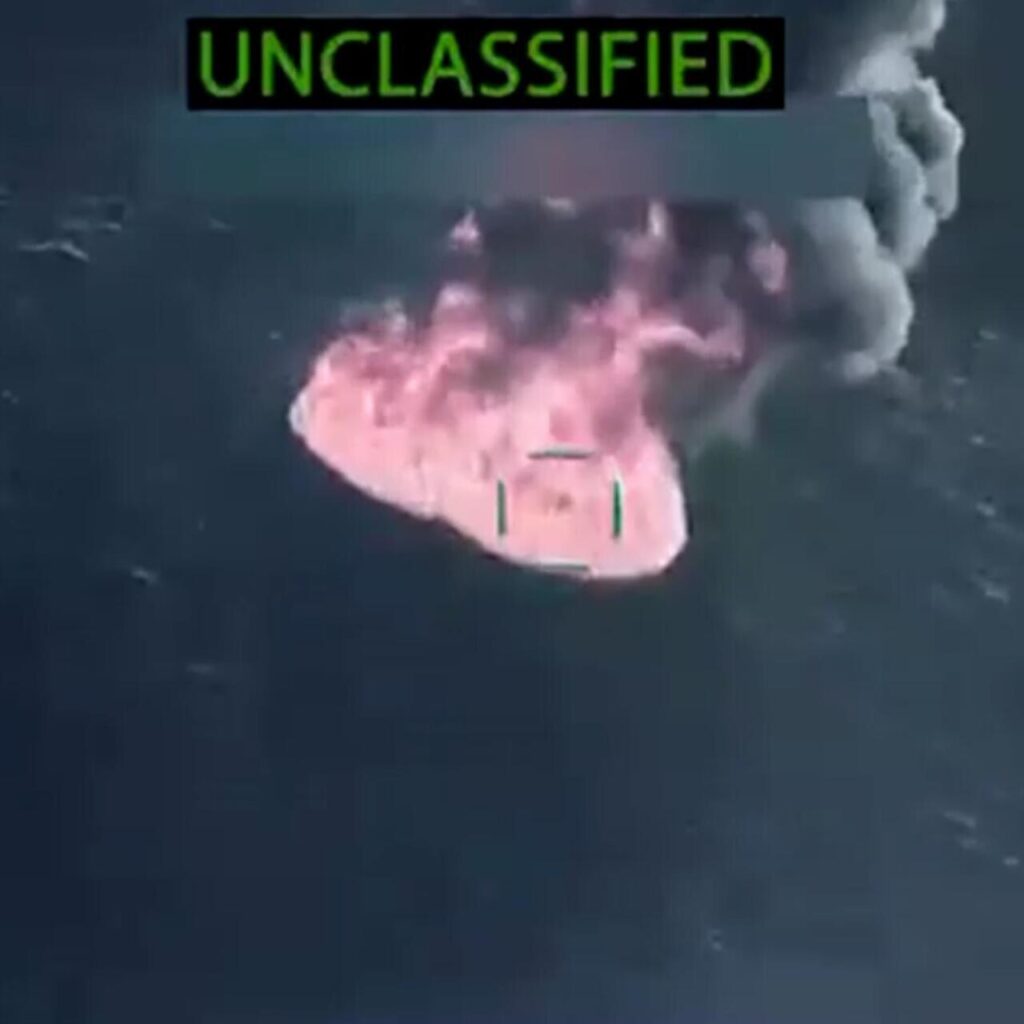
According to Pentagon officials, the strikes targeted vessels believed to be carrying narcotics off the coast of Colombia. However, the exact location remains unclear, as Mexico’s navy reported conducting a search roughly 400 miles southwest of Acapulco—hundreds of miles from Colombia—suggesting at least one of the strikes may have occurred closer to Mexican waters.
A Pentagon official, speaking on condition of anonymity, said the U.S. military observed one survivor clinging to wreckage following the attacks and relayed the person’s coordinates to the U.S. Coast Guard and a nearby Mexican military aircraft. Defense Secretary Hegseth later said Mexican authorities had taken responsibility for coordinating the rescue but did not confirm whether the survivor had been found or would remain in Mexican custody.
Mexico condemned the strikes, with President Claudia Sheinbaum announcing that she had instructed her foreign affairs secretary and navy to meet with the U.S. ambassador to “discuss this unacceptable incident.” During her daily press briefing, Sheinbaum said, “We do not agree with these attacks. We want all international treaties to be respected.”
The strikes have also deepened tensions with Colombia, a key U.S. ally in anti-narcotics operations. Last week, the Trump administration imposed sanctions on Colombian President Gustavo Petro, his family, and a member of his government, alleging involvement in the international drug trade — accusations Petro strongly denies.
Hegseth released footage of the latest attacks showing two boats moving along known narco-trafficking routes before erupting into flames. A third clip shows a pair of stationary vessels exploding in what appears to be a precision strike. “The four vessels were known by our intelligence apparatus, transiting along established narco-trafficking routes and carrying narcotics,” Hegseth said in his statement.
The Pentagon has not provided public evidence linking the targeted boats to drug cartels or identifying those killed. Still, the U.S. has claimed that several previous strikes targeted operations connected to the Tren de Aragua gang, a Venezuelan criminal network designated as a foreign terrorist organization by Washington.
The latest operation raises the total death toll from 13 disclosed strikes to at least 57 people. The Trump administration insists the campaign is part of an expanding “armed conflict” against drug cartels that it claims have “killed more Americans than Al-Qaeda.”
Secretary of State Marco Rubio defended the strikes, arguing that Venezuelan President Nicolás Maduro’s government “allows and participates in the shipment of narcotics.” Maduro, however, accused Washington of “fabricating a war” to justify aggression and warned that the military buildup in the region — which now includes an aircraft carrier, eight warships, and thousands of troops — threatens Venezuela’s sovereignty.
President Donald Trump has maintained that he possesses full legal authority to carry out the attacks, citing the same provisions used by President George W. Bush’s administration in the post-9/11 war on terror. “Cartels will be treated the same way as terrorists,” Hegseth said, drawing a direct parallel between the current counterdrug operations and America’s long-standing campaign against extremist networks.
The strikes represent a significant expansion of U.S. military engagement in Latin American waters, underscoring the administration’s willingness to use force far beyond traditional drug interdiction tactics — a move that has sparked both regional outrage and growing international scrutiny.
Associated Press story




