

Two women in their 20s were arrested in northern Uganda after neighbors accused them of engaging in same-sex conduct, police confirmed Tuesday, in a case unfolding under the country’s sweeping 2023 Anti-Homosexuality Act.
Josephine Angucia, a regional police spokesperson, told Agence France-Presse that officers detained the pair in the northwestern city of Arua, roughly 450 kilometers (280 miles) from the capital, Kampala, following complaints from residents.
“Neighbours contacted police complaining the two were practicing homosexuality and were seen kissing each other in public,” Angucia said, adding that some residents photographed the women and submitted the images to authorities.
Angucia further indicated that neighbors alleged that multiple women had been seen entering the pair’s one-room rental home and staying overnight, raising suspicions of same-sex relations. The police spokesperson said the file had been forwarded to state prosecutors for review and potential court proceedings.
The two women have remained in detention since Feb. 18 and, as of Tuesday, had not secured legal representation, according to the information provided by police to AFP.
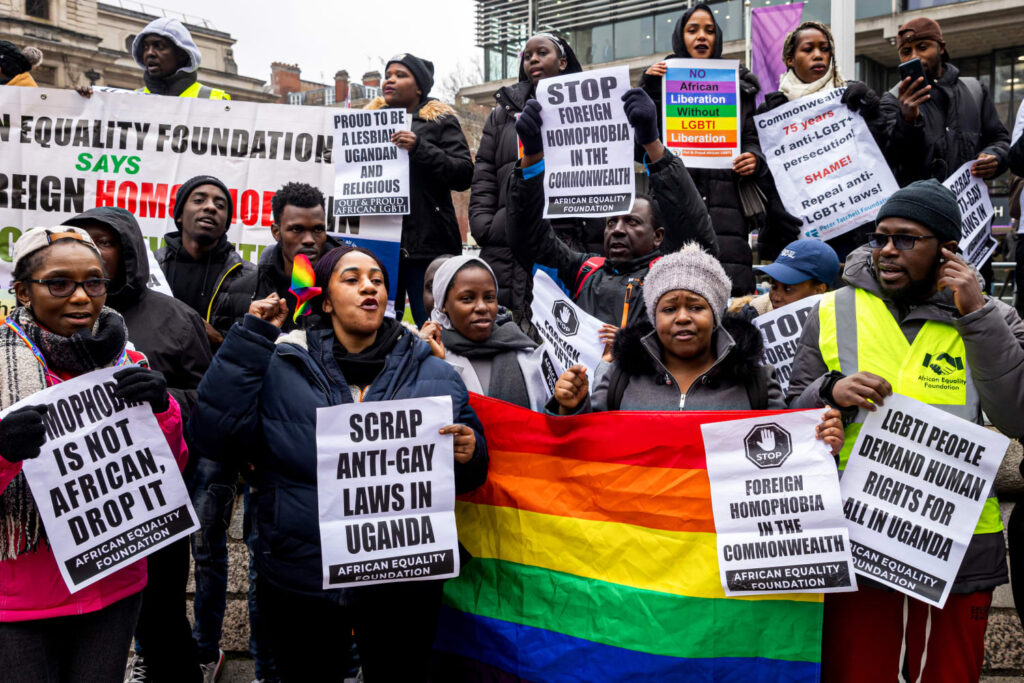
Uganda’s 2023 Anti-Homosexuality Act, among the most stringent anti-LGBTQ statutes globally, prescribes penalties of up to life imprisonment for consensual same-sex relations. The legislation also introduced the offense of “aggravated homosexuality,” which carries a potential death sentence under certain circumstances defined in the statute.
The law has drawn sustained international condemnation since its passage. The United Nations and several Western governments denounced the measure as a severe violation of human rights. The World Bank suspended new financing to Uganda shortly after the act was enacted, citing concerns over discrimination and exclusion. Funding resumed in mid-2025 after discussions with Ugandan authorities regarding mitigation measures.
Uganda is a predominantly Christian and socially conservative nation in East Africa, where political leaders have frequently framed the law as a defense of traditional values. Supporters argue it reflects the will of the electorate and safeguards cultural norms. Critics counter that it has intensified fear, vigilantism and abuse.
Frank Mugisha, a prominent Ugandan human rights advocate, condemned the arrests in a post on X, asserting that the case illustrates the precarious conditions faced by LGBTQ individuals since the law took effect.
“It has fuelled a dangerous cycle of blackmail and extortion,” Mugisha wrote. “Criminals are now using this law as a weapon to prey on the LGBTQ+ community, knowing their victims are too terrified to seek protection.”
Human rights organizations have long cautioned that beyond formal prosecutions, the law may embolden private citizens to report or harass individuals suspected of same-sex conduct. Legal analysts note that the broad language of the statute can leave room for expansive interpretation, increasing the risk of arbitrary enforcement.
Authorities have not disclosed whether formal charges have been filed against the two women. Angucia indicated that prosecutors would determine the next steps, including whether to present the matter in court.
The arrests come amid heightened scrutiny of Uganda’s application of the 2023 law. While official conviction figures remain limited, activists maintain that detentions, evictions and informal coercion have risen sharply. In some communities, landlords have reportedly removed tenants over suspicions of homosexuality, and individuals have described being threatened with exposure or police referral.
The Ugandan government has defended the law as a sovereign matter, resisting external pressure to amend or repeal it. Officials argue that international criticism constitutes interference in domestic affairs.
At the same time, Uganda’s reliance on foreign aid and development financing has complicated the diplomatic landscape. The temporary suspension of World Bank funding underscored the potential economic consequences of rights-related disputes. Observers say the partial restoration of support in 2025 reflected a pragmatic recalibration by both Kampala and international lenders, though tensions remain.
Legal experts suggest the Arua case could test how aggressively local authorities pursue allegations rooted primarily in neighbor complaints. Under Ugandan law, evidence standards and prosecutorial discretion will determine whether the matter proceeds to trial.
For LGBTQ Ugandans and advocacy groups, the episode reinforces broader concerns about privacy, due process and access to counsel. Without legal representation, detainees may face prolonged custody or limited ability to challenge accusations.
As the file moves to prosecutors, the case highlights the continued domestic and international debate over Uganda’s Anti-Homosexuality Act — a law that has reshaped the legal landscape for sexual minorities in the country and placed Kampala at the center of a global human rights dispute.




