

Uganda’s military chief openly threatened opposition leader Bobi Wine with death and issued a 48-hour surrender ultimatum Monday, dramatically escalating post-election tensions as authorities intensified their crackdown on dissent following President Yoweri Museveni’s disputed victory last week.
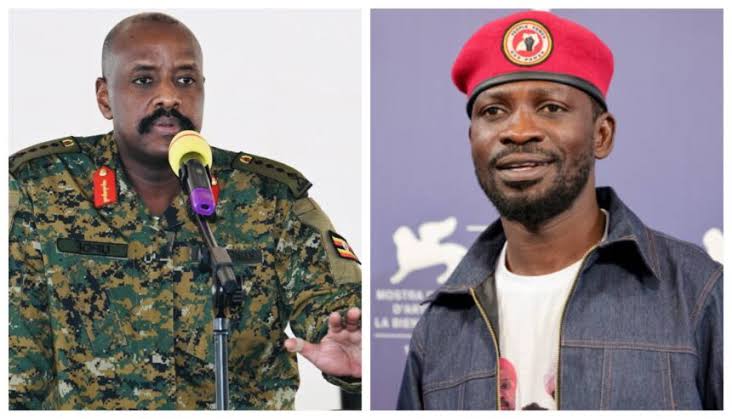
Gen. Muhoozi Kainerugaba, Museveni’s outspoken son who commands Uganda’s armed forces, brazenly declared on the social media platform X that he was praying for Wine’s death, days after the opposition leader disclosed he had been forced into hiding following a security raid on his residence that he narrowly escaped.
“We have killed 22 NUP terrorists since last week. I’m praying the 23rd is Kabobi,” Kainerugaba wrote late Monday, employing a derogatory nickname for Wine and referencing his National Unity Platform party. The acknowledgment that security forces have killed nearly two dozen opposition supporters represents a rare public admission of lethal force against political opponents in the aftermath of elections international observers characterized as deeply flawed.
In a subsequent post, Kainerugaba gave Wine “48 hours to surrender” to police, threatening to treat him as an outlaw if he failed to comply. The military chief attempted to shield his father from responsibility for the ultimatum, stating, “I exonerate my great and venerable father from what I’m going to do to Kabobi (Bobi Wine).”
The general expressed dissatisfaction with the death toll his forces have inflicted. “Personally, I’m embarrassed by our record. 22 killed in one week is too low. I promise to do better,” he wrote, a chilling declaration that suggests systematic killing of opposition supporters rather than isolated incidents of violence.
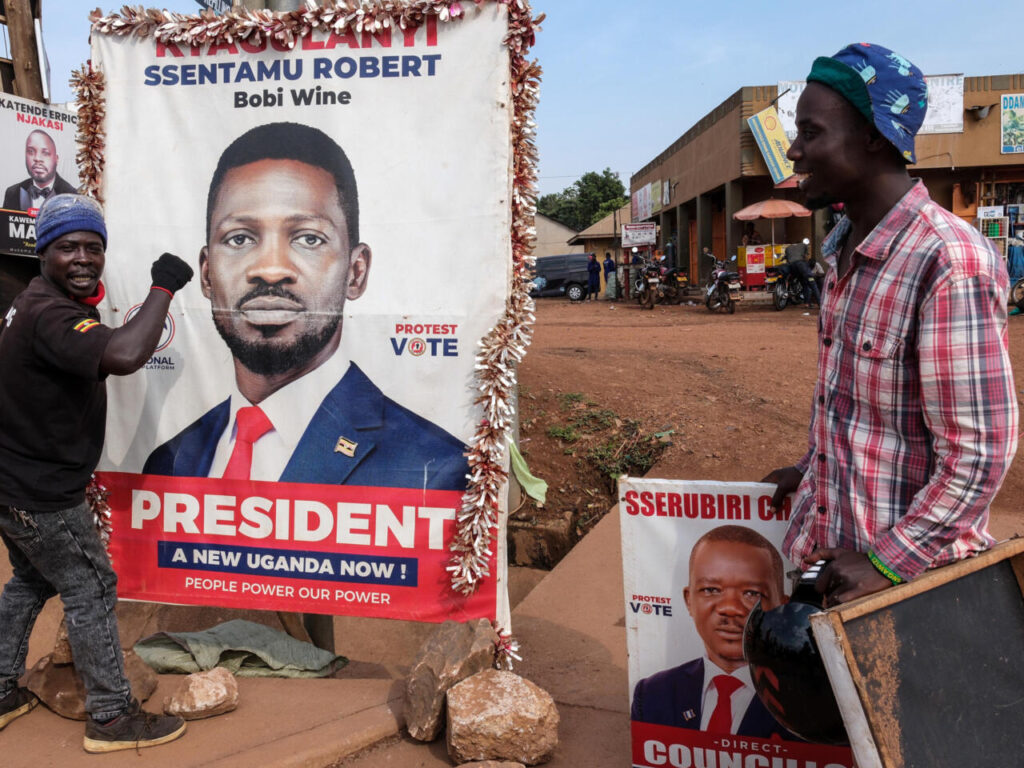
Wine, whose legal name is Robert Kyagulanyi, quickly responded to the threats, accusing Kainerugaba of ordering the raid on his Magere home designed to harm or capture him. “You ordered the raid on my house to harm me,” Wine wrote, describing how he narrowly avoided capture during what he characterized as a military operation involving power cuts, interference with CCTV cameras and helicopters hovering above his residence.
“Anyway, I will resurface when I decide. Then you and your father can do whatever you want to me. But make no mistake – You will never escape the inevitable consequences of your atrocities against the people of Uganda. This is our country,” Wine added, defying the military chief’s ultimatum while acknowledging his precarious situation.
The 43-year-old opposition leader detailed the Friday night operation, describing a coordinated military and police raid. “Last night (Friday night) was very difficult at our home in Magere. The military and police raided us. They switched off the power and cut off some of our CCTV cameras. Helicopters were hovering over,” he disclosed.
Wine’s wife remains under apparent house arrest while his whereabouts remain unknown following Saturday’s escape. In a televised message aired Monday night on NTV Uganda, Wine accused police of vandalizing his home and explained that leaving the premises allowed him “to speak to the world,” though he declined to reveal his location.
The confrontation follows Museveni’s announcement as winner of last week’s presidential election with 71.6 percent of the vote, securing an eighth consecutive term for the 81-year-old leader who has governed Uganda since 1986. Wine finished second with 24 percent, Citizen.digital disclosed, citing official results that election observers and human rights organizations have widely criticized as fraudulent.
Kainerugaba, the 51-year-old general widely believed to be his father’s preferred successor, escalated his rhetoric further by claiming prophetic status and hurling dehumanizing insults at Wine. “I told you all that Mzee would win by the biggest percentage since 1996, and it happened. Now I tell you that NUP will be removed and extinguished from our land like a bad dream!” he wrote, using an honorific term for his father while threatening to eliminate the opposition party entirely.
The army chief has established a pattern of provocative online statements. Last year he openly threatened to behead Wine and boasted about holding the opposition leader’s bodyguard in his basement, threatening castration. The bodyguard was subsequently charged with robbery, suggesting the claims were not merely rhetorical but reflected actual detention and potential torture.
Kainerugaba remained unusually quiet during the campaign period but returned to social media immediately following his father’s victory, posting frequently and aggressively. The general has spoken openly about his ambition to succeed Museveni, though the president has publicly denied grooming his son for succession despite elevating him to the military’s top position.
Police spokesperson Kituma Rusoke said Monday night that Wine was not being sought by authorities, a statement that directly contradicts Kainerugaba’s 48-hour surrender demand and illustrates either poor coordination between military and police forces or deliberate ambiguity designed to create confusion about the opposition leader’s legal status.
The crackdown on opposition has expanded substantially since the election. At least 118 National Unity Platform members faced charges in Kampala courts Monday on offenses including unlawful assembly, conspiracy and possession of election materials, court documents and party officials confirmed.
NUP secretary-general David Rubongoya denied accusations that party supporters engaged in violence, asserting that many arrested individuals were accredited polling agents. “They even had letters confirming that they were polling agents of NUP. They were targeted and arrested violently,” Rubongoya told NTV Uganda.
Scattered protests erupted in portions of the capital Saturday after electoral officials announced Museveni’s victory, but police swiftly dispersed crowds using tear gas and mass detentions. Reuters disclosed that several incidents of post-election violence occurred, including police killings of multiple opposition supporters in central Uganda under disputed circumstances.
However, the widespread violence that killed hundreds and possibly thousands in neighboring Tanzania following its October elections did not materialize in Uganda, though whether this reflects restraint by authorities or successful suppression of dissent remains unclear.
Ahead of the vote, the United Nations Human Rights Office accused Uganda’s military and police of deploying live ammunition against peaceful rallies, conducting arbitrary arrests and abducting opposition supporters. The pattern of intimidation and violence during the campaign created an environment where genuine democratic competition became impossible.
Wine and his party have rejected the election results, alleging ballot stuffing, intimidation, enforced disappearances of polling agents and widespread repression that prevented fair electoral competition. The opposition’s claims find support from international observers who documented systematic irregularities favoring the incumbent.
Museveni’s latest victory positions him to rule Uganda for nearly half a century by the time his new term ends in 2031, assuming he completes the full period. The 81-year-old leader ranks as Africa’s third-longest-serving head of state, having maintained power through constitutional amendments that removed term limits and age restrictions that would have forced his retirement.
Kainerugaba’s public death threats against a prominent opposition leader represent an extraordinary escalation even by Ugandan standards, where political repression has intensified during Museveni’s four decades in power. The military chief’s willingness to openly advocate killing political opponents on social media suggests either confidence that no accountability will follow or a deliberate strategy to intimidate the broader opposition movement into silence.
The general’s history of inflammatory social media posts includes a 2022 threat to invade neighboring Kenya, an outburst that prompted diplomatic tensions before being dismissed as personal views rather than official policy. The pattern demonstrates how Kainerugaba uses his social media presence to advance positions too extreme for official government channels while maintaining plausible deniability through claims that his statements represent personal opinions.
For Wine, the dilemma involves balancing personal safety against political leadership responsibilities. Remaining in hiding protects him from immediate arrest or worse but potentially undermines his credibility as a leader willing to face consequences for challenging authoritarian rule. Surrendering to authorities as Kainerugaba demands would likely result in detention on manufactured charges, effectively removing him from politics.
The international community faces its own calculations about how forcefully to condemn Kainerugaba’s threats and the broader crackdown. Uganda receives substantial foreign aid and maintains strategic partnerships with Western nations on counterterrorism and regional stability, creating competing interests that often result in muted criticism of Museveni’s authoritarian governance.
For ordinary Ugandans who supported Wine’s candidacy, hoping his youthful energy and reformist platform might end Museveni’s long tenure, the post-election repression confirms their fears that the entrenched regime will use any means necessary to maintain power. The acknowledgment of 22 opposition supporters killed in one week provides chilling evidence of the costs associated with political dissent in contemporary Uganda.
As the 48-hour ultimatum expires, attention will focus on whether Kainerugaba follows through on his threats if Wine remains at large. The military chief’s credibility within security forces may depend on demonstrating that his ultimatums carry consequences, creating pressure to escalate violence against the opposition leader regardless of international condemnation.
For Uganda’s fragile democracy, the episode illustrates how military involvement in politics and dynastic succession ambitions combine to transform electoral competition into existential conflicts where losing power means facing potential death rather than simply entering opposition. This dynamic virtually guarantees continued authoritarian rule as incumbents cannot risk democratic transitions that might expose them to accountability for decades of repression.
Citizen.digital/Reuters




