

Ukraine has recovered the bodies of two Kenyan nationals who were recruited by Russia and killed while fighting in eastern Ukraine, Ukrainian defense intelligence officials said, underscoring the expanding role of foreign fighters in Moscow’s war effort.
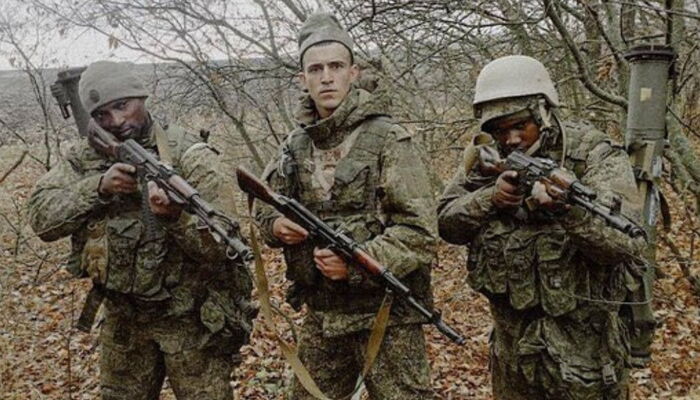
The Defence Intelligence of Ukraine said the remains were found near the city of Lyman in the Donetsk region, a heavily contested area that has seen repeated offensives and counteroffensives since the early stages of the war. The two men were identified as Ombwori Denis Bagaka, born Jan. 30, 1987, and Wahome Simon Gititu, born May 21, 1991.
Ukrainian officials said the identification was confirmed through passports and personal documents recovered from the bodies. The remains were located close to the position where another Kenyan national, Clinton Nyapara Mogesa, had previously been killed during fighting in the same area.
According to Ukrainian intelligence, all three men had been recruited outside Russia, having worked in Qatar for private security firms that promised stable and high-paying employment. Officials said the men were later funneled into Russia’s military recruitment system, a tactic Ukraine says has increasingly been used to bolster depleted Russian units.
Bagaka and Mogesa arrived at a Russian recruitment center in Yaroslavl on Sept. 27, 2025, Ukrainian intelligence said. Gititu joined them roughly a month later, arriving on Oct. 28. After what was described as a short period of military training, the men were deployed to the Donbas region and assigned to assault units involved in operations around Lyman.
Ukrainian officials said the three Kenyans were sent into active combat during an advance on the city, moving through terrain described as a “kill zone.” Ukrainian Defense Forces engaged the unit, and all three men were killed during the assault, according to the intelligence briefing.
The Defence Intelligence of Ukraine said Russian commanders failed to provide adequate battlefield support or attempt evacuation during or after the engagement, leaving the bodies behind once the assault collapsed. Mogesa’s remains were discovered several days earlier at a former Russian position following a Ukrainian counterassault in the Donetsk region.
Officials said Mogesa had also previously lived and worked in Qatar before signing a contract with the Russian army and being assigned to a frontline assault unit. After his death, Ukrainian intelligence said, Russian forces did not recover his body, and his family has received no formal notification from Russian authorities.
The deaths of the Kenyan fighters come amid growing scrutiny of Russia’s recruitment of foreign nationals, particularly from Africa and Asia, to fight in Ukraine. Ukrainian officials say many recruits are lured with promises of high wages, residency benefits, or employment opportunities, only to be deployed quickly to some of the war’s most dangerous front lines.
The toll of the war on Kenyan families was highlighted again this week when relatives of another Kenyan national killed while fighting for Russia held a memorial service without his remains. On Feb. 5, family members of Charles Wangari gathered in Mukurweini, in Kenya’s Nyeri County, to honor his memory after learning he had been killed on Christmas Day.
Wangari’s body could not be recovered from the battlefield, leaving his family unable to conduct a traditional burial. Relatives displayed his portrait during the ceremony, mourning a son they said had left Kenya in search of better opportunities abroad.
Wangari, a former player for Kubali FC from Laikipia West, had hoped to build a future in Europe, with Sweden among his intended destinations, according to family members. His journey instead led him into Russia’s war in Ukraine, where he was killed, adding to a growing list of foreign nationals who have died in the conflict.
Ukrainian officials say the recovery of the Kenyan bodies near Lyman serves as further evidence of Russia’s reliance on foreign fighters and the high human cost of the war, particularly for recruits who often lack full awareness of the risks they face once deployed to the front lines.
kenyans.co.ke




