

An American climber renowned for redefining the limits of human endurance scaled Taiwan’s tallest skyscraper without ropes or safety gear on Sunday, drawing cheers from thousands below and reigniting debate over the risks and ethics of broadcasting extreme feats live.
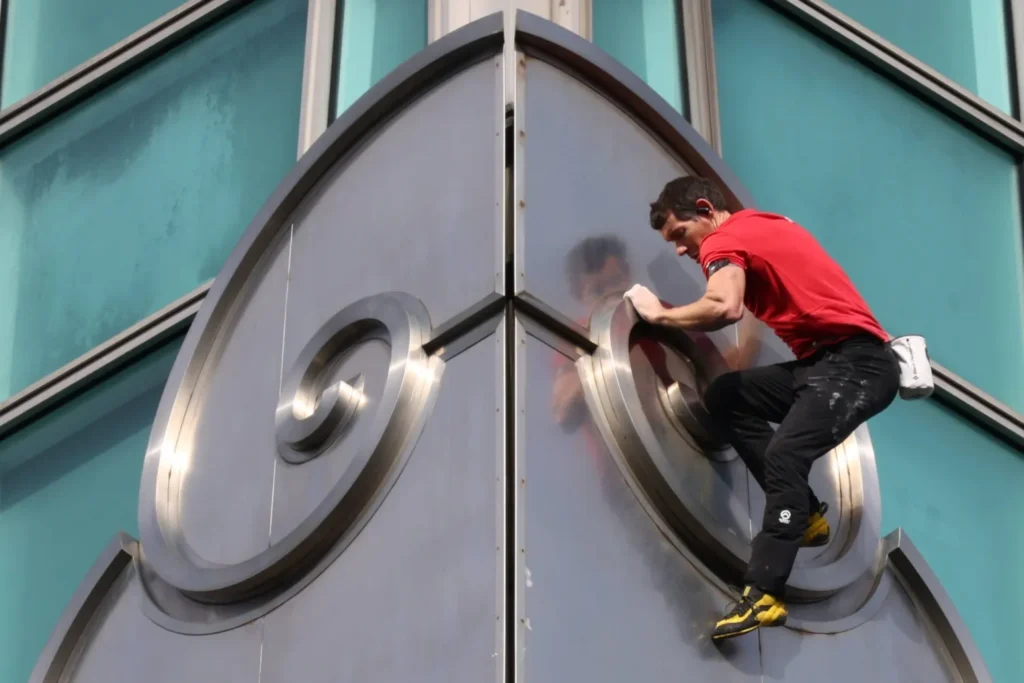
Alex Honnold completed a ropeless ascent of Taipei 101, the 508-meter (1,667-foot) landmark that dominates the capital’s skyline, reaching the spire after 91 minutes of uninterrupted climbing. The ascent, described as a “free solo” climb, was carried out with the approval of building officials and Taipei’s city government and was broadcast live by Netflix, organizers said.
“Sick,” Honnold said upon reaching the top, pausing to take in the view before descending safely. Speaking later to reporters, he described the climb as a rare opportunity to see the city from a perspective few ever experience. The attempt had been delayed by a day because of rain, underscoring the role of weather in an endeavor where even minor miscalculations can prove fatal.
Taipei 101 was the world’s tallest building from 2004 to 2010 before being surpassed by the Burj Khalifa in Dubai, according to Reuters. It remains one of Asia’s most recognizable structures and a symbol of Taiwan’s modern identity. Honnold’s ascent transformed the tower into an arena for what producers billed as the highest urban free-solo climb ever attempted.
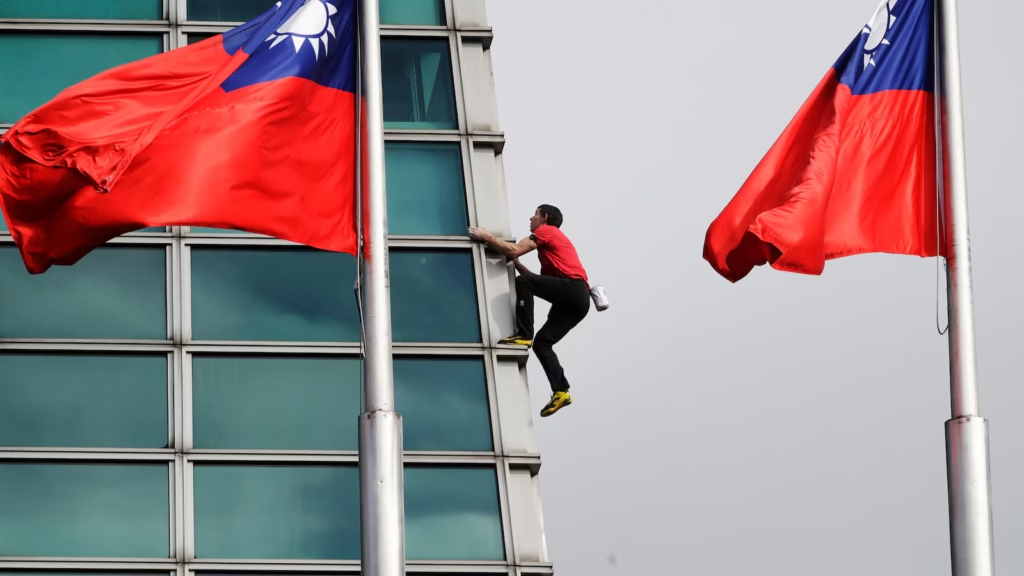
Honnold said he once considered climbing the building without authorization but abandoned the idea out of respect for the structure and those who manage it. He credited cooperation from the building’s owners and local authorities for making the climb possible. Event executive producer James Smith said it was highly unusual for a major skyscraper to grant access for such a high-risk undertaking, calling Taipei 101 “an icon of this country.”
Taiwanese leaders quickly embraced the moment. President Lai Ching-te wrote on Facebook congratulating Honnold for completing the challenge and thanked Netflix for showcasing Taiwan to a global audience more accustomed to seeing the island in headlines about semiconductors or regional security tensions. Through the broadcast, Lai said, viewers also saw “the warmth and passion of the Taiwanese people” and the island’s natural beauty.
The climb added to Taipei 101’s history as a magnet for elite climbers. In 2004, French climber Alain Robert—known as “Spiderman” for his skyscraper ascents—scaled the tower using a safety rope during its opening celebrations, taking nearly four hours in difficult weather. Honnold, by contrast, became the first to climb the structure entirely without ropes, completing the route in less than half the time Robert required.
The announcement of Honnold’s attempt had generated excitement and unease in equal measure. In interviews with The Associated Press before the climb, observers questioned the wisdom of undertaking such a dangerous feat live, particularly given that Honnold is now married and a father of two. His reputation was forged by his ropeless ascent of Yosemite National Park’s El Capitan, documented in the Oscar-winning film “Free Solo,” a climb that many considered unimaginable before he completed it.
Honnold told The Associated Press last year that he chooses objectives that stand apart from anything else around them. He described Taipei 101 as fitting that definition—a singular structure whose scale and exposure offered a new kind of challenge. He said he did not expect the climb to be especially difficult, noting that he had practiced the movements in advance and even consulted Robert on his podcast.
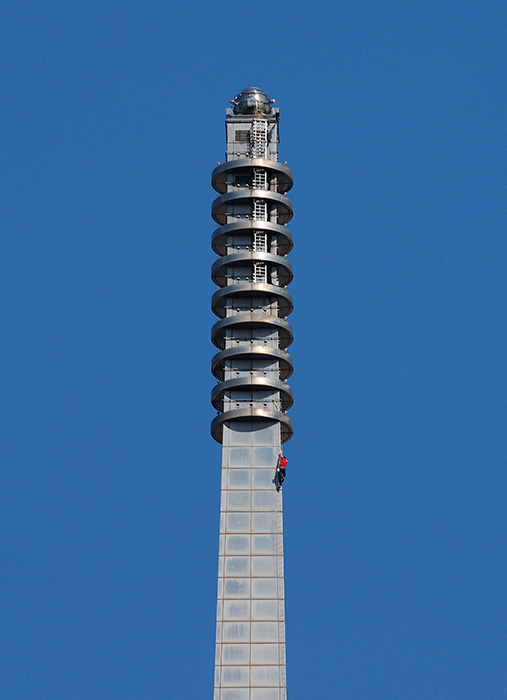
The building’s distinctive design shaped the challenge. Taipei 101 comprises 101 floors, with the most demanding section in the middle, where stacked “bamboo box” segments create steep, overhanging surfaces. Each segment contains eight floors, followed by a balcony that allowed brief rests. Organizers said the broadcast operated on a 10-second delay to allow intervention if something went wrong.
Safety planning extended well beyond the climber himself. Smith said he consulted risk-management specialists early in discussions with Honnold. Cameramen were stationed inside the building, while four high-angle camera operators were suspended on ropes nearby. Professional weather forecasters were also hired to monitor conditions, and Smith said the climb would have been canceled if rain or wind posed unacceptable danger.
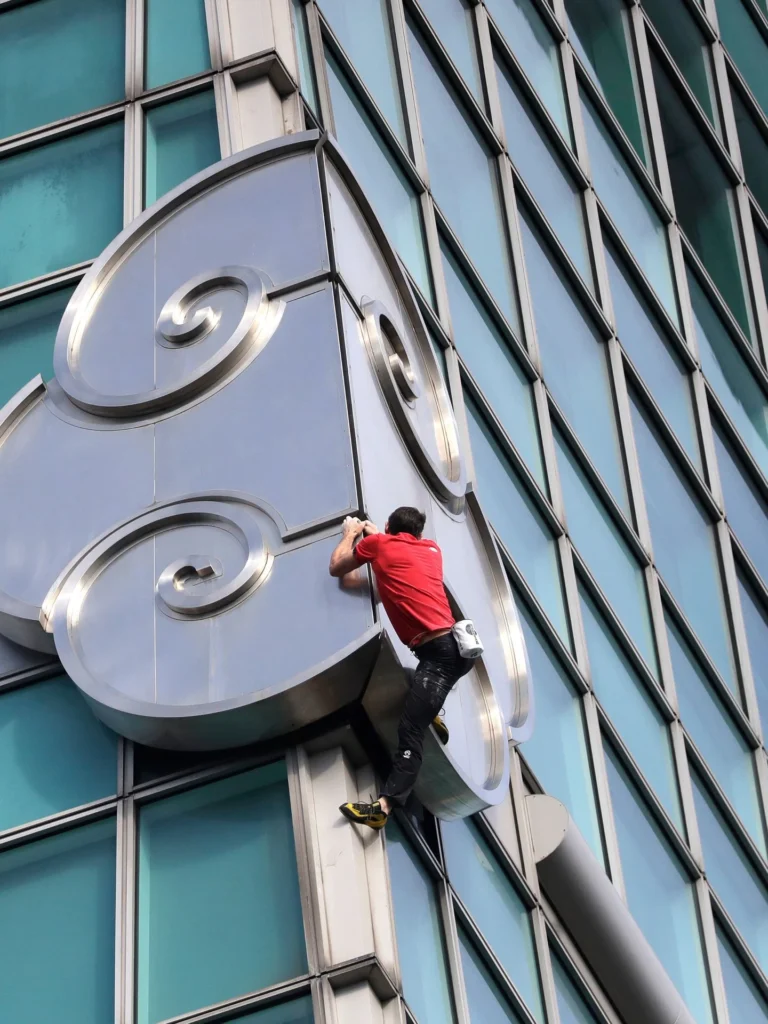
Despite those precautions, the spectacle revived ethical questions about televising extreme risk. Subbu Vincent, director of media and journalism ethics at Santa Clara University, told The Associated Press that it was essential the production not amplify danger for the sake of entertainment. He said the broadcast delay was a critical safeguard and argued that livestreaming should be halted immediately if an accident occurred.
Concerns also center on influence. Free solo climbing has claimed numerous lives, including that of a young climber who fell in Yosemite last year. Separately, a trend known as “roof-topping,” in which people illegally access skyscrapers to take photos from ledges, has resulted in multiple deaths worldwide. Critics worry high-profile broadcasts could encourage imitation.
Jeff Smoot, author of “All and Nothing: Inside Free Soloing,” acknowledged those fears but said risk has always been intrinsic to climbing culture. From the public’s viewpoint, he said, such feats appear as thrill-seeking, while climbers often describe them as meditative and controlled. Smoot admitted he initially questioned why Honnold would climb Taipei 101 without ropes and why it needed to be filmed live, but concluded the danger itself was central to the appeal.
Among local climbers, admiration outweighed concern. Taiwanese rock climber Chin Tzu-hsiang said he grew up staring at Taipei 101 and imagining whether it could be climbed. He described Honnold as a household name among climbers in Taiwan and said his students, some new to the sport, were eager to watch. Chin said he trusted Honnold’s preparation and judgment.
“For him to finish the climb,” Chin said, “it’s like he’s helping us fulfill our dream.”
Beyond the spectacle, the event offered Taiwan a rare moment of global attention untethered from geopolitics. Analysts noted that the images of a lone climber inching up the island’s most famous building conveyed a narrative of openness and confidence, contrasting with the tensions that often frame coverage of the region.
Honnold’s ascent did not eliminate the risks inherent in free soloing, nor did it settle the debate over whether such feats should be broadcast live. What it did accomplish was to push the boundaries of urban climbing and place Taipei 101—once again—at the center of a global conversation, this time about human limits rather than architectural records.




