

United States immigration authorities have expanded a high-profile deportation operation by adding 18 more Nigerians to a federal list of what officials describe as the “worst of the worst” criminal non-citizens, bringing the total number of Nigerians slated for removal to 97.
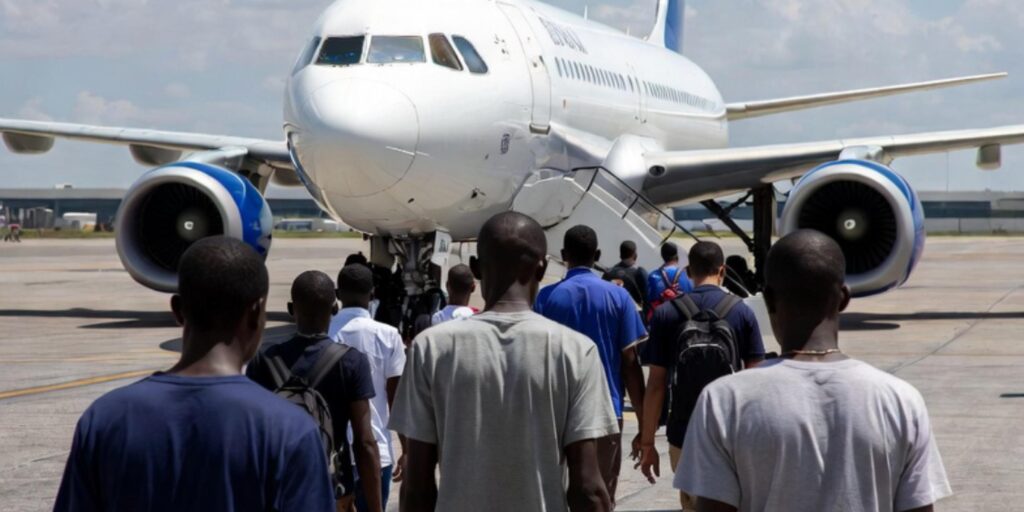
The latest update, published on the Department of Homeland Security website and reviewed Monday, comes just days after PUNCH Metro disclosed that 79 Nigerians convicted of various crimes had been earmarked for deportation under an intensified enforcement drive led by U.S. Immigration and Customs Enforcement.
The addition of new names signals a widening of the operation as the administration of President Donald Trump presses ahead with a nationwide crackdown targeting immigrants with criminal records. DHS officials said the enforcement action is ongoing and forms part of a broader strategy to prioritize the arrest and removal of non-citizens convicted of serious offenses.
Federal records show that the newly added individuals were convicted primarily of financial crimes, including wire fraud, mail fraud and identity theft, offenses U.S. authorities say cause significant harm to victims and undermine public trust.
In a statement accompanying the updated list, the department said ICE officers nationwide are acting under directives to focus first on individuals deemed the highest public-safety risk.
“The U.S. Department of Homeland Security is highlighting the worst of the worst criminal aliens arrested by U.S. Immigration and Customs Enforcement,” the statement said. “Under Secretary Noem’s leadership, the hardworking men and women of DHS and ICE are fulfilling President Trump’s promise and carrying out mass deportations, starting with the worst of the worst.”
Among the Nigerians newly listed for removal are Oluwaseyanu Akinola Afolabi, Olugbeminiyi Aderibigbe, Benjamin Ifebajo, Obinwanne Okeke, Kolawole Aminu, Oluwadamilola Olufunsho Ojo and Franklin Ibeabuchi. Others include Alex Afolabi Ogunshakin, Joshua Ineh, Stephen Oseghale, Eghosa Obaretin, Adesina Surajudeen Lasisi, Ibrahim Ijaoba, Azeez Yinusa, Charles Akabuogu, Kelechi Umeh, Lotenna Chisom Umeadi, Donald Ehie and Chukwudi Kingsley Kalu.
Their inclusion raises the overall number of Nigerians identified for deportation to 97, underscoring the scale of the enforcement push and its impact on one of the largest African immigrant communities in the United States.
Earlier this month, DHS data showed that 79 Nigerians had already been designated as “high-priority criminal aliens.” Those individuals were convicted of offenses ranging from fraud and drug trafficking to robbery, assault and manslaughter, according to federal records published online.
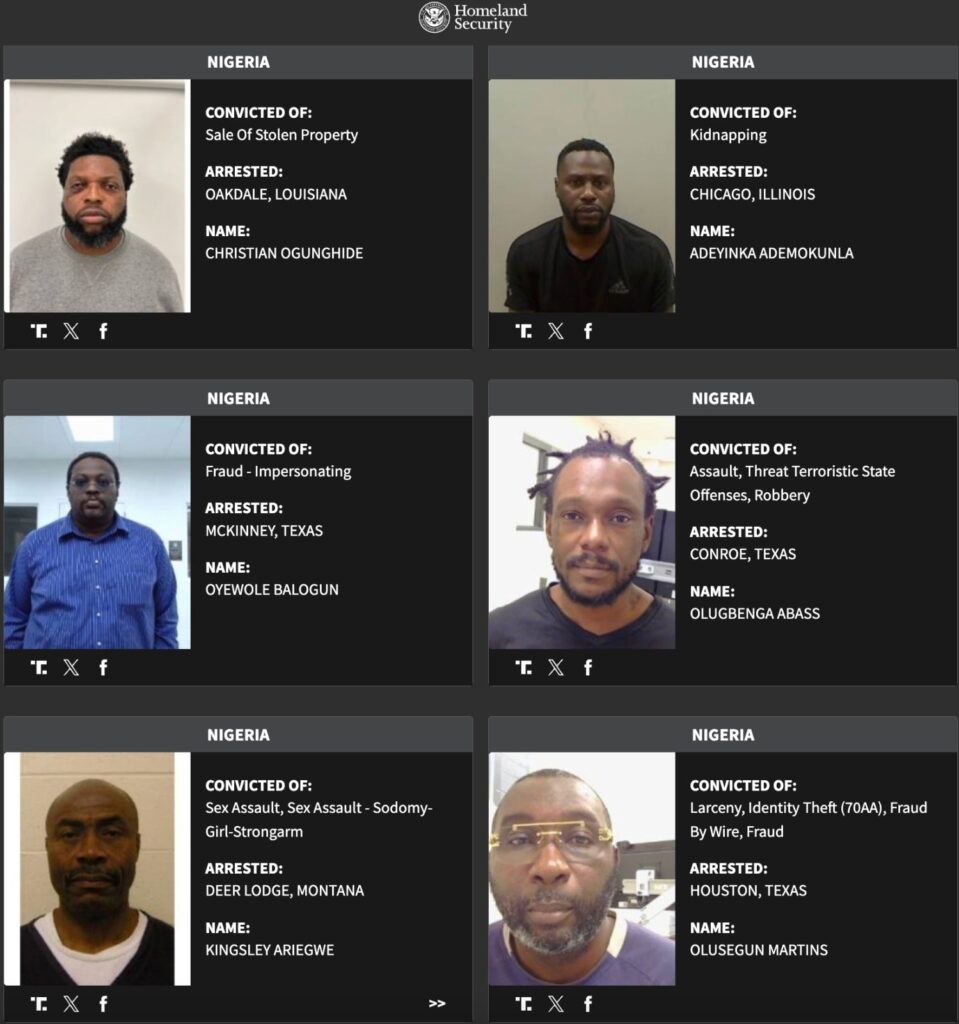
Names previously released by U.S. authorities include Boluwaji Akingunsoye, Ejike Asiegbunam, Emmanuel Mayegun Adeola, Bamidele Bolatiwa, Ifeanyi Nwaozomudoh, Aderemi Akefe, Solomon Wilfred, Chibundu Anuebunwa, Joshua Ineh, Usman Momoh, Oluwole Odunowo and Bolarinwa Salau. Others listed earlier are Oriyomi Aloba, Oludayo Adeagbo, Olaniyi Akintuyi, Talatu Dada, Olatunde Oladinni, Jelili Qudus, Abayomi Daramola, Toluwani Adebakin, Olamide Jolayemi, Isaiah Okere, Benji Macaulay and Joseph Ogbara.
Additional names published by DHS and cited by PRNigeria include Olusegun Martins, Kingsley Ariegwe, Olugbenga Abass, Oyewole Balogun, Adeyinka Ademokunla, Christian Ogunghide, Christopher Ojuma, Olamide Adedipe, Patrick Onogwu, Olajide Olateru Olagbegi and Omotayo Akinto. Others listed are Kenneth Unanka, Jeremiah Ehis, Oluwafemi Orimolade, Ayibatonye Bienzigha, Uche Diuno, Akinwale Adaramaja, Boluwatife Afolabi, Chinonso Ochie, Olayinka A. Jones, Theophilus Anwana, Aishatu Umaru and Henry Idiagbonya.
The DHS records further name Bernard Ogie Oretekor, Abiemwense Obanor, Olufemi Olufisayo Olutiola, Chukwuemeka Okorie, Abimbola Esan, Elizabeth Miller, Chima Orji, Adetunji Olofinlade, Abdul Akinsanya, Elizabeth Adeshewo, Dennis Ofuoma, Quazeem Adeyinka, Ifeanyi Okoro, Oluwaseun Kassim, Olumide Bankole Morakinyo, Abraham Ola Osoko, Oluchi Jennifer and Chibuzo Nwaonu.
U.S. officials say the list spans multiple states, reflecting what DHS describes as a coordinated national effort to enforce immigration laws and remove individuals convicted of crimes. The department maintains that the focus is not on nationality but on criminal history and public safety risk.
The stepped-up enforcement has drawn attention within immigrant communities and sparked renewed debate over the administration’s immigration agenda. Advocacy groups say the visibility of the operations, including coordinated arrests and raids, has created fear in several U.S. cities. Reports indicate that some Nigerian nationals have gone into hiding, while others are making plans to leave the country voluntarily amid uncertainty over enforcement actions.
DHS officials, however, argue that the measures are necessary to strengthen national security and uphold the rule of law. They emphasize that those targeted have been convicted of crimes and exhausted legal avenues to remain in the United States.
The expansion of the deportation list also highlights broader diplomatic and social implications for Nigeria, which has seen a steady flow of returnees in recent years as U.S. and European immigration enforcement tightens. Analysts say the latest development could strain family networks, affect remittance flows and raise questions about reintegration support for deported individuals.
At the same time, the Trump administration’s approach reflects a campaign promise to prioritize removals of criminal non-citizens, a policy officials say will continue as ICE officers conduct further investigations and arrests nationwide.
Punchng




