

WASHINGTON — The United States Department of Homeland Security has expanded its deportation priority list targeting Kenyan nationals with criminal convictions from 15 to 28 individuals over approximately two months, officials disclosed, as the Trump administration intensifies enforcement operations against undocumented immigrants and foreign nationals convicted of crimes.
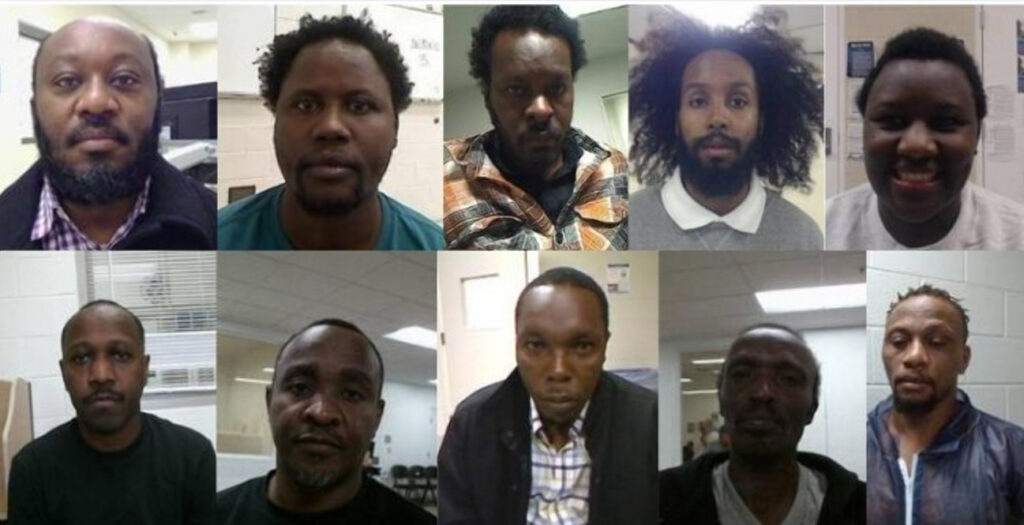
The expansion follows a heightened crackdown by President Donald Trump’s administration on immigrants who have been arrested and convicted of various offenses and are considered dangerous by federal authorities. Over the past 50 days, DHS has added 13 additional Kenyan nationals to what the agency characterizes as its “worst of the worst” list of undocumented immigrants facing deportation.
The phrase “worst of the worst” is terminology used by U.S. security agencies to refer to individuals believed to pose significant public safety threats based on criminal convictions or alleged activities.
The database was launched in December to track undocumented immigrants who have been arrested and convicted across all 50 states. Homeland Security said the platform is intended to increase transparency around immigration enforcement, particularly ahead of the World Cup tournament beginning in the United States this July.
The expanded list includes Kenyan nationals convicted of offenses including drug trafficking, armed robbery, homicide, assault, child molestation and cruelty toward children, DHS disclosed. Additional charges against listed individuals include aggravated assault with a weapon, flight to evade prosecution, simple assault, terror-related threats, money laundering and check forgery.
Some are accused of driving under the influence, domestic violence, robbery, fraud, kidnapping a minor, violation of court orders and receiving stolen property, according to the database.
In a statement on Jan. 20, 2026, the Department of Homeland Security said it has removed more than 670,000 undocumented immigrants, including individuals convicted of murder, child sexual abuse, rape, gang activity and terrorism-related offenses, from the United States.
“On President Trump’s first day in office, he unleashed ICE to target the worst of the worst criminal illegal aliens, including pedophiles, murderers, gang members, terrorists, and rapists,” Assistant Secretary Tricia McLaughlin said.
She added, “Today, we thank our law enforcement for a record-breaking first year of achievements, including more than 670,000 removals and two million self-deportations.”
The self-deportation figure of 2 million represents individuals who left the country voluntarily rather than through formal removal proceedings, though independent verification of that statistic was not immediately available.
To accelerate enforcement operations, the U.S. government launched a self-deportation application designed to facilitate voluntary departures. The Trump administration has also announced substantial increases in Immigration and Customs Enforcement funding, though the specific $9 trillion figure cited in some reports could not be independently confirmed and appears inconsistent with federal budget allocations.
On Monday, Jan. 19, the Department of Homeland Security announced it had increased compensation for voluntary departure from approximately $1,000 to $2,600 for undocumented immigrants willing to leave the country without contesting removal proceedings.
The announcement specified that payments would only be disbursed to individuals who register for voluntary departure through the Customs and Border Protection application. Homeland Security said that beyond the financial incentive, participants would receive complimentary transportation to their countries of origin.
The Kenyan nationals included on the expanded list face formal removal proceedings through immigration courts, where they can contest deportation orders, seek relief from removal or accept voluntary departure. The criminal convictions that placed individuals on the priority list do not automatically result in deportation but significantly increase enforcement focus on those cases.
For Kenya, the expanded list represents a relatively small portion of the estimated thousands of Kenyan nationals living in the United States without legal authorization, though the 28 individuals face the highest priority for removal given their criminal histories.
The database’s public accessibility creates transparency about enforcement priorities while raising privacy concerns about individuals who may contest charges or whose cases remain under judicial review. Whether all 28 Kenyan nationals have exhausted appeals or whether some retain legal options to remain in the United States could not be determined from available information.
The timing of the list expansion ahead of the World Cup tournament reflects DHS concerns about security during major international events that attract large crowds and global attention. Previous major sporting events in the United States have prompted temporary enforcement surges and enhanced vetting procedures for foreign visitors.
The self-deportation incentive program represents an attempt to reduce removal costs and immigration court backlogs by encouraging voluntary departures. The increased payment from $1,000 to $2,600 suggests the administration believes financial incentives can motivate departures more effectively than enforcement alone, though whether the program attracts significant participation remains to be determined.
For the Kenyan community in the United States, which includes both documented and undocumented immigrants, the expanded enforcement focus creates anxiety beyond the 28 individuals specifically targeted. Heightened ICE operations often affect broader immigrant populations through workplace raids, traffic stops and community enforcement actions that can ensnare individuals without criminal records.
The criminal offenses cited for the 28 Kenyan nationals range from serious violent crimes to relatively minor infractions, creating questions about prioritization criteria and whether inclusion on the “worst of the worst” list accurately reflects threat levels for all individuals designated.
kenyans.co.ke




