

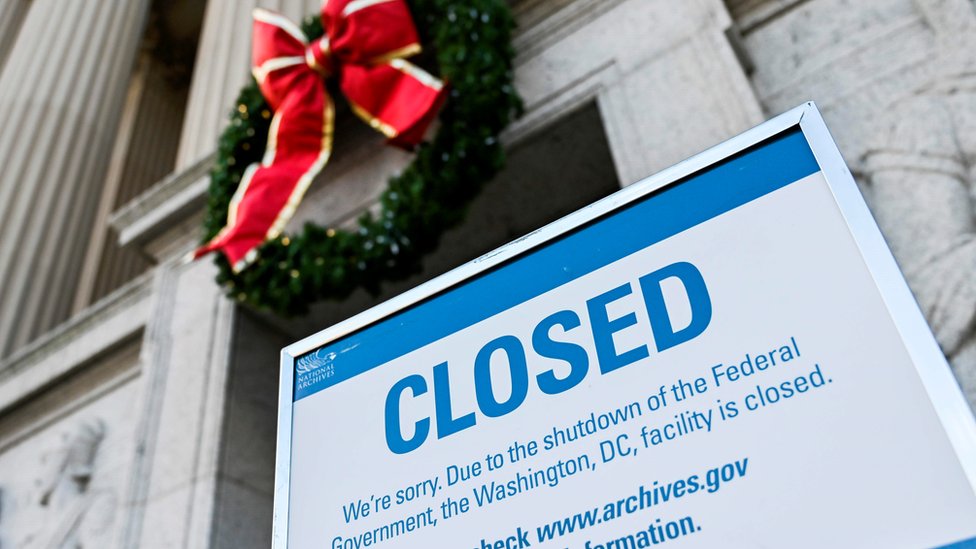
Washington (BN24) – The U.S. government officially shut down at midnight after President Donald Trump and Congress failed to reach an agreement on extending federal funding, leaving hundreds of thousands of federal workers facing furloughs or working without pay. The closure marks the first government shutdown since Trump’s first term in 2018, when the impasse lasted a record 34 days into early 2019.

The standoff has paralyzed Washington, with Democrats and Republicans locked in a bitter dispute over health care funding and budget priorities. Democrats are demanding renewed federal subsidies for health insurance and assurances that Trump will not continue withholding congressionally approved spending. Republicans, meanwhile, insist on a “clean” temporary funding bill with no additional provisions, accusing Democrats of holding the government “hostage.”
Despite Republicans controlling both chambers of Congress, Senate rules requiring 60 votes for passage meant bipartisan support was necessary. On Tuesday, both a GOP-backed measure and a Democratic proposal failed in the Senate just hours before the deadline. Three Senate Democrats—John Fetterman of Pennsylvania, Angus King of Maine, and Catherine Cortez Masto of Nevada—broke ranks to support the Republican plan, but it fell short of the necessary votes.
As the shutdown takes effect, the Congressional Budget Office estimates that about 750,000 federal employees will be furloughed each day, while essential workers such as TSA agents, air traffic controllers, law enforcement officers, and military personnel will continue to work without pay. Although employees are legally entitled to back pay when the government reopens, the CBO projected that compensation for furloughed workers alone will cost taxpayers about $400 million.
National parks will remain partially open, though services will be limited. Social Security and Medicare benefits will continue unaffected, but new applications could face delays. Airports, hospitals, and federal agencies are bracing for disruptions as the shutdown drags on.
The White House has shown little sign of compromise. Administration officials argue Democrats will ultimately face public backlash for refusing to approve temporary funding. “It’ll be hard for Democrats to explain why they are blocking a clean bill to keep the government open,” one White House official said. Trump himself suggested Tuesday that the shutdown could be an opportunity to dismiss “many” federal employees permanently.
Democratic leaders, however, insist Republicans are to blame for rejecting bipartisan negotiations. “Republicans are plunging America into a shutdown — rejecting bipartisan talks, pushing a partisan bill and risking Americans’ health care worst of all,” Senate Minority Leader Chuck Schumer said.
The war of words has intensified, with the political battle extending beyond Capitol Hill. A White House meeting Monday between Trump, Schumer, and House Minority Leader Hakeem Jeffries yielded no progress, instead devolving into new hostilities. Hours later, Trump shared an artificial intelligence–generated video mocking the two Democrats, prompting Jeffries to call the president a coward.
Polling suggests both sides risk public backlash. A New York Times survey found that 26% of Americans would primarily blame Trump and Republicans for a shutdown, 19% would blame Democrats, while 33% said both sides equally. A Marist poll showed similar results, with 38% blaming Republicans, 27% Democrats, and 31% both parties.
Republican leaders have hinted that the political dynamics could shift once the economic pain of a shutdown sets in. Senate Majority Leader John Thune of South Dakota said he expects cracks to appear among Democrats as pressure builds. “The cracks in the Democrats are already showing,” he told reporters.
Still, Democrats show no signs of backing down, with party leaders under pressure from their base to confront Trump aggressively in his second term. “The next time you have something to say about me, don’t cop out through a racist and fake AI video,” Jeffries said on the Capitol steps Tuesday. “When I’m back in the Oval Office, say it to my face.”
White House budget director Russell Vought instructed federal agencies hours before the deadline to “execute their plans for an orderly shutdown,” underscoring the administration’s expectation that the stalemate could last.
Sen. Lindsey Graham, R-S.C., predicted the impasse could extend at least into next week. “I don’t think anything’s going to happen until the House gets back,” he said. “Then people can sit down and find a way to get it done.”
With no negotiations scheduled, it remains unclear when the government will reopen, as both sides brace for a protracted battle over funding, health care, and Trump’s policies.




