

The U.S. military is preparing for the possibility of extended operations against Iran that could last for weeks if President Donald Trump authorizes military action, according to two U.S. officials familiar with the planning, raising the prospect of a conflict more prolonged and complex than prior confrontations between the two countries.
The officials, who spoke on condition of anonymity due to the sensitivity of operational deliberations, described contingency planning that goes beyond a limited strike scenario. Their account was first disclosed by Reuters.
The preparations unfold as diplomatic efforts remain fragile. U.S. and Iranian representatives met in Oman last week in an attempt to revive negotiations over Tehran’s nuclear program. Those talks followed a significant buildup of American military assets in the Middle East ordered by Trump, a move that intensified speculation about potential military action.
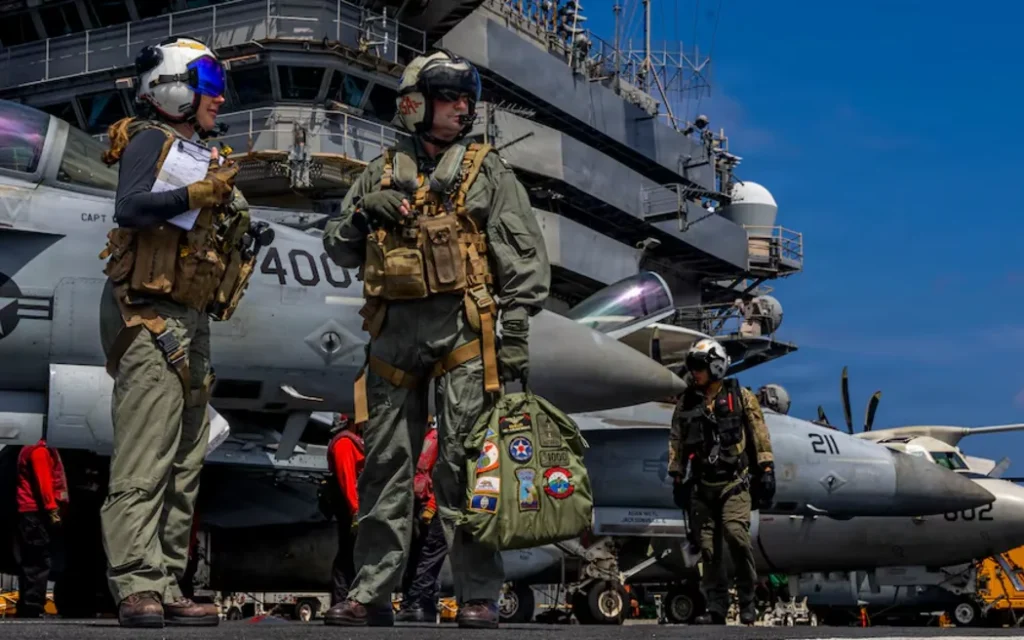
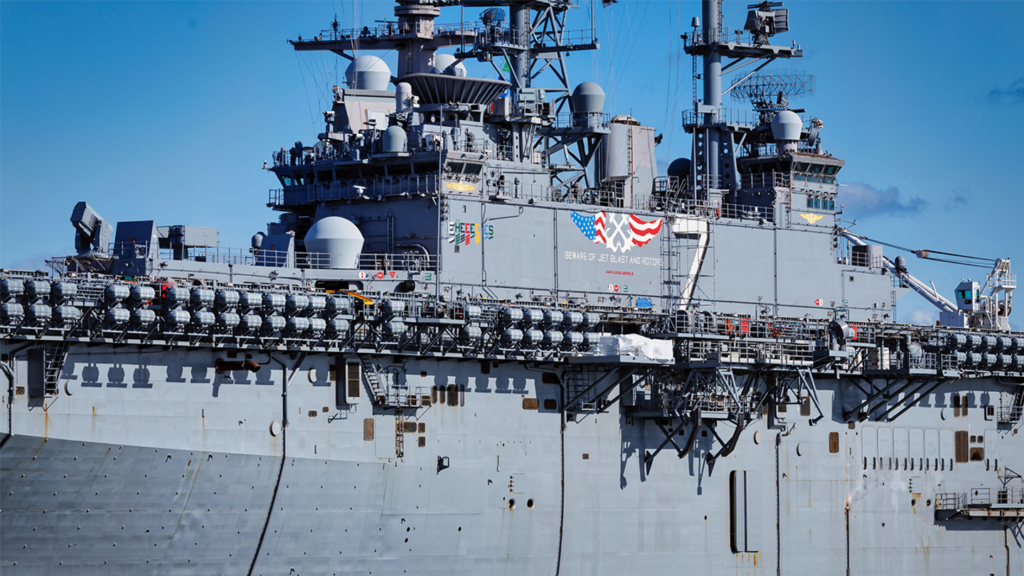
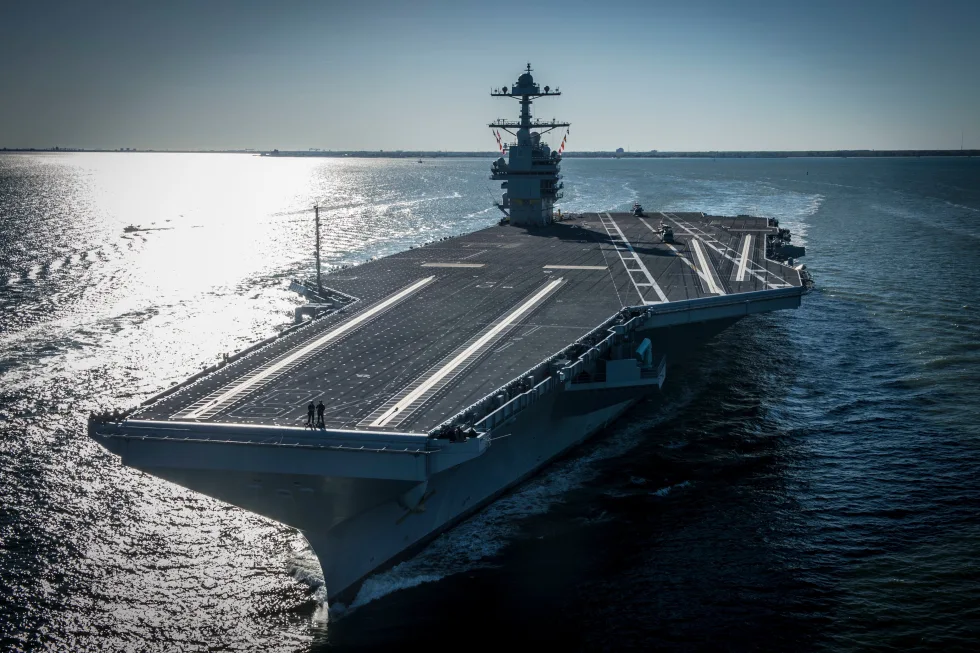
On Friday, Pentagon officials confirmed that an additional aircraft carrier strike group would be deployed to the region, reinforcing an already substantial U.S. presence that includes thousands of troops, fighter aircraft and guided-missile destroyers. The carrier is expected to join the USS Abraham Lincoln, which has been operating in the area. Reuters also reported that the USS Gerald R. Ford is being repositioned toward the Middle East.
Speaking to troops at a base in North Carolina on Friday, Trump acknowledged difficulties in reaching an agreement with Tehran.
“It’s been difficult to make a deal,” Trump said. “Sometimes you have to have fear. That’s the only thing that really will get the situation taken care of.”
White House spokesperson Anna Kelly said the president has not foreclosed any options. “President Trump has all options on the table with regard to Iran,” Kelly said, adding that he considers a range of viewpoints before determining what best protects U.S. national security interests.
The Pentagon declined to elaborate on operational specifics.
The planning described by U.S. officials suggests a more expansive approach than previous U.S. military actions targeting Iran.
Last year, the United States launched a strike known as “Midnight Hammer,” a one-time operation involving stealth bombers flying from the U.S. mainland to attack Iranian nuclear facilities. Iran responded with a limited retaliatory strike against a U.S. installation in Qatar, and the exchange did not escalate into broader hostilities.
This time, however, officials indicated that contingency plans contemplate a sustained campaign. One official said that in such a scenario, U.S. forces could strike not only nuclear infrastructure but also Iranian state and security facilities. The official declined to identify specific targets.
The scope of planning reflects concern that any conflict would not remain narrowly confined. Iran maintains a sizable arsenal of ballistic and cruise missiles, as well as proxy forces across the region capable of targeting U.S. assets and allies.
Iran’s Islamic Revolutionary Guard Corps has warned that attacks on Iranian territory would trigger retaliation against U.S. military installations throughout the Middle East.
The United States operates bases in Jordan, Kuwait, Saudi Arabia, Qatar, Bahrain, the United Arab Emirates and Turkey, positioning American forces within range of Iranian missiles and drone capabilities.
The military preparations unfold amid delicate diplomatic maneuvering. Iranian officials have signaled willingness to discuss limits on their nuclear program in exchange for sanctions relief but have ruled out linking negotiations to their ballistic missile program.
Trump has repeatedly threatened military action over Iran’s nuclear activities, missile development and internal crackdowns. On Thursday, he cautioned that absent a diplomatic breakthrough, the alternative would be “very traumatic.”
Israeli Prime Minister Benjamin Netanyahu met with Trump in Washington earlier this week, emphasizing that any agreement with Tehran must address security concerns vital to Israel. Netanyahu has long urged Washington to adopt a harder line toward Iran’s missile program and its support for militant groups.
The renewed U.S. force posture appears designed both to deter Iran and to strengthen Washington’s leverage in negotiations. Whether it will produce diplomatic movement or provoke further escalation remains uncertain.
A sustained U.S. military campaign against Iran would represent a significant departure from prior limited engagements and would carry heightened risks of regional war.
Iran’s missile inventory and regional proxy networks differentiate it from adversaries targeted in previous U.S. operations. A prolonged exchange could involve strikes not only between U.S. and Iranian forces but also indirect confrontations involving allied militias in Iraq, Syria, Lebanon and Yemen.
Military analysts note that extended operations could strain U.S. logistics and require defensive deployments to protect American installations across the Gulf. The presence of multiple aircraft carriers enhances offensive capabilities but also presents high-value targets in a missile-rich environment.
There is also the economic dimension. Escalation could disrupt shipping lanes in the Strait of Hormuz, through which a significant portion of global oil supplies transit, potentially triggering energy market volatility.
At the same time, Trump’s strategy appears calibrated to maximize pressure without necessarily crossing into open conflict. By signaling readiness for weeks-long operations, Washington may be seeking to reinforce deterrence and compel concessions at the negotiating table.
Whether Iran interprets the buildup as leverage for diplomacy or as preparation for imminent attack could determine the trajectory of the crisis.
For now, U.S. officials say no final decision has been made. But with additional naval power en route and contingency plans in place, the window for a diplomatic resolution may narrow as military preparations accelerate.




