

The United States has imposed sanctions on eight Nigerians accused of ties to Boko Haram, the Islamic State of Iraq and the Levant, and cybercrime networks, freezing any assets under U.S. jurisdiction and barring American individuals and companies from conducting business with them.
The designations were detailed in a Feb. 10 update to the U.S. Treasury Department’s Office of Foreign Assets Control publication titled “Specially Designated Nationals and Blocked Persons List,” a 3,000-page registry that serves as formal notice of individuals and entities subject to economic penalties.
In its notice, OFAC said the publication functions as a compliance guide, alerting financial institutions and the public to enforcement actions involving individuals “whose property is blocked” under U.S. sanctions authorities. The agency described the measures as part of broader counterterrorism and national security efforts aimed at disrupting financial support networks linked to extremist organizations.
The sanctions freeze all property and interests in property of the named individuals that fall within U.S. jurisdiction. U.S. persons are generally prohibited from engaging in transactions with them under Executive Order 13224, a counterterrorism authority first issued after the Sept. 11 attacks and subsequently expanded.
Among those listed is Salih Yusuf Adamu, also known as Salihu Yusuf, born Aug. 23, 1990, in Nigeria. OFAC identified him as having connections to Boko Haram. He was one of six Nigerians convicted in 2022 in the United Arab Emirates for establishing a Boko Haram financing cell. Emirati authorities determined the group attempted to move $782,000 from Dubai to Nigeria to support insurgent activity.
Also designated was Babestan Oluwole Ademulero, born March 4, 1953, who appeared under multiple aliases including Wole A. Babestan and Olatunde Irewole Shofeso. He was sanctioned under the SDNTK counterterrorism authority.
The list further includes Abu Abdullah ibn Umar Al-Barnawi, also known as Ba Idrisa; Abu Musab Al-Barnawi, also identified as Habib Yusuf; Khaled, or Khalid, Al-Barnawi; Ibrahim Ali Alhassan; and Abu Bakr ibn Muhammad ibn Ali Al-Mainuki, also known as Abu-Bilal Al-Minuki. U.S. authorities associated those individuals with Boko Haram or ISIL-related activities. Several were born in Maiduguri or other areas of Borno State, a region that has long been at the center of Nigeria’s insurgency.
In addition to terrorism-related designations, Nnamdi Orson Benson, born March 21, 1987, was placed under CYBER2 sanctions authorities for cyber-related offenses.
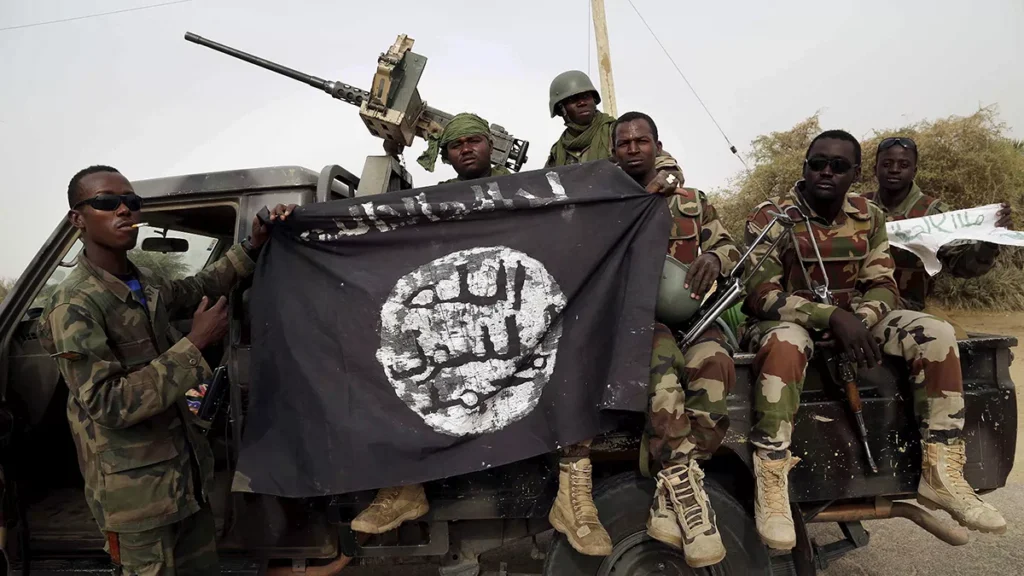
The U.S. formally designated Boko Haram as a Foreign Terrorist Organization in 2013. The State Department has said the group has carried out thousands of killings across northern and northeastern Nigeria and in parts of Cameroon, Chad and Niger since 2009.
The sanctions announcement comes amid heightened scrutiny in Washington over security conditions in Nigeria. Punchng noted that members of the U.S. Congress recently urged visa restrictions and asset freezes targeting individuals and organizations accused of religious freedom violations and persecution of Christians.
Separately, The Guardian Nigeria reported that U.S. lawmakers recommended visa bans and asset freezes against former Kano State Gov. Rabiu Kwankwaso, the Miyetti Allah Cattle Breeders Association of Nigeria and Miyetti Allah Kautal. Those recommendations were referenced in discussions surrounding the OFAC publication, though formal sanction status depends on Treasury determinations.
OFAC emphasized that its publication provides “actual notice of actions” taken against designated persons and entities to assist compliance with sanctions programs administered by the department.
In October 2025, President Donald Trump announced that Nigeria would again be placed on the U.S. State Department’s list of “Countries of Particular Concern,” citing allegations of religious persecution. Nigeria had previously been added to the list in 2020 during Trump’s first term but was removed in 2021 under President Joe Biden.
Under U.S. law, the secretary of state may designate countries that have repeatedly provided support for acts of international terrorism or engaged in severe violations of religious freedom. Such determinations can trigger restrictions under the National Defense Authorization Act, the Arms Export Control Act and the Foreign Assistance Act.
While the latest sanctions target specific individuals rather than the Nigerian government, the move underscores Washington’s sustained focus on counterterrorism financing and cyber-enabled threats originating from or linked to West Africa.
Analysts say sanctions serve both punitive and preventative purposes. By blocking access to the U.S. financial system, the Treasury Department aims to limit the ability of designated individuals to move funds internationally, acquire weapons or coordinate cross-border networks. Even when targeted individuals hold limited assets in the United States, their designation can deter banks and institutions worldwide from facilitating transactions due to compliance risks.
The inclusion of cybercrime-related sanctions alongside terrorism designations reflects the expanding scope of U.S. enforcement tools. Financial crimes and digital fraud operations have increasingly intersected with extremist financing models, according to security experts, complicating efforts to dismantle illicit networks.
At the same time, sanctions often carry diplomatic implications. Nigeria remains a key U.S. partner in Africa, particularly in counterterrorism cooperation and regional stability initiatives. Expanded designations could add strain to bilateral discussions, especially against the backdrop of religious freedom debates and political sensitivities.
Security observers note that Boko Haram has splintered over the past decade, with factions aligning at times with ISIL-affiliated groups. Although Nigerian authorities have reported military gains against insurgents, sporadic attacks continue in the northeast and surrounding Lake Chad Basin.
For Washington, the latest Treasury action signals continuity in a sanctions-based strategy that has evolved over more than a decade of counterterrorism operations in Nigeria and neighboring states. Whether the designations significantly disrupt financing pipelines remains to be seen, but they reinforce a broader U.S. effort to leverage economic tools against militant and cyber-linked threats.
The Treasury Department did not indicate whether additional designations are forthcoming.




