

U.S. military forces seized the Olina tanker in the Caribbean on Friday, marking the fifth vessel captured in recent weeks as the Trump administration intensifies efforts to enforce a comprehensive blockade of Venezuelan oil exports following the military operation that removed President Nicolás Maduro from power.
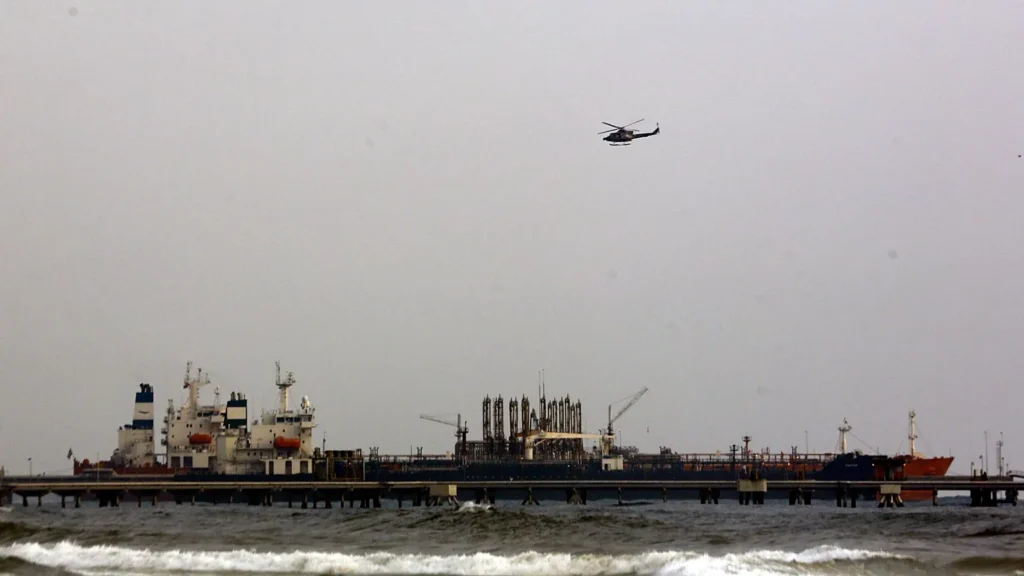
In a predawn operation, marines and sailors from Joint Task Force Southern Spear, launched from the aircraft carrier USS Gerald R. Ford, apprehended the Olina in Caribbean waters “without incident,” U.S. Southern Command announced on X. The seizure demonstrated continued American willingness to use military force to control petroleum flows from Venezuela despite international criticism characterizing the blockade as resource theft.
“Once again, our joint interagency forces sent a clear message this morning: ‘there is no safe haven for criminals,'” Southern Command declared, framing the tanker seizure as law enforcement rather than economic warfare against a sovereign nation whose government the United States forcibly removed.
The Olina, which according to public shipping database Equasis was falsely flying the flag of Timor-Leste, had previously departed from Venezuela and returned to the region carrying a full cargo of crude oil, according to an industry source with direct knowledge of the vessel’s movements.
The ship left Venezuela last week fully loaded as part of a flotilla that departed shortly after U.S. forces captured President Maduro on January 3, and was returning with its cargo following implementation of the American oil export blockade.
According to the Associated Press, Southern Command and Homeland Security Secretary Kristi Noem both posted unclassified footage on social media showing a U.S. helicopter landing on the vessel and American personnel conducting searches of the deck while tossing what appeared to be an explosive device in front of a door leading to the ship’s interior—imagery suggesting breaching operations to access secured areas where crew members may have barricaded themselves.
In her social media post, Noem characterized the ship as “another ‘ghost fleet’ tanker ship suspected of carrying embargoed oil” that had departed Venezuela “attempting to evade U.S. forces.” The “ghost fleet” designation refers to aging tankers operated through opaque ownership structures designed to circumvent sanctions by disabling tracking systems, using false flags, and conducting ship-to-ship transfers at sea.
The Olina represents the fifth tanker seized by U.S. forces as part of President Donald Trump’s strategy to control production, refining, and global distribution of Venezuela’s petroleum products following Maduro’s ouster.
The escalating maritime interdiction campaign has effectively blockaded Venezuela’s primary revenue source, preventing the country from earning foreign currency through oil sales except under American supervision.
Samir Madani, co-founder of TankerTrackers.com, stated his organization used satellite imagery and surface-level photographs to document that at least 16 tankers departed the Venezuelan coast in contravention of the quarantine U.S. forces established to block sanctioned ships from conducting trade.
The Olina was among that flotilla, suggesting that despite five vessel seizures, most tankers attempting to transport Venezuelan crude have successfully evaded American interdiction.
U.S. government records show the Olina was sanctioned for transporting Russian oil under its prior name, Minerva M, when registered in Panama. The vessel’s history of sanctions violations and flag changes exemplifies the shadow fleet’s operational patterns where ships frequently alter names, registrations, and ownership documentation to evade enforcement while continuing to transport embargoed petroleum.
While current records show the Olina flying Timor-Leste’s flag, international shipping registries list it as having a false flag, meaning the claimed registration is invalid. In July, the vessel’s registered owner and manager changed to a Hong Kong company—a corporate restructuring typical of sanctions evasion strategies employing shell companies in jurisdictions with limited transparency or cooperation with Western enforcement.
According to ship tracking databases, the Olina last transmitted its location in November in the Caribbean north of Venezuela’s coast.
Since then the vessel operated with its location beacon disabled—a practice called “going dark” that sanctions-evading ships employ to avoid satellite tracking that enforcement agencies use to monitor petroleum smuggling operations.
While Noem and military officials framed the seizure as law enforcement, other Trump administration officials have explicitly characterized vessel captures and oil confiscation as revenue generation mechanisms as they pursue plans to rebuild Venezuela’s deteriorated petroleum infrastructure and control the country’s economy.
In an early morning post on his Truth Social network, Trump stated that the U.S. and Venezuela “are working well together, especially as it pertains to rebuilding, in a much bigger, better, and more modern form, their oil and gas infrastructure.”
The optimistic characterization of bilateral cooperation notably omitted mention that such “cooperation” occurs under threat of continued military action against a country whose president the United States kidnapped and whose acting government faces explicit threats of violence if it fails to comply with American demands.
The administration announced expectations to sell 30 million to 50 million barrels of sanctioned Venezuelan oil, with proceeds allegedly benefiting both American and Venezuelan populations—though the distribution mechanisms and whether Venezuela would actually receive significant revenues remain unclear.
Trump expects the arrangement to continue indefinitely as he meets Friday with executives from 17 oil companies to discuss investing $100 billion in Venezuela to repair and upgrade oil production and distribution infrastructure.
Vice President JD Vance told Fox News this week that the United States can “control” Venezuela’s “purse strings” by dictating where its oil can be sold, making explicit that American policy aims to establish long-term control over Venezuelan petroleum revenues rather than simply enforcing temporary sanctions during a transition period.
Madani estimated the Olina carries 707,000 barrels of oil which, at current market prices of approximately $60 per barrel, would be worth more than $42 million. The substantial cargo value illustrates the financial stakes in each tanker seizure, with five captured vessels potentially containing over $200 million in petroleum that the U.S. plans to sell while claiming authority to confiscate and liquidate Venezuelan state assets.
“The vessel’s AIS (location) tracker was last active 52 days ago in the Venezuelan EEZ, northeast of Curacao,” British maritime risk management company Vanguard stated separately.
“The seizure follows a prolonged pursuit of tankers linked to sanctioned Venezuelan oil shipments in the region,” indicating that U.S. forces tracked the vessel for weeks before executing the capture operation.
Reuters reported that the United States imposed sanctions on the Olina in January 2024 when it operated as the Minerva M, designating it as part of the “shadow fleet” of ships that sail with minimal regulation or known insurance.
Shadow fleet vessels often lack legitimate maritime insurance, creating environmental risks if accidents occur since no insurers would pay for spill cleanup or compensate affected parties.
The M Sophia, another tanker from the flotilla of approximately a dozen vessels that departed Venezuela earlier this month, was seized by U.S. forces earlier this week, demonstrating systematic American efforts to intercept multiple ships from the same convoy rather than isolated vessel captures.
Three vessels—Skylyn, Min Hang, and Merope—all fully loaded and part of the same flotilla that departed last week, sailed back to Venezuelan waters on Thursday, according to the industry source.
Seven additional tankers from that flotilla, also carrying full cargoes, were scheduled to return to Venezuelan waters Friday and Saturday, the source stated.
All petroleum aboard these ten returning tankers is owned by Venezuelan state producer PDVSA, the source added, indicating that Venezuela successfully exported at least ten full tanker loads despite the American blockade—a significant percentage of the flotilla that evaded interdiction. PDVSA did not immediately respond to requests for comment about the returning vessels or the overall impact of American seizures on export operations.
It remained unclear whether Washington would take action against other tankers sailing toward Venezuela, though the return of ten vessels suggests either that U.S. forces lack sufficient assets to intercept all targets or that officials are selectively capturing ships to demonstrate enforcement capability while allowing some trade to continue. The selective interdiction creates unpredictability for tanker operators while avoiding a total blockade that might trigger more severe international condemnation.
The U.S. blockade of sanctioned Venezuelan oil remains in full effect “anywhere in the world,” Defense Secretary Pete Hegseth stated Wednesday, indicating that American forces claim authority to seize Venezuelan petroleum regardless of where tankers operate globally rather than limiting interdiction to Caribbean waters near Venezuela.
The assertion of worldwide enforcement authority raises profound questions about international law and maritime sovereignty. While the United States can legally intercept vessels in international waters under certain circumstances, claiming blanket authority to seize any ship carrying Venezuelan crude anywhere on Earth dramatically expands American power projection beyond traditional legal frameworks governing maritime interdiction.
For Venezuela’s acting government led by Delcy Rodríguez, the blockade creates impossible circumstances. The country desperately needs petroleum revenues to pay government salaries, import food and medicine, and maintain basic services, yet American interdiction prevents earning such revenues except through arrangements where Washington controls sales and dictates profit distribution. The economic strangulation provides leverage compelling Venezuelan cooperation with Trump administration demands while demonstrating the costs of resistance.
International maritime law experts have questioned whether comprehensive petroleum blockades constitute acts of war requiring congressional authorization, though the Trump administration characterizes actions as sanctions enforcement and law enforcement operations rather than military blockades.
The semantic distinction becomes important for domestic legal challenges to presidential authority, though the practical effect—preventing a country from exporting its primary commodity through military force—resembles traditional naval blockades regardless of terminology.
The environmental risks posed by shadow fleet vessels add another dimension to the crisis. Ships operating without legitimate insurance or adherence to safety standards present elevated risks of accidents, spills, or mechanical failures.
If any of the 16 tankers that evaded the blockade experience problems, the lack of insurance and opaque ownership makes determining liability and funding cleanup efforts extraordinarily difficult.
For oil companies meeting with Trump on Friday, Venezuelan petroleum infrastructure investment presents potentially lucrative opportunities if American military control over Venezuela enables contracts on favorable terms.
However, such investments also carry substantial political and legal risks given uncertain legitimacy of arrangements negotiated under military occupation and potential future Venezuelan governments’ unwillingness to honor agreements signed under duress.
The tanker seizures illustrate the Trump administration’s willingness to use military force not just for immediate tactical objectives like capturing Maduro but for sustained economic control through maritime interdiction that could continue indefinitely.
Whether such sustained military operations to control another nation’s petroleum exports will prove sustainable domestically, internationally acceptable, or economically successful remains uncertain as the Venezuela occupation enters its third week.
Reuters/AP




