

ATLANTIC OCEAN/WASHINGTON — The United States seized two oil tankers linked to Venezuela in the Atlantic Ocean on Wednesday, including one sailing under Russia’s flag, as President Donald Trump dramatically expanded maritime enforcement following Saturday’s military raid that captured Venezuelan President Nicolás Maduro, while announcing plans to refine and sell up to 50 million barrels of Venezuelan crude oil currently immobilized under U.S. sanctions.
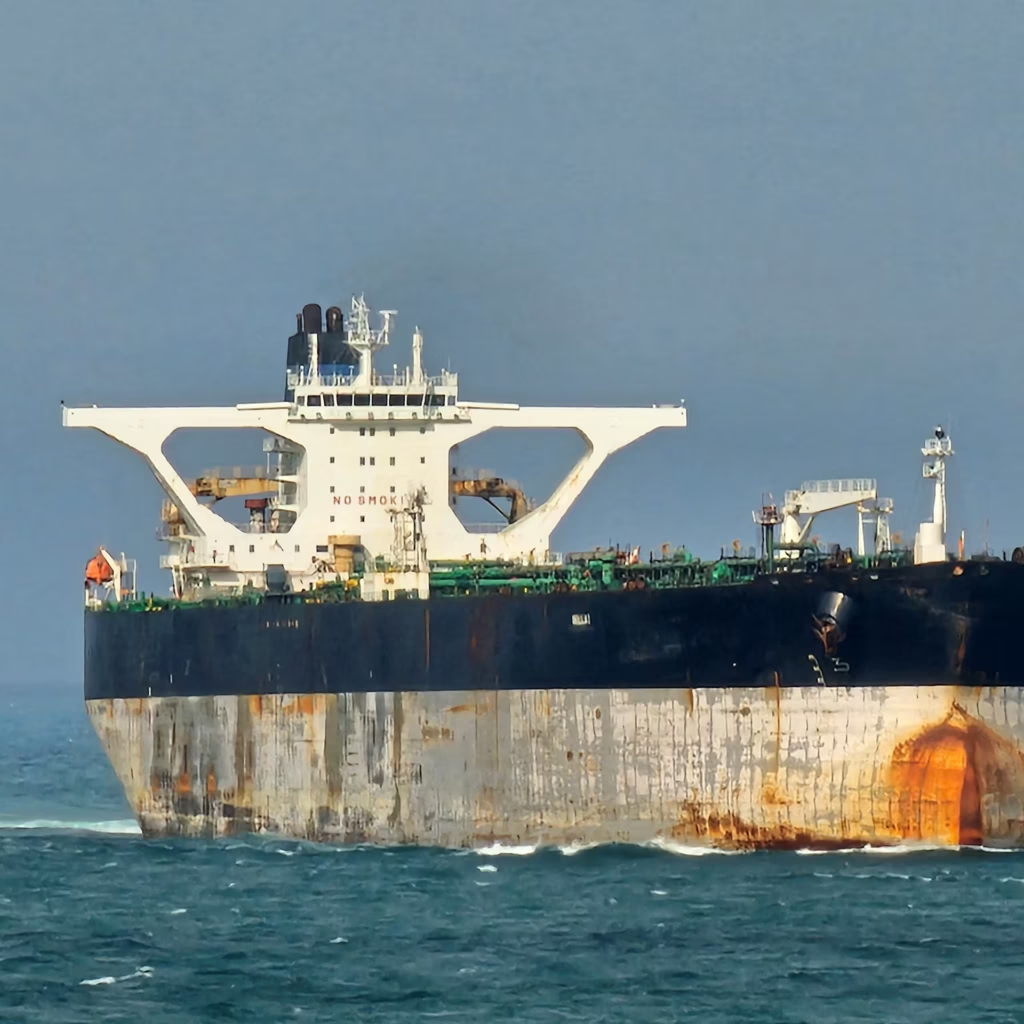
A weeks-long chase across the Atlantic concluded Wednesday morning when U.S. Coast Guard personnel and military special forces bearing a judicial seizure warrant apprehended the Marinera crude oil tanker, which had refused boarding last month before switching to Russia’s flag in an apparent attempt to evade American enforcement, according to U.S. officials who characterized the vessel as part of a “shadow fleet” transporting sanctioned petroleum.
The U.S. operation received support from Britain’s Royal Air Force and a Royal Navy vessel, which British Defence Secretary John Healey described as contributions to “global efforts to crack down on sanctions busting.” The British assistance reflected the United Kingdom’s willingness to support American maritime interdiction despite the operation’s controversial nature and potential complications for relations with Russia.
With Russian submarines and vessels nearby, the seizure risked direct confrontation with Moscow, which has condemned U.S. actions regarding Venezuela and already maintains adversarial relations with Western nations due to the war in Ukraine. The Kremlin did not respond to requests for comment on the tanker seizure, with Wednesday marking a public holiday in Russia that limited official government responses.
Earlier Wednesday, the U.S. Coast Guard also intercepted the M Sophia, a Panama-flagged tanker carrying Venezuelan oil, near the northeast coast of South America, U.S. officials confirmed. The vessel was fully loaded according to records from Venezuela’s state oil company PDVSA, making it the fourth tanker seizure in recent weeks as the Trump administration intensifies maritime enforcement targeting what it characterizes as sanctions-busting petroleum transport.
The Marinera, formerly known as the Bella-1, was empty of oil when seized, but U.S. authorities stated it belonged to a “shadow fleet” of tankers used to transport sanctioned crude from Venezuela and Iran. These shadow fleet vessels typically employ tactics including disabling tracking transponders, conducting ship-to-ship transfers at sea, and frequently changing flags and ownership documentation to evade sanctions enforcement.
“The only maritime energy transport allowed will be that consistent with American law and national security,” Stephen Miller, deputy White House chief of staff, declared in a statement announcing the seizures. “There is unlimited economic potential for the Venezuelan energy sector through legitimate and authorized commercial avenues established by the United States.”
Attorney General Pam Bondi stated that the Marinera crew had made “frantic efforts to avoid apprehension” and “failed to obey” Coast Guard orders, announcing that crew members would face criminal charges. The threatened prosecutions represented an escalation beyond vessel seizures to potential imprisonment of mariners following orders from ship owners regarding cargo transport.
The tanker seizures occurred as the Trump administration simultaneously pursued negotiations with Venezuela’s transitional government to divert oil supplies intended for China, Venezuela’s largest petroleum buyer, while gaining American access to $2 billion worth of Venezuelan crude oil currently subject to sanctions restrictions.
“The United States’ brazen use of force against Venezuela and its demand for ‘America First’ when Venezuela disposes of its own oil resources are typical acts of bullying,” Chinese Foreign Ministry spokesperson Mao Ning told reporters, delivering Beijing’s sharpest criticism yet of American actions following Maduro’s capture and the expanding maritime blockade.
Trump has openly discussed controlling Venezuela’s vast oil reserves—the world’s largest proven petroleum deposits—in conjunction with U.S. oil companies, following the arrest and detention of Maduro, whom the president has characterized as a drug-trafficking dictator aligned with Washington’s adversaries. Maduro, 63, pleaded not guilty this week to narco-terrorism charges when he appeared in shackles in federal court in New York.
Maduro’s Socialist Party allies remain in power in Venezuela, where Acting President Delcy Rodríguez navigates precarious circumstances between denouncing Maduro’s “kidnapping” by U.S. forces and initiating cooperation with Washington under explicit threats of further military violence from Trump. Rodríguez herself faces U.S. sanctions, with her frozen foreign financial assets identified as potential leverage, according to one person briefed on Trump administration thinking.
Top Trump administration officials including Secretary of State Marco Rubio and Defense Secretary Pete Hegseth conducted classified briefings on Venezuela for the U.S. Senate and House of Representatives on Wednesday. Democratic lawmakers expressed dissatisfaction with the information provided and concerns about the administration’s broader Venezuela strategy.
“They are proposing to steal Venezuela’s oil, at gunpoint, and use that leverage, forever, to run the country,” Democratic Senator Chris Murphy of Connecticut told reporters following the classified briefing, characterizing Trump administration plans as resource theft disguised as sanctions enforcement or governance assistance.
Trump announced Tuesday that the United States would refine and sell up to 50 million barrels of crude oil currently immobilized in Venezuela under U.S. sanctions, describing the sale as a first step in his plan to revive a petroleum sector that has experienced dramatic decline despite Venezuela possessing the world’s largest proven oil reserves.
To enable the oil sales Trump described, the U.S. is “selectively rolling back sanctions” on Venezuelan petroleum, White House Press Secretary Karoline Leavitt told reporters Wednesday, acknowledging that American refineries would need sanctions relief to process Venezuelan crude that has been prohibited from U.S. markets since 2019 when Trump first imposed comprehensive petroleum sanctions during his initial presidential term.
“We are going to take between 30 and 50 million barrels of oil,” Rubio stated during media appearances. “We’re going to sell it in the marketplace, at market rates, not at the discounts Venezuela was getting,” suggesting that U.S. control over Venezuelan petroleum sales would enable capturing profits that Venezuela previously received through discounted sales to allies including China and Cuba.
PDVSA confirmed Wednesday it was negotiating with the U.S. government and characterized discussions as involving “strictly commercial transactions under terms that are legal, transparent and beneficial for both parties.” The state oil company’s conciliatory language reflected Venezuelan officials’ recognition that resistance to American demands could trigger additional military action that Trump has repeatedly threatened.
Crude oil prices fell on world markets due to anticipated increased supplies from Trump’s plan to sell Venezuelan petroleum, with traders calculating that 30 to 50 million barrels entering global markets would temporarily depress prices despite representing only a fraction of daily worldwide consumption. The price decline benefited consumers while harming petroleum-exporting nations dependent on higher prices to balance government budgets.
China, Russia, and leftist allies of Venezuela have all denounced the U.S. military operation that captured Maduro, during which dozens of Venezuelans were killed according to official Venezuelan government statements. The operation represented Washington’s most significant military intervention in Latin America since the 1989 invasion of Panama to topple Manuel Noriega and bring him to the United States to face drug trafficking charges.
Washington’s traditional allies have expressed deep unease at the extraordinary precedent of seizing a foreign head of state through military force, with Trump threatening similar actions targeting other nations from Mexico to Greenland to further U.S. interests. The threats have generated anxiety across Latin America and Europe where governments worry about American willingness to use military power to enforce Trump’s vision of U.S. dominance.
The seizure of a Russian-flagged vessel carries particular risks given already strained U.S.-Russia relations over Ukraine, where Moscow’s invasion has triggered Western sanctions and military support for Ukrainian resistance. Russia could retaliate against American commercial shipping, escalate military tensions, or provide enhanced military support to countries resisting U.S. pressure including Venezuela, Iran, and other nations targeted by Trump administration enforcement.
The British participation in the Marinera seizure operation reflected the United Kingdom’s willingness to support American sanctions enforcement despite potential complications. However, London’s involvement also exposes British vessels and interests to possible Russian retaliation, particularly in regions like the North Atlantic where Russian naval and submarine forces operate with increasing frequency.
The escalating maritime enforcement represents implementation of what Trump has termed a “blockade” of Venezuelan oil exports, effectively preventing the country from earning foreign currency through petroleum sales to anyone except buyers approved by Washington. International law scholars have questioned whether such comprehensive blockades constitute acts of war requiring congressional authorization, though the Trump administration characterizes actions as sanctions enforcement rather than military blockade.
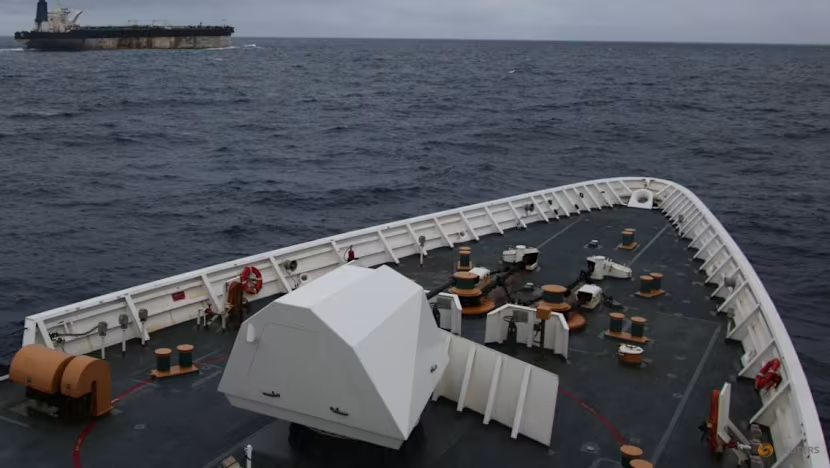
The shadow fleet vessels that U.S. authorities are targeting represent an evolving sanctions-evasion ecosystem involving aging tankers purchased by intermediaries, registered under flags of convenience, and operated through complex corporate structures designed to obscure beneficial ownership. These vessels transport billions of dollars worth of sanctioned petroleum annually from Venezuela, Iran, and Russia, undermining Western sanctions programs while generating revenues for governments targeted by economic pressure.
Maritime insurance companies and port authorities face difficult decisions about whether to service vessels suspected of shadow fleet involvement, with American secondary sanctions threatening penalties for entities facilitating sanctioned petroleum transport. The sanctions create cascading economic pressure throughout the maritime industry, though determined actors continue finding ways to move prohibited cargoes despite enforcement risks.
For Venezuela’s population, Trump’s plans to seize and sell Venezuelan oil generate fury across the political spectrum. Even Venezuelans who opposed Maduro’s government view the petroleum as national patrimony that belongs to the Venezuelan people rather than spoils for foreign seizure. The resource confiscation feeds narratives about American imperialism that have animated Latin American politics for decades and could generate long-term resentment regardless of Venezuela’s eventual governance structure.
The selective rollback of sanctions to enable U.S. refineries to process Venezuelan crude while maintaining restrictions on Venezuelan access to revenues creates asymmetric arrangements where American companies profit from Venezuelan resources while the country remains economically isolated. Critics characterize this as neo-colonial extraction where the United States dictates terms while Venezuelan needs remain subordinated to American interests.
The 30 to 50 million barrels Trump plans to sell represents a relatively modest percentage of Venezuelan oil currently in storage or transit, suggesting the initial sales constitute a pilot program that could expand dramatically if the approach proves politically and economically successful. Venezuela’s total oil reserves exceed 300 billion barrels, making it potentially the world’s most valuable petroleum prize if the United States can establish long-term control over production and sales.
American oil companies including Chevron, ExxonMobil, and others have maintained interests in Venezuelan petroleum despite sanctions, viewing the country’s massive reserves as attractive assets if political conditions enable resumed operations. Trump’s promises that U.S. companies will “go in, spend billions of dollars, fix the badly broken infrastructure” suggest plans for comprehensive American corporate control over Venezuelan energy sector modernization and operations.
The legal basis for seizing and selling Venezuelan state assets remains contested. While U.S. courts have issued judgments against PDVSA in various commercial disputes, whether those judgments authorize wholesale seizure and liquidation of a sovereign nation’s petroleum reserves raises complex questions about international law, sovereign immunity, and the extent of American judicial authority over foreign state property.
For Acting President Rodríguez, negotiating with Washington while her own assets remain frozen creates precarious circumstances where cooperation might lead to personal sanctions relief while resistance risks additional violence and economic devastation. Her calculations must balance Venezuelan nationalist sentiment opposing foreign resource control against pragmatic recognition that military resistance to American demands appears futile given the overwhelming force disparity.
The tanker seizures and oil sales represent just initial components of what Trump has characterized as temporary American governance of Venezuela “until such time as we can do a safe, proper and judicious transition” to leadership aligned with U.S. interests. The petroleum revenue control provides leverage to shape that transition while funding occupation costs and compensating American claims against Venezuela.
International legal scholars will debate for years whether Trump’s Venezuela actions constitute legitimate sanctions enforcement, justifiable intervention to address narco-terrorism threats, or illegal aggression violating United Nations Charter prohibitions on using force against sovereign nations. The unprecedented nature of capturing a sitting president, seizing national assets, and declaring intent to govern a country “temporarily” while extracting resources creates novel legal questions without clear precedents or resolution mechanisms.




