

CARACAS/WASHINGTON — The United States launched what President Donald Trump characterized as a “large-scale strike” against Venezuela in the predawn hours Saturday, with the president announcing that Venezuelan leader Nicolás Maduro had been captured and flown out of the country in an extraordinary nighttime operation that immediately raised profound constitutional and international law questions.
Multiple explosions reverberated through Caracas, Venezuela’s capital, as low-flying aircraft swept overhead during the attack that Trump announced on Truth Social shortly after 4:30 a.m. Eastern Time. The Venezuelan government immediately condemned what it called an “imperialist attack” on civilian and military installations, urging citizens to take to the streets in resistance.
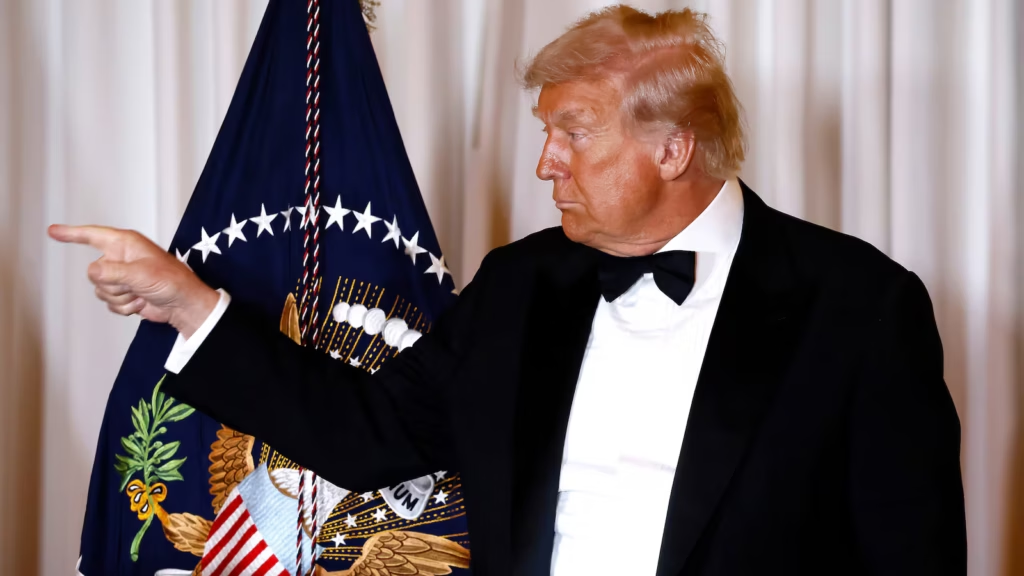
“The United States of America has successfully carried out a large scale strike against Venezuela and its leader, President Nicolas Maduro, who has been, along with his wife, captured and flown out of the Country,” Trump wrote on his social media platform. “This operation was done in conjunction with U.S. Law Enforcement. Details to follow.”
The president scheduled a news conference for 11 a.m. Saturday at his Mar-a-Lago resort in Florida, though he declined to answer questions from The New York Times about whether he had sought congressional authorization for the military action. In a brief phone interview, Trump praised what he called a “brilliant operation” involving “a lot of good planning and lot of great, great troops and great people.”
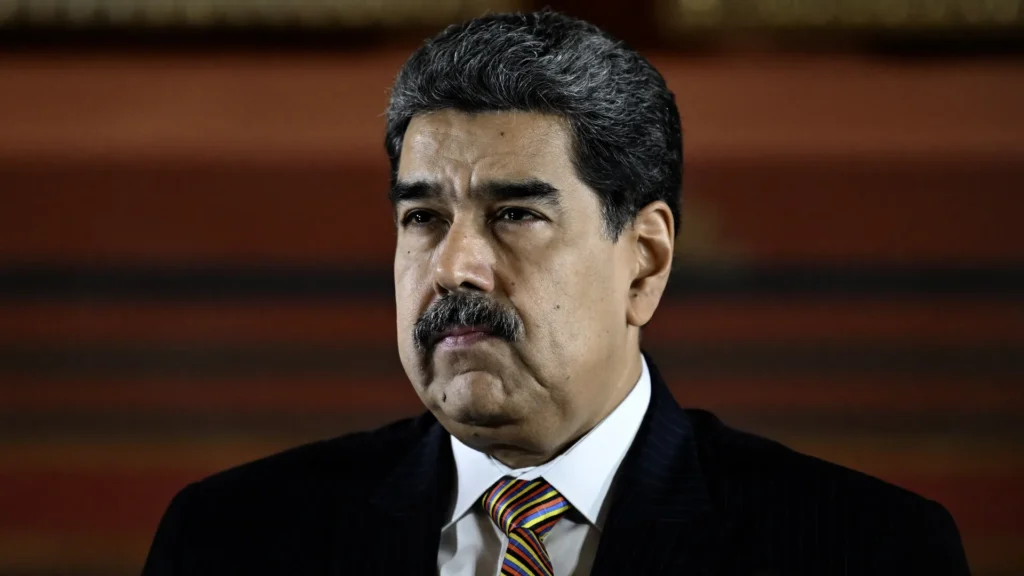
It remained unclear who was running Venezuela following the reported capture, with Maduro’s whereabouts unknown despite Trump’s claims. Under Venezuelan constitutional law, Vice President Delcy Rodríguez would assume power in the president’s absence, though no confirmation of such a transition had occurred by Saturday morning.
Rodríguez issued a statement following the strikes that directly challenged Trump’s narrative. “We do not know the whereabouts of President Nicolás Maduro and First Lady Cilia Flores,” she declared. “We demand proof of life.” Her statement suggested either that Venezuelan officials genuinely did not know Maduro’s location or that they were publicly disputing U.S. claims while privately assessing the situation.
The White House did not immediately respond to inquiries about where Maduro and his wife were being transported or whether the Justice Department intended to prosecute him on federal charges. Maduro was indicted in March 2020 on “narco-terrorism” conspiracy charges in the Southern District of New York, providing potential legal framework for his detention and prosecution in the United States, though the legality of using military force to execute an arrest warrant remained highly contested.
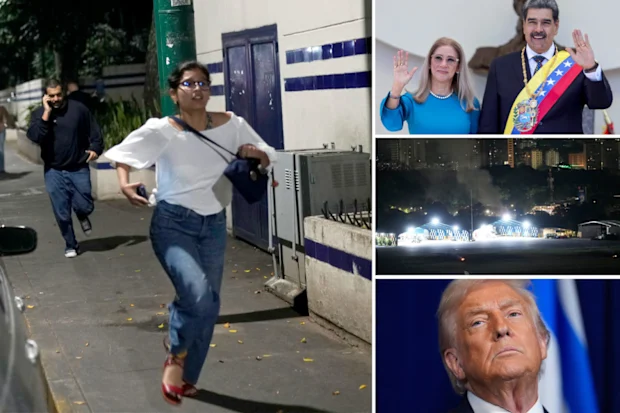
At least seven explosions struck Caracas during the attack, which lasted less than 30 minutes according to witnesses and video footage. Residents rushed into streets while others documented the blasts on social media, though casualty figures from either side were not immediately available. The Federal Aviation Administration issued a ban on U.S. commercial flights in Venezuelan airspace citing “ongoing military activity” ahead of the explosions.
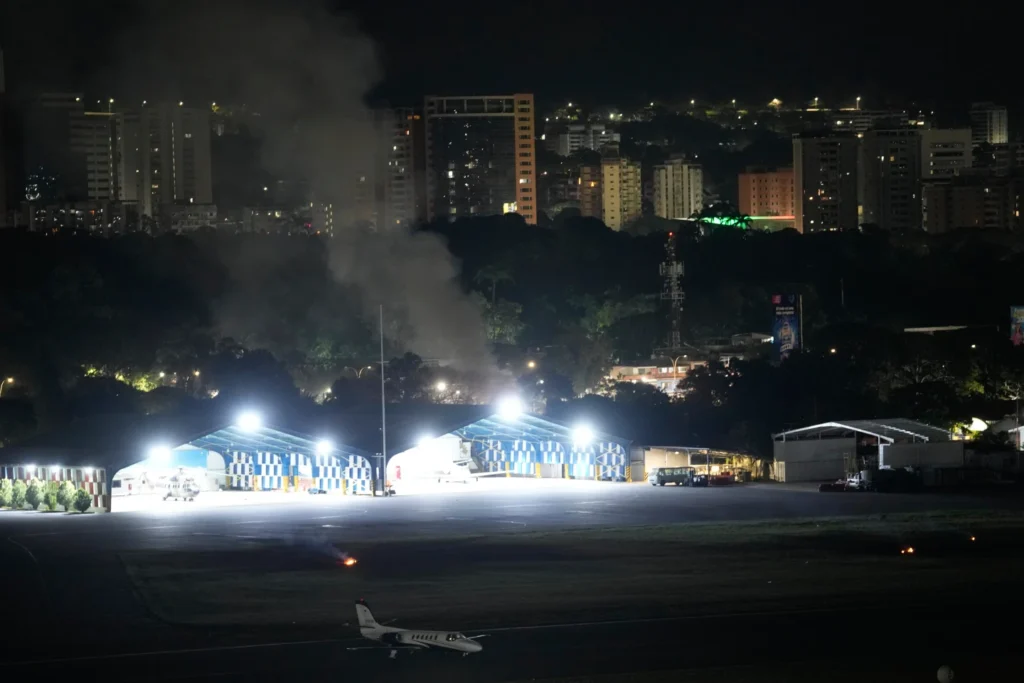
Video obtained from Caracas and an unidentified coastal city, verified by The Associated Press, showed tracers and smoke clouding the night sky as repeated muted explosions illuminated the landscape. Other footage captured an urban highway with vehicles passing as blasts lit up hills in the background, with unintelligible conversation audible. Smoke rose from a military base hangar in Caracas, while another military installation in the capital lost power.
“The whole ground shook. This is horrible. We heard explosions and planes,” said Carmen Hidalgo, a 21-year-old office worker, her voice trembling as she walked briskly with two relatives returning from a birthday party. “We felt like the air was hitting us.”
Armed individuals and uniformed members of civilian militias took to the streets in a Caracas neighborhood long considered a ruling party stronghold, according to reports. However, other areas of the city remained empty hours after the attack. Parts of Caracas lost power, though vehicles continued moving freely through most areas, suggesting the strikes targeted specific military and government facilities rather than civilian infrastructure broadly.
Venezuela’s government responded with a mobilization call. “People to the streets!” it declared in an official statement. “The Bolivarian Government calls on all social and political forces in the country to activate mobilization plans and repudiate this imperialist attack.” The statement added that Maduro had “ordered all national defense plans to be implemented” and declared “a state of external disturbance”—an emergency designation granting him power to suspend civil rights and expand military authority, though the declaration’s validity remained unclear if Maduro had indeed been removed from the country.
The website of the U.S. Embassy in Venezuela, which has been closed since 2019, issued warnings to American citizens in the country. “U.S. citizens in Venezuela should shelter in place,” the advisory stated, acknowledging awareness of “reports of explosions in and around Caracas.”
The operation sparked immediate constitutional concerns in Washington. U.S. Senator Mike Lee, a Utah Republican representing the party’s libertarian wing, publicly questioned the legal basis for military action. “I look forward to learning what, if anything, might constitutionally justify this action in the absence of a declaration of war or authorization for the use of military force,” Lee posted on X.
However, Lee appeared to moderate his position following a phone call with Secretary of State Marco Rubio, who provided additional details about the operation’s objectives. According to NBC, Rubio “informed me that Nicolás Maduro has been arrested by U.S. personnel to stand trial on criminal charges,” Lee posted, adding that Rubio anticipated “no further action in Venezuela” now that Maduro was in U.S. custody.
Lee subsequently characterized the military strikes as protective measures for personnel executing an arrest warrant. “The kinetic action we saw tonight was deployed to protect and defend those executing the arrest warrant,” he wrote. “This action likely falls within the president’s inherent Article II of the Constitution to protect U.S. personnel from an actual or imminent attack.”
The legal theory that Article II presidential powers authorize military force to protect personnel executing law enforcement operations in foreign countries represents controversial constitutional ground. Critics argue that such interpretations could justify military interventions worldwide without congressional oversight, fundamentally undermining the legislative branch’s constitutional authority to declare war and authorize military force.
It remained unclear whether Congress had been officially notified of the strikes. The Armed Services committees in both houses of Congress, which maintain jurisdiction over military matters, had not been notified by the administration of any actions, according to a person familiar with the matter who was granted anonymity to discuss it. The lack of congressional notification would violate the War Powers Resolution requiring the president to notify Congress within 48 hours of introducing armed forces into hostilities.
Lawmakers from both political parties have raised deep reservations and outright objections to U.S. attacks on boats suspected of drug smuggling near the Venezuelan coast, and Congress has not specifically approved authorization for the use of military force for such operations in the region. The escalation from maritime interdiction strikes to operations on Venezuelan soil dramatically raises the stakes and constitutional concerns about presidential war powers.
The strike came after months of escalating Trump administration pressure on Maduro. The CIA conducted a drone strike last week at a docking area believed used by Venezuelan drug cartels—the first known direct U.S. operation on Venezuelan soil since strikes began in September. Trump had repeatedly threatened that he could soon order strikes on targets within Venezuela following months of attacks on boats accused of carrying drugs.
The U.S. military has attacked boats in the Caribbean Sea and eastern Pacific Ocean since early September. As of Friday, 35 boat strikes had killed at least 115 people, according to numbers announced by the Trump administration. The maritime campaign followed a major buildup of American forces in waters off South America, including the November arrival of the nation’s most advanced aircraft carrier, adding thousands of troops to what was already the largest U.S. military presence in the region in generations.
Trump has justified the boat strikes as necessary escalation to stem drug flows into the United States, asserting that the U.S. is engaged in “armed conflict” with drug cartels. However, legal scholars have questioned whether counter-narcotics operations constitute armed conflict under international law or whether they provide sufficient justification for military force that would otherwise violate other nations’ sovereignty.
Maduro has characterized U.S. military operations as thinly veiled efforts to oust him from power, accusations that Saturday’s strikes and his reported capture would seem to vindicate. The Venezuelan president last appeared on state television Friday while meeting with a Chinese delegation in Caracas, providing no indication that he anticipated imminent U.S. military action or planned to flee the country.
International reaction emerged slowly in the early Saturday hours. Cuba, a longtime Maduro supporter and U.S. adversary, called for international community response to what President Miguel Díaz-Canel Bermúdez characterized as “the criminal attack.” According to the Associated Press, Díaz-Canel declared on X that “our zone of peace is being brutally assaulted.” Iran’s Foreign Ministry also condemned the strikes, reflecting alliances between Maduro’s government and U.S. adversaries.
Argentine President Javier Milei, a close Trump ally, praised the claimed Maduro capture with his frequent political slogan celebrating right-wing advances: “Long live freedom, dammit!” The enthusiastic response from regional right-wing leaders contrasted sharply with condemnations from leftist governments historically sympathetic to Venezuela’s socialist leadership.
The Pentagon and U.S. Southern Command did not respond to inquiries following Trump’s social media announcement. The FAA warned all commercial and private U.S. pilots that airspace over Venezuela and Curacao, the small island nation off Venezuela’s northern coast, was off limits “due to safety-of-flight risks associated with ongoing military activity.”
The operation’s implications for Venezuelan governance remain profoundly uncertain. If Maduro has indeed been removed, Venezuela faces potential power struggles between Vice President Rodríguez, military leaders, opposition figures, and other political forces. The country has experienced severe economic collapse, massive emigration, and political polarization during Maduro’s tenure, creating conditions where regime change could trigger either democratic transition or further instability and violence.
The United States has long sought Maduro’s removal, imposing severe economic sanctions and recognizing opposition figure Juan Guaidó as Venezuela’s legitimate president following disputed 2018 elections that international observers deemed fraudulent. However, Maduro maintained power through military support and assistance from Russia, China, Cuba, and Iran, surviving multiple coup attempts and international pressure campaigns.
The 2020 federal indictment charging Maduro with narco-terrorism conspiracy alleged he conspired with Colombian guerrilla groups to flood the United States with cocaine, using drug trafficking proceeds to fund his government and maintain power. The Justice Department offered a $15 million reward for information leading to Maduro’s arrest and conviction, though previous efforts to apprehend him through Venezuelan military defection or covert operations had failed.
If Maduro is indeed prosecuted in the Southern District of New York, he would face trial before a jury on charges carrying potential life imprisonment. However, the circumstances of his capture—through military strikes on a sovereign nation without declared war or clear congressional authorization—could generate complex legal challenges regarding whether evidence obtained through such means would be admissible and whether the prosecution itself violates international law prohibitions on aggressive war.
The strikes represent the most dramatic U.S. military intervention in Latin America since the 1989 invasion of Panama that removed dictator Manuel Noriega, who was subsequently prosecuted on drug trafficking charges in Miami. That operation generated significant international controversy and condemnation from Latin American nations sensitive to U.S. military interventionism, concerns that Saturday’s Venezuela strikes will almost certainly amplify given the region’s history of U.S. interference in domestic politics.
The operation’s success or failure will ultimately be determined not just by whether Maduro has been captured but by what follows in Venezuela. If his removal triggers democratic transition and stability, Trump administration officials will claim vindication for controversial military action. If instead the strikes precipitate civil war, humanitarian crisis, or anti-American backlash across Latin America, the operation could be remembered as a catastrophic miscalculation that destabilized an entire region while establishing dangerous precedents for presidential war powers.
CNN/NBC/AP




