

Venezuela’s Vice President Delcy Rodríguez demanded Saturday that the United States provide immediate proof that President Nicolás Maduro and First Lady Cilia Flores remain alive following predawn military strikes on the capital and President Trump’s extraordinary claim that U.S. forces captured the Venezuelan leader and flew him out of the country.
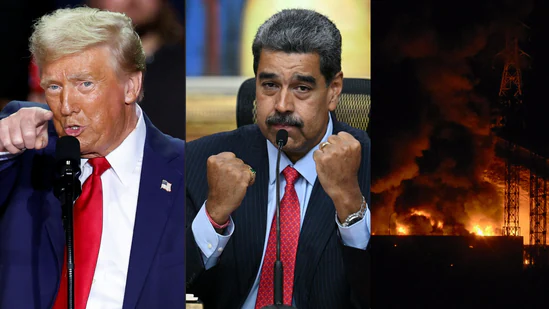
“In the face of this brutal situation and in the face of this brutal attack, we do not know the whereabouts of President Nicolás Maduro and first lady Cilia Flores,” Rodríguez stated during a phone call broadcast on state television station Venezolana de Televisión. “We demand from the government of President Donald Trump immediate proof of life of President Maduro and of the first lady.”
The dramatic demand came hours after Trump announced on Truth Social that the United States had captured Maduro and removed him from Venezuela, though the Venezuelan government’s statement suggested officials either genuinely did not know his location or were publicly challenging U.S. claims while privately assessing the chaotic situation following the military strikes.
CBS News reported that U.S. officials confirmed Maduro was captured by Delta Force, the U.S. military’s elite counter-terrorism unit. According to the BBC’s U.S. partner network, the specialized force executed the operation to detain the Venezuelan president, though neither the Pentagon nor White House had officially confirmed Delta Force’s involvement by Saturday morning.
Rodríguez condemned what she characterized as a “savage” attack on Venezuela, stating that officials, soldiers, and civilians had been killed in the strikes. However, the Venezuelan government had not released an official casualty tally by Saturday afternoon, leaving the human cost of the operation uncertain as families across Caracas searched for information about loved ones who may have been near targeted installations.
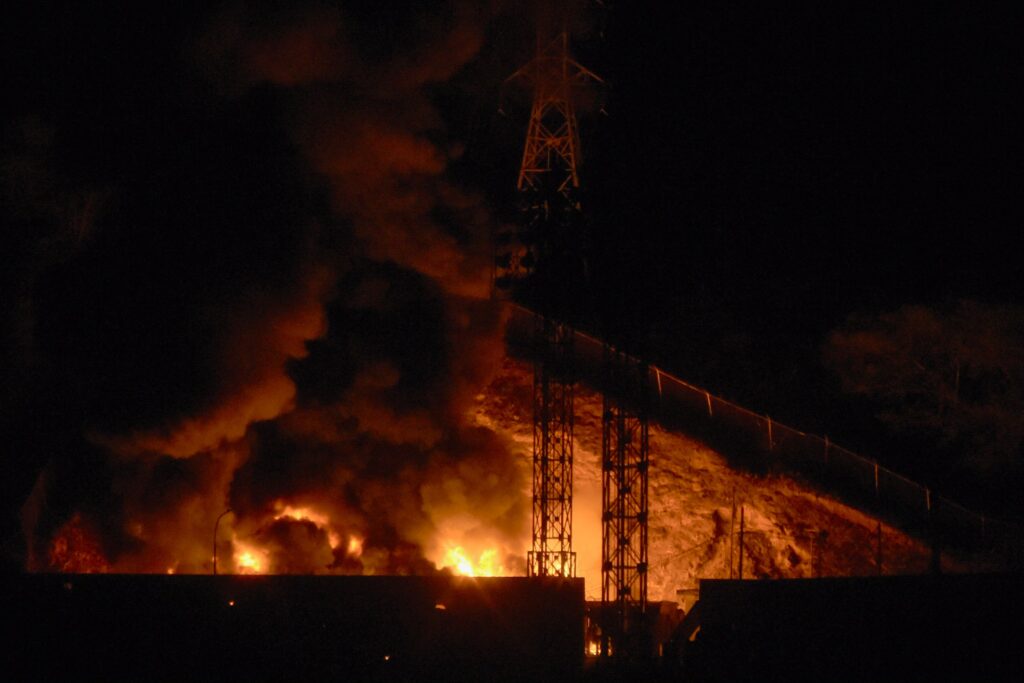
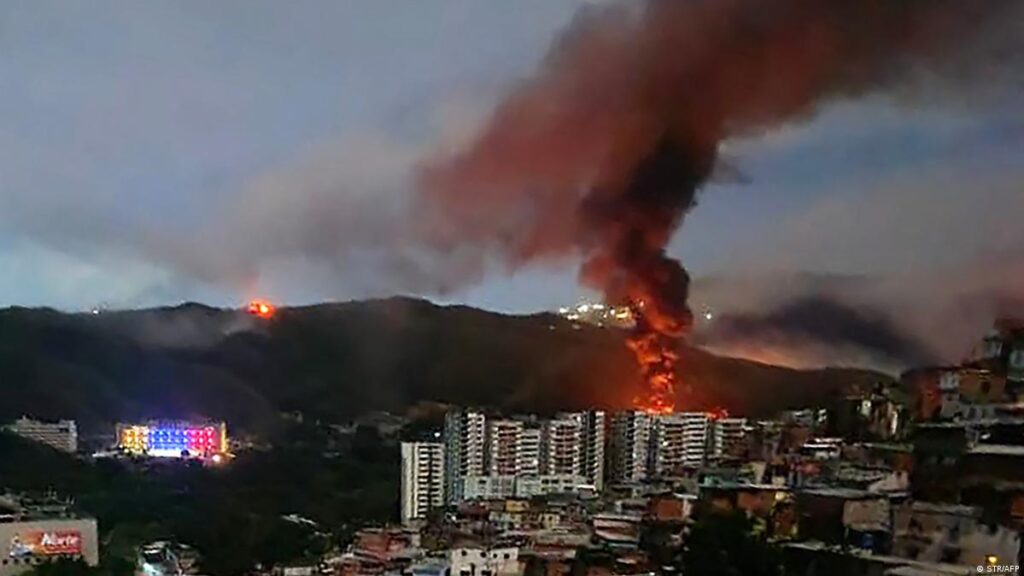
A CNN team witnessed several explosions in Caracas during the early Saturday morning attack, with the first blast recorded at approximately 1:50 a.m. local time. “One was so strong, my window was shaking after it,” CNNE correspondent Osmary Hernandez reported from the Venezuelan capital, describing the intensity of detonations that reverberated through residential neighborhoods surrounding military and government facilities.
Several areas of Caracas lost electrical power following the strikes, plunging portions of the city into darkness. CNN journalists in the Venezuelan capital heard aircraft sounds after the explosions, consistent with U.S. military assets conducting operations over the city. The power outages affected both residential areas and critical infrastructure, complicating emergency response efforts and leaving civilians uncertain about whether additional strikes might follow.
The brother of NBC News senior producer Geraldine Cols Azocar, who is Venezuelan, was “woken up by the sound of bombs” in Caracas where he lives, Cols Azocar reported during live coverage. The family’s home sits in the same neighborhood as a military base in Caracas, placing them in proximity to likely strike targets. Helicopters flew overhead, and “immediately within minutes of the first couple of bombs falling they lost electricity,” she stated in a phone interview, adding that family members were “hunkering down” as the situation unfolded.
Before his reported capture, Maduro declared a state of external emergency across the entire nation, according to Venezuelan state television channel TeleSUR, following what his government described as “serious military aggression perpetrated by the current Government of the United States of America.” The decree grants Maduro authority to restrict certain constitutional rights, mobilize armed forces, and implement extraordinary measures for an unspecified period, though the declaration’s validity remained unclear if Maduro had indeed been removed from Venezuelan territory.
The strikes represented a dramatic escalation of months of mounting U.S. pressure on Venezuela. President Trump had repeatedly warned that the U.S. was preparing new action against alleged drug trafficking networks in Venezuela and that strikes on Venezuelan soil would begin “soon.” In October, Trump acknowledged authorizing the CIA to operate inside Venezuela to combat what he characterized as illegal flows of migrants and drugs from the South American nation.
CNN reached out to the White House, State Department, Pentagon, and U.S. Southern Command for comment on the strikes and Maduro’s reported capture. The Pentagon referred inquiries to the White House, which had not provided detailed responses by Saturday afternoon despite intense international media attention and demands for clarification from multiple governments.
The United States has accused Maduro of operating a “narco-state” and rigging the 2024 presidential election that international observers widely deemed fraudulent. Trump administration officials have characterized Venezuela under Maduro as a criminal enterprise masquerading as a government, using drug trafficking proceeds to maintain power while devastating the country’s economy and triggering massive emigration that has created regional refugee crises.
Maduro has consistently asserted that Washington seeks control of Venezuela’s oil reserves, the world’s largest proven petroleum deposits. The Venezuelan leader has portrayed U.S. pressure as neo-colonial imperialism aimed at seizing natural resources rather than legitimate concern about drug trafficking or human rights. His government has cultivated alliances with Russia, China, Cuba, and Iran to counterbalance U.S. influence and sanctions.
Trump had promised land operations in Venezuela and stated Monday that it would be “smart” for Maduro to voluntarily relinquish power, effectively delivering an ultimatum that the Venezuelan president either ignored or was unable to accept given domestic political constraints. The warning provided limited time for Maduro to consider options before the U.S. launched what Trump characterized as a successful operation to forcibly remove him.
The United States has conducted a major military buildup in the Caribbean region, deploying an aircraft carrier, warships, and advanced fighter jets to waters surrounding Venezuela. In November, the USS Gerald R. Ford, America’s largest and most sophisticated aircraft carrier, arrived in the Caribbean with thousands of personnel and advanced strike capabilities that dramatically expanded U.S. military options for operations against Venezuelan targets.
Trump has sought what he terms a “blockade” of Venezuelan oil exports and expanded sanctions against the Maduro government beyond measures implemented during previous administrations. U.S. forces also conducted more than two dozen strikes on vessels that the U.S. alleged were involved in trafficking drugs in the Pacific Ocean and Caribbean Sea, killing at least 115 people according to numbers announced by the Trump administration.
The maritime interdiction campaign generated congressional concern about legal authority and appropriateness of using lethal military force against suspected smuggling vessels. Some lawmakers questioned whether the strikes constituted acts of war requiring congressional authorization, while Trump administration officials argued they fell within executive authority to combat transnational criminal organizations threatening U.S. national security.
Maduro had recently signaled potential openness to negotiations with Washington on drug trafficking cooperation, marking what observers interpreted as acknowledgment that sustained U.S. pressure was affecting his government. “The U.S. government knows, because we’ve told many of their spokespeople, that if they want to seriously discuss an agreement to combat drug trafficking, we’re ready,” Maduro stated in a taped interview with Spanish journalist Ignacio Ramonet aired Thursday.
In that wide-ranging conversation, Maduro declined to directly address an alleged CIA ground attack on a docking facility along Venezuela’s shoreline the previous month, stating only that he could discuss it “in a few days.” The CIA, following standard practice, declined to comment on reports it conducted what would represent the first-known land attack on Venezuelan territory by U.S. forces.
However, Trump confirmed Monday that the U.S. had “knocked out” a Venezuelan facility he linked to drug operations. “We just knocked out — I don’t know if you read or you saw — they have a big plant or big facility where they send the, you know, where the ships come from,” Trump stated during a WABC radio interview. “Two nights ago, we knocked that out. So we hit them very hard.” The president did not provide further details, and NBC News could not independently confirm the strike.
Maduro had attempted to strike conciliatory notes regarding potential cooperation on both drug trafficking and oil production. “If they want oil, Venezuela is ready for U.S. investment, like with Chevron, whenever they want it, wherever they want it and however they want it,” he told Ramonet, suggesting room for economic partnership if political tensions could be resolved.
“The U.S. people should know that here they have a friendly, peaceful people, and they also have a friendly government,” Maduro stated, according to an English translation published on TeleSUR’s website. The appeal directly to the American public represented an attempt to circumvent the Trump administration’s hostile posture by cultivating U.S. popular opinion against military intervention.
However, Trump appeared unmoved by diplomatic overtures, stating in November that Maduro’s “days are numbered” and telling NBC News in a separate interview that he was “not ruling out war with Venezuela.” The threatening rhetoric preceded Saturday’s strikes by just weeks, suggesting Trump administration officials had decided military action represented the only viable path to Maduro’s removal after diplomatic and economic pressure failed to achieve regime change.
The latest U.S. strike on alleged drug-trafficking vessels occurred New Year’s Eve, with U.S. Southern Command reporting that five people were killed in operations targeting two boats. Since launching maritime strikes in September, the Trump administration has not provided evidence supporting allegations about vessels or people on board, relying instead on classified intelligence that lawmakers and international observers cannot independently verify.
U.S. forces also seized oil tankers off the Venezuelan coast last month and ordered a blockade of all sanctioned tankers, working to prevent vessels from entering or leaving Venezuelan ports. The naval blockade effectively constituted an act of war under international law, though Trump administration officials characterized it as sanctions enforcement rather than military aggression requiring congressional authorization.
The United States does not recognize Maduro as Venezuela’s legitimate president following the 2024 election that opposition groups and international observers concluded was fraudulent. The U.S. has instead recognized opposition figure Juan Guaidó as interim president, though Guaidó has been unable to assume power or exercise meaningful authority given Maduro’s military support.
Maduro has previously denied having ties to drug trafficking and accused the U.S. of “fabricating” justifications for aggression against his government. However, U.S. prosecutors indicted Maduro in March 2020 on narco-terrorism conspiracy charges in the Southern District of New York, alleging he conspired with Colombian guerrilla groups to flood the United States with cocaine while using drug proceeds to fund his government.
The indictment provided legal framework for Maduro’s detention and prosecution, though the use of military strikes to execute an arrest warrant raised profound questions about whether such methods violate international law prohibitions on aggressive war and whether evidence obtained through military intervention would be admissible in federal court.
If Maduro is indeed in U.S. custody and faces prosecution, his trial would represent one of the most significant criminal cases against a sitting head of state in modern history. However, the circumstances of his capture—through military strikes killing Venezuelan officials, soldiers, and civilians—could generate complex legal challenges regarding the legitimacy of both the detention and any subsequent conviction.
The Venezuelan government’s demand for proof of life reflected either genuine uncertainty about Maduro’s fate or a propaganda strategy designed to challenge U.S. narratives while buying time to assess options. Under Venezuelan constitutional law, Vice President Rodríguez would assume presidential authority if Maduro were confirmed dead, incapacitated, or permanently absent from the country, potentially triggering power struggles between military factions, political elites, and opposition forces.
The human cost of Saturday’s strikes remained unclear as Venezuelan authorities had not released casualty figures and independent verification proved impossible given communication disruptions and government information controls. Rodríguez’s acknowledgment that officials, soldiers, and civilians died suggested significant loss of life beyond military targets, raising questions about whether U.S. forces took adequate precautions to minimize civilian casualties during urban strikes.
The operation’s ultimate success or failure will be determined not just by whether Maduro was captured but by what follows in Venezuela and across Latin America, where memories of U.S. military interventionism remain powerful political forces shaping attitudes toward Washington’s regional role.
NBC/CNN/AP/BBC




