

NASHVILLE, Tenn. — A relentless arctic siege has claimed at least 12 lives and left more than a million customers without electricity as Winter Storm Fern unleashes a catastrophic combination of ice, snow and subzero temperatures across a 2,000-mile swath of the nation, from New Mexico to New England.
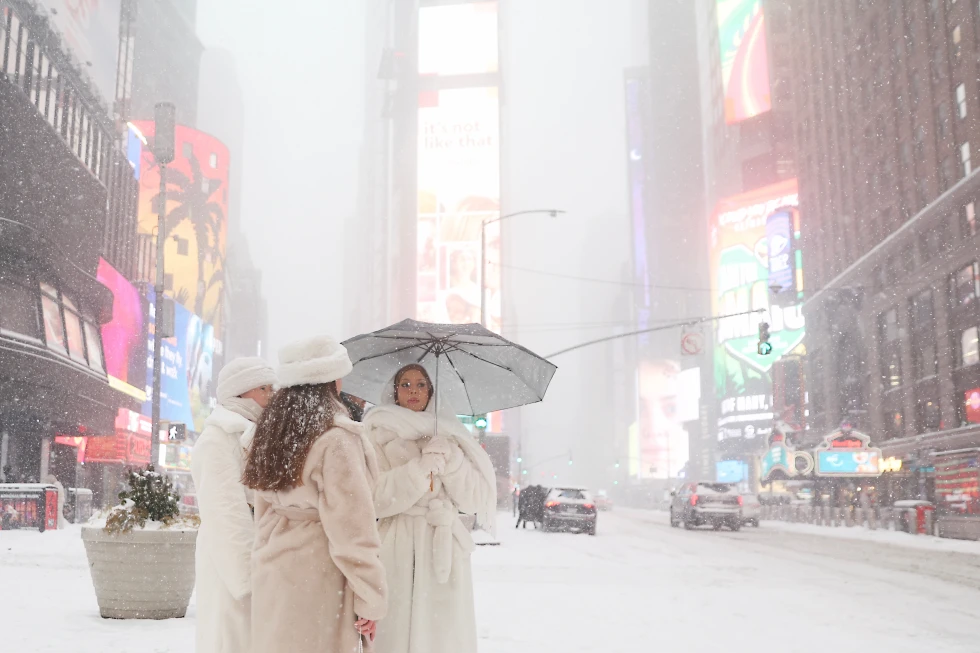
The fatalities paint a grim picture of the storm’s widespread devastation. Five residents perished in New York City as temperatures plummeted Saturday night, their bodies discovered outdoors before heavy snowfall arrived. Louisiana’s health department confirmed two men from Caddo Parish died from hypothermia. A man was found deceased in a Shell gas station parking lot in Austin, Texas, early Sunday morning. Additional deaths occurred in Arkansas, Michigan, Virginia and Tennessee, with officials categorizing nine as cold-related and three as storm-related incidents.
The crisis deepened Sunday afternoon when the National Weather Service Tallahassee issued an unexpected tornado watch for portions of Alabama, Georgia and Florida, effective until 6 p.m. CST. Forecasters warned that multiple tornadoes could develop alongside wind gusts reaching 70 mph and hail measuring up to half an inch in diameter. The volatile weather system produced at least one confirmed tornado that tore through Williamson and Davidson counties in Tennessee, leaving downed trees and power lines scattered across snow-covered roads, WSMV meteorologist Dan Thomas confirmed.
The juxtaposition of winter devastation in the South with tornado warnings represents an unusual meteorological phenomenon that underscores the storm’s exceptional nature. National Weather Service meteorologist Allison Santorelli emphasized the system’s extraordinary reach during a telephone interview, noting the event affects areas spanning approximately 2,000 miles. This geographic breadth, combined with prolonged subfreezing temperatures, creates conditions that will likely extend infrastructure damage and recovery efforts for days or potentially weeks beyond the storm’s passage.
President Donald Trump approved federal emergency disaster declarations Saturday for twelve states: South Carolina, Virginia, Tennessee, Georgia, North Carolina, Maryland, Arkansas, Kentucky, Louisiana, Mississippi, Indiana and West Virginia. By Saturday, seventeen states and the District of Columbia had declared weather emergencies, the Department of Homeland Security disclosed. The Federal Emergency Management Agency pre-positioned commodities, personnel and search-and-rescue teams throughout numerous states in anticipation of deteriorating conditions.
Power infrastructure has suffered catastrophic damage, with 1,018,477 customers experiencing outages across affected regions as of Sunday afternoon, data from poweroutage.us showed. Tennessee bore the heaviest burden with 306,722 customers in darkness, followed by Mississippi with 175,276 and Louisiana with 145,105. Texas, Georgia, Kentucky, West Virginia and Alabama collectively contributed another 310,227 outages to the national total.
Nashville Electric Service announced that restoration efforts could extend for days or longer in Tennessee’s capital city, where more than 330,000 customers remained without power Sunday. The utility provider explained that freezing rain and ice accumulation weighed down trees overnight, causing branches to snap and sever power lines throughout the service territory. This assessment aligns with broader warnings from officials about ice-laden infrastructure. Homeland Security Secretary Kristi Noem explained during an appearance on Fox News Sunday Briefing that the storm’s unique characteristic involves sustained cold temperatures that will keep ice accumulation heavy on power lines for an extended period, creating ongoing collapse risks even for infrastructure that initially survived the onslaught.
The situation in Mississippi has reached particularly dire levels. Tippah Electric Power characterized the damage as “catastrophic” and warned customers that restoration could require weeks rather than days. In Corinth, Caterpillar instructed employees at its remanufacturing facility to remain home Monday and Tuesday as widespread outages crippled the community. Resident Kathy Ragan described the harrowing overnight experience on Facebook, writing that the sounds of trees snapping, exploding and falling proved deeply unsettling.
Transportation networks collapsed under the storm’s assault. More than 10,800 flights scheduled for Sunday were canceled, with an additional 16,000 delayed, flight tracking website FlightAware documented. Ronald Reagan National Airport in Washington, D.C., saw airlines cancel all Sunday departures. Major metropolitan airports in New York, Philadelphia and Charlotte, North Carolina, experienced cancellation rates exceeding 80 percent. Delta Air Lines adjusted operations to a reduced schedule subject to real-time precipitation conditions, while repositioning cold-weather experts to southern airports to support de-icing and baggage operations.
The National Weather Service forecast calls for heavy snow accumulations from the Ohio Valley to the Northeast through Monday morning, with potential totals reaching 18 inches in New England. Much of the Southeast and portions of the Mid-Atlantic face continued rain and freezing rain. Forecasters predicted bitterly cold temperatures and dangerously cold wind chills from the southern plains to the Northeast would follow in the storm’s wake.
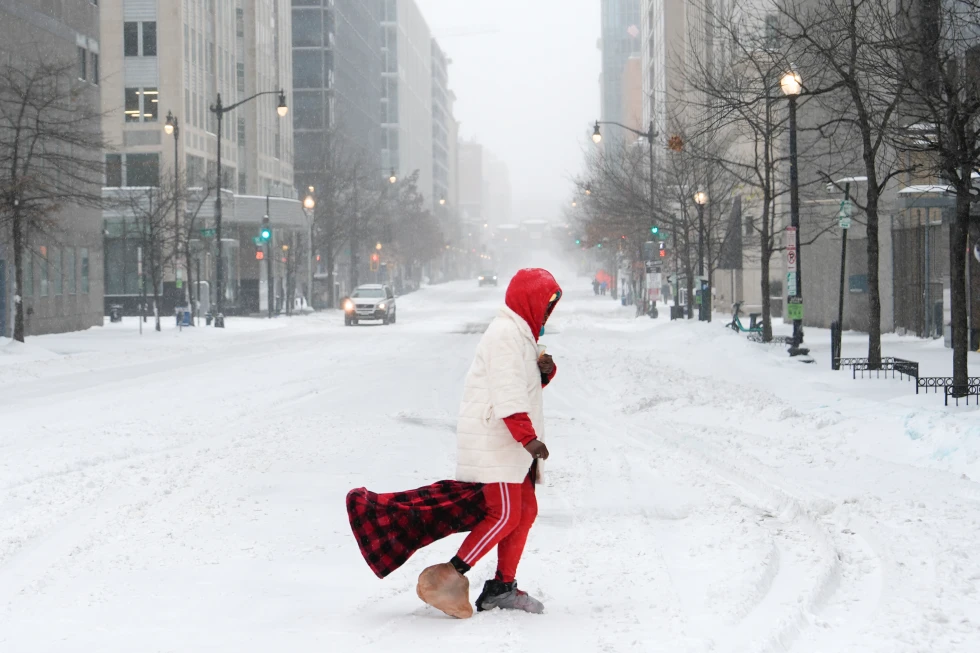
New York communities near the Canadian border have already experienced record-breaking subzero temperatures, with Watertown registering minus 34 degrees Fahrenheit and Copenhagen plummeting to minus 49 degrees, Governor Kathy Hochul disclosed. She characterized the weather event as an “Arctic siege” that is brutal, bone-chilling and dangerous. New York City Mayor Zohran Mamdani implored residents to remain indoors and avoid roadways, emphasizing that authorities want every New Yorker to survive the storm safely.
The storm’s impact extends beyond American borders. Canada faces up to a foot of snow accumulation, while Toronto’s Pearson International Airport canceled 60 percent of scheduled flights due to deteriorating weather conditions. In a dramatic rescue operation on Lake Michigan, a U.S. Coast Guard cutter broke through ice to free a 650-foot cargo ship trapped near Beaver Island, successfully assisting the vessel back to navigable waters.
The Department of Energy took extraordinary measures to maintain electrical grid stability. Saturday brought an emergency order authorizing the Electric Reliability Council of Texas to deploy backup generation resources at data centers and major facilities to prevent widespread blackouts. Sunday saw a second emergency order permitting grid operator PJM Interconnection to run specified resources in the mid-Atlantic region regardless of state law limits or environmental permit restrictions.
Dominion Energy, whose Virginia operations encompass the world’s largest concentration of data centers, indicated that if ice forecasts prove accurate, this winter event could rank among the largest in company history. The Tennessee Valley Authority spokesperson Scott Brooks noted that while the bulk power system remains stable, overnight icing caused interruptions across north Mississippi, north Alabama, southern middle Tennessee and the Knoxville area.
Ground-level conditions remained treacherous throughout affected areas. In Queens, New York, building porter Robert Williams described how his snow plow malfunctioned just as sidewalk clearing began Sunday morning, forcing him and a colleague to manually shovel and salt paths around their block-sized building nearly every hour. In Little Rock, Arkansas, accumulated snow and sleet weight apparently caused an awning collapse onto houseboats, prompting the rescue of six individuals and evacuation of 22 others, Pulaski County officials confirmed.
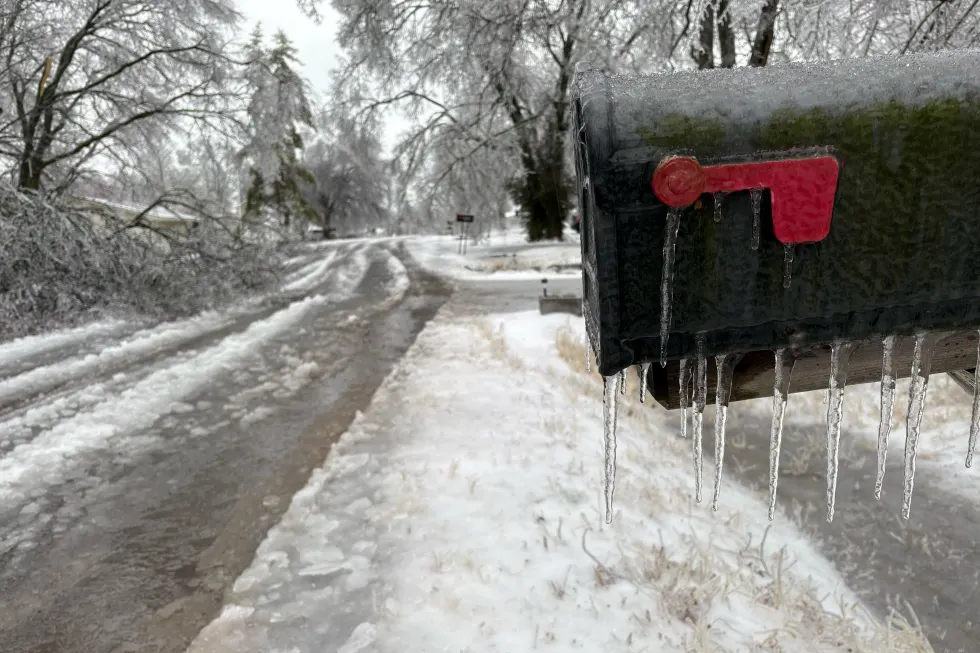
The storm’s meteorological complexity stems from its interaction with Gulf Coast temperatures. While thermometers reached the high 60s and low 70s along the Gulf Sunday, forecasters anticipated a precipitous drop into the high 20s and low 30s by Monday morning. The National Weather Service warned of damaging winds and slight severe storm risks, including possible brief tornadoes—a forecast that materialized with the Tennessee touchdown.
Charlotte Area Transit System suspended all transportation services Sunday, with resumption expected at 10 a.m. Monday. Officials cautioned that continued detours and delays on hazardous roadways would affect Monday operations, with Express Bus Service canceled entirely. The system’s Blue Line light rail ice cutter trains continued operating throughout the crisis.
Perhaps most tellingly, Cherokee County Sheriff’s office in north Georgia posted photographic evidence of shuttered Waffle House restaurants—an informal but widely recognized metric known as the Waffle House Index that locals use to gauge disaster severity across the South. When these famously resilient establishments close, conditions have typically reached genuinely dangerous levels.
As approximately 213 million people remained under winter weather warnings Sunday morning, authorities across affected states announced Monday school cancellations or remote learning transitions. The prolonged nature of subfreezing temperatures following the precipitation means ice and snow will melt slowly, potentially hampering power restoration and infrastructure repair efforts for an extended period. In Oxford, Mississippi, police utilized social media Sunday morning to order residents to remain home as outdoor dangers intensified. Oxford Utilities made the difficult decision to pull line crews from overnight work after trees actively snapped and fell around workers in bucket trucks.
The storm’s aftermath will likely reveal the full extent of economic disruption, infrastructure vulnerability and the challenges posed by extreme weather events affecting such vast geographic areas simultaneously.
NBC/Reuters,AP/Dailymail




