

Zambia’s National Assembly has approved a contested constitutional amendment that reshapes the country’s election framework and significantly expands parliamentary representation, forwarding the measure to President Hakainde Hichilema for assent amid sustained opposition criticism.
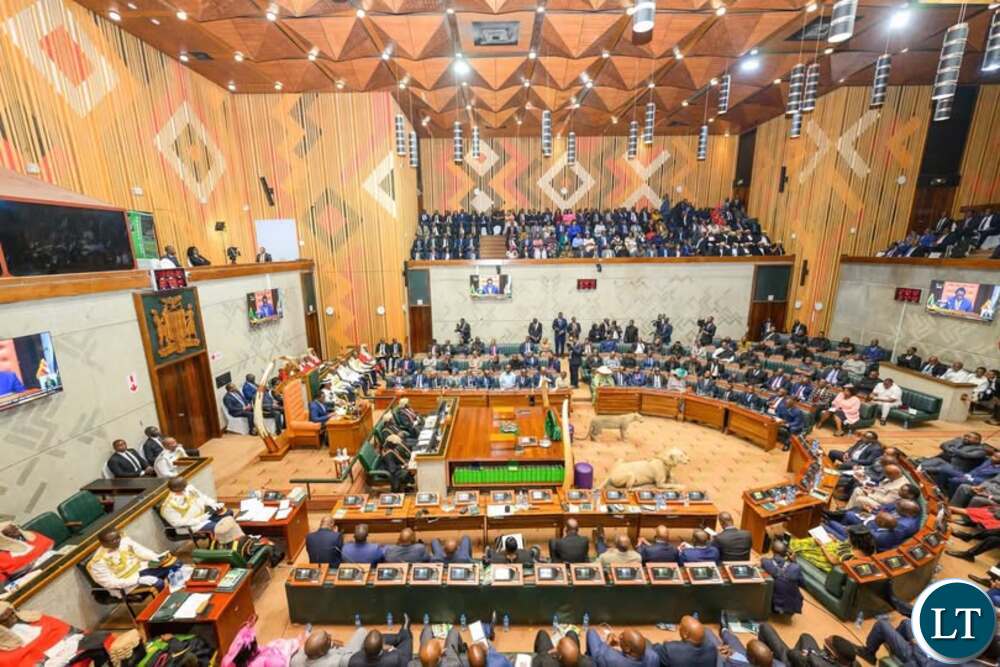
The legislation, formally known as the Constitution of Zambia (Amendment) Bill No. 7 of 2025, raises the number of parliamentary constituencies from 156 to 211, a central objective lawmakers described as necessary to improve representation in a growing population. The bill cleared parliament with overwhelming support, Lusaka Times reported.
Government officials framed the measure as a modernization of Zambia’s democratic system, while opposition parties, church groups and civil society organizations warned the changes could tilt the political field in favor of the ruling United Party for National Development (UPND) ahead of the August 2026 general election.
The bill initially proposed 13 constitutional amendments, though lawmakers dropped two of the most contentious clauses during debate. Parliament removed provisions that would have dissolved the legislature shortly before elections and required independent candidates to resign from political parties months before filing nomination papers.
Among the reforms retained is the introduction of a Mixed Member Proportional Representation (MMPR) electoral system, intended to strengthen representation for women, youth and persons with disabilities. The bill also expands elected seats while allocating 40 positions to candidates from those groups, Citizens.digital reported.
Additional amendments lower the professional experience requirement for the Secretary to the Cabinet from 10 years to five, eliminate term limits for mayors and council chairpersons, and allow the Attorney-General and Solicitor-General to remain in office after elections until replacements are appointed. The legislation also revises local council composition to include Members of Parliament elected from constituencies.
During the second reading, 131 lawmakers voted in favor and two opposed. At the decisive third reading, all 135 members present supported the bill, with no abstentions.
Closing the debate, Justice Minister Princess Kasune described Bill 7 as more than a technical amendment. She said it represented “a covenant with the Zambian people aimed at inclusion, fairness, representation and strengthening democracy,” adding that the reforms were shaped by nationwide consultations, constitutional review processes, the 2025 Electoral Technical Committee Report, and international standards.
Opposition lawmaker Francis Kapyanga of the Patriotic Front (PF) rejected the bill, saying he would not “legitimise an illegality.”
The bill’s passage comes amid heightened political tensions in the southern African nation of about 22 million people. Disputes have extended beyond parliament to a standoff over the burial of former President Edgar Lungu, who died in South Africa in June. His family has refused to repatriate his body, objecting to President Hichilema presiding over the funeral.
Reacting to the vote, Makebi Zulu, a Lungu family spokesman and PF presidential hopeful, wrote on social media that “the struggle for democracy and respect for the rule of law begins in earnest today.”
President Hichilema, who is eligible to seek a second and final five-year term, acknowledged the bill had “tested” national unity but said the outcome of parliament’s vote must be respected.
The approval of Bill 7 marks one of Zambia’s most consequential constitutional changes in recent years, with implications that extend well beyond the next election cycle. Supporters argue the reforms correct long-standing representational imbalances, while critics warn that the timing and speed of passage risk eroding public trust.
With the bill now awaiting presidential assent, attention will turn to how the changes are implemented and whether legal challenges follow. As Zambia approaches the 2026 polls, the debate over Bill 7 underscores the fragile balance between institutional reform and political legitimacy in one of the region’s most closely watched democracies.
LusakaTimes/Citizen.digital




