

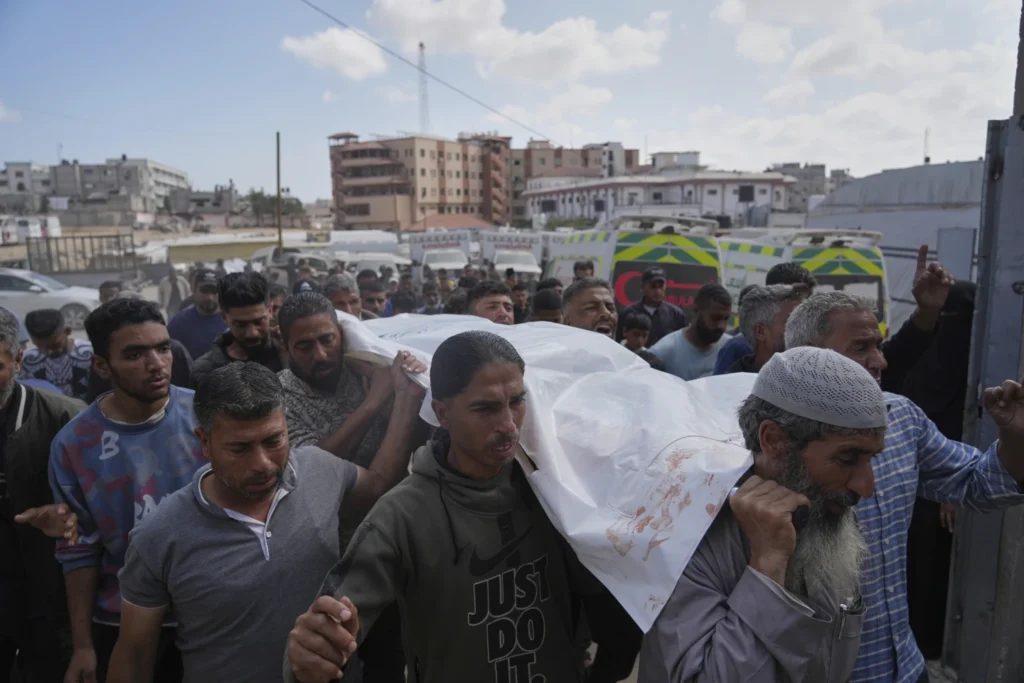
RAFAH, Gaza Strip — At least 27 Palestinians were killed Tuesday after Israeli forces opened fire near an aid distribution point in southern Gaza, according to Palestinian health officials and eyewitnesses. The incident marked the third fatal shooting near such sites in as many days, as international criticism grows over Israel’s militarized aid system and the deepening humanitarian crisis in Gaza.
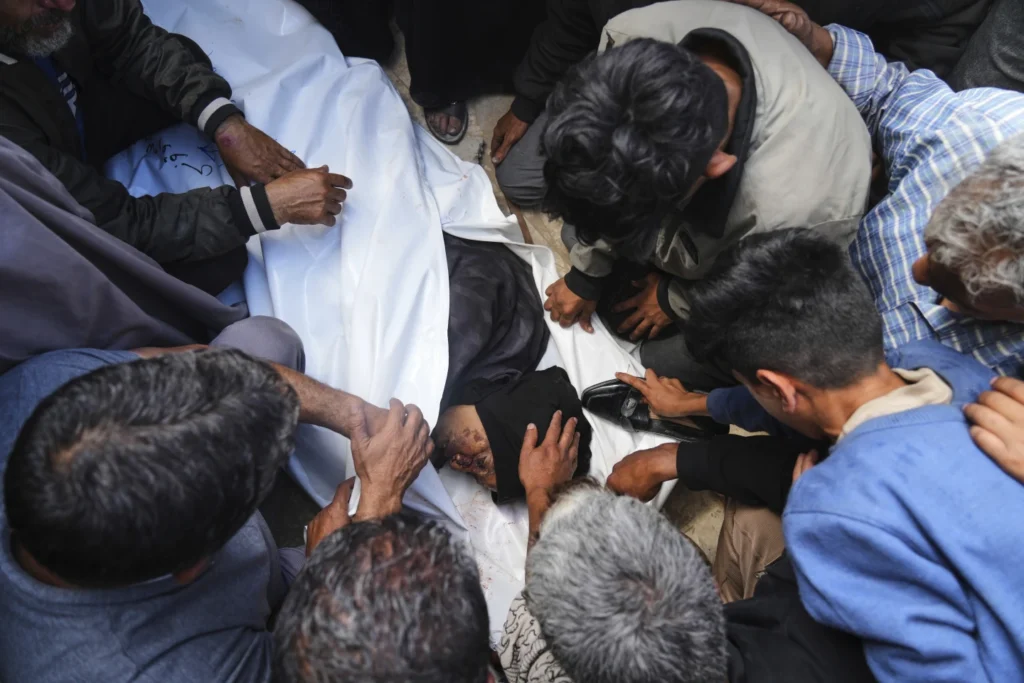
Witnesses said the victims were among a group of displaced Palestinians heading toward the Gaza Humanitarian Foundation (GHF)’s aid site near the Flag Roundabout in Rafah when the shooting erupted around 4 a.m. Many were killed or wounded before reaching the distribution point, where survivors later reported no aid remained.
The Israel Defense Forces (IDF) acknowledged firing “near a few individual suspects” who had deviated from a designated humanitarian corridor and approached Israeli troops, allegedly ignoring warning shots. The army denied targeting civilians directly and said it was investigating Tuesday’s incident, as well as similar deadly events reported on Sunday and Monday.
In total, at least 61 Palestinians have been killed in the past three days while attempting to reach aid convoys, according to Gaza’s Health Ministry. The GHF, which coordinates aid operations within IDF-controlled zones, confirmed the military was reviewing whether civilians were injured after crossing into what it described as a “closed military zone” beyond its secure site.
Testimonies from survivors painted a harrowing picture. “There was gunfire from all directions,” said Rasha al-Nahal, who described seeing more than a dozen bodies along the road to the aid point. “We’d rather die than deal with this. Death is more dignified than what’s happening to us.”
Another witness, Neima al-Aaraj from Khan Younis, called the shooting “indiscriminate” and said she found no aid when she finally arrived. “After the martyrs and wounded, I won’t return,” she added. “Either way we will die.”
Yasser Abu Lubda, 50, said he saw several people shot at close range as they attempted to flee the area.
An Associated Press journalist at the International Committee of the Red Cross (ICRC) field hospital in Rafah reported a steady stream of wounded arriving by ambulance. Bloodstained flour sacks lay scattered outside as desperate residents returned empty-handed from the aid site.
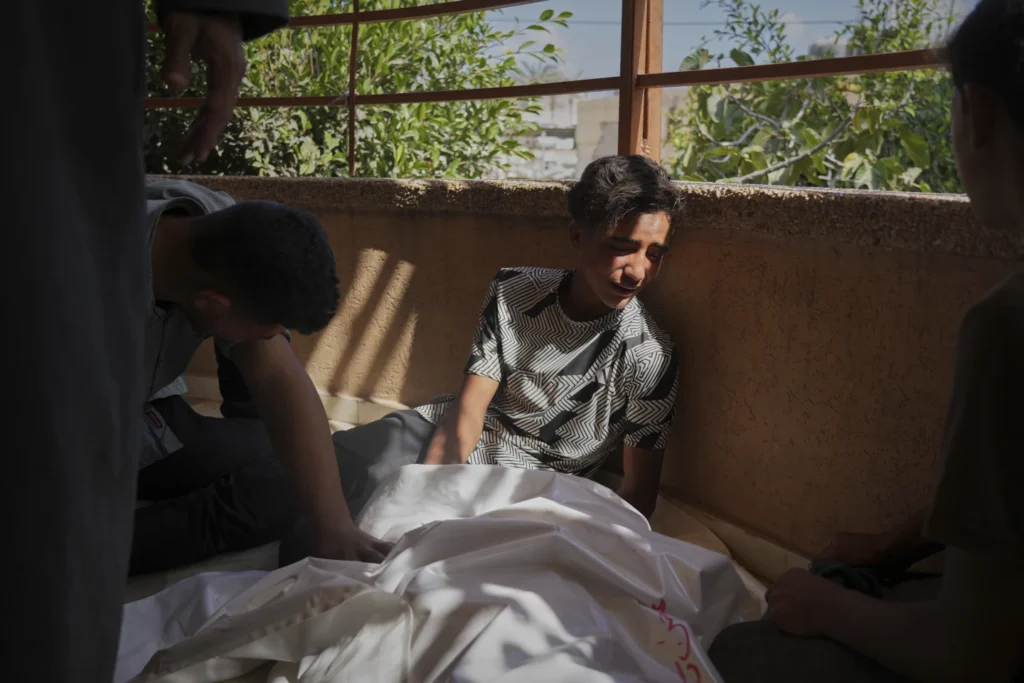
Hisham Mhanna, an ICRC spokesperson, confirmed that the hospital received 184 wounded, with 27 ultimately pronounced dead. Mohammed Saqr, head nurse at Nasser Hospital in Khan Younis, said the dead included three children and two women, with most victims suffering gunshot wounds.
Jeremy Laurence, spokesperson for the U.N. Office of the High Commissioner for Human Rights, confirmed the casualty count and denounced the killings. U.N. human rights chief Volker Türk issued a scathing statement: “Palestinians have been presented the grimmest of choices: die from starvation or risk being killed while trying to access the meagre food that is being made available through Israel’s militarized humanitarian assistance mechanism.”
The UN has rejected Israel’s new aid distribution model—established in coordination with the U.S. and private groups—which channels humanitarian deliveries through military zones. The UN argues that the approach fails to address Gaza’s urgent hunger crisis and allows Israel to exert political leverage over aid access.
The GHF reported it had distributed 21 truckloads of food in Rafah on Tuesday, while its two other sites remained closed. Before the collapse of a recent ceasefire, Gaza was receiving up to 600 aid trucks per day. Now, humanitarian access is severely limited.
Amid the escalating humanitarian toll, the Israeli military announced the deaths of three soldiers in northern Gaza on Monday, reportedly from an explosion in Jabaliya. Israeli media said the soldiers, all in their early 20s, were killed in the deadliest incident involving IDF troops since the last ceasefire ended in March.
Since October 7, 2023—when Hamas militants killed 1,200 people and took 251 hostages in a cross-border attack—Israel has launched a full-scale military campaign in Gaza. The Gaza Health Ministry, which reports to the Hamas-run government, says over 54,000 Palestinians have been killed, most of them women and children. U.N. agencies and independent analysts consider the figures broadly credible, though Israel disputes the civilian toll.
Israel claims it has killed around 20,000 militants but has not provided supporting evidence. The IDF reports that more than 860 Israeli soldiers have died since the war began, including over 400 in ground operations inside Gaza.
Israel imposed a complete blockade on Gaza for two and a half months, halting food and fuel imports and prompting warnings of imminent famine. Restrictions were partially eased in May, but aid remains sporadic and inadequate, international organizations say.
Israel maintains that its restrictions are intended to prevent Hamas from seizing humanitarian supplies. The UN, however, says there is no evidence of systematic diversion and that access is primarily hindered by Israeli roadblocks, looting, and widespread insecurity.
As desperate civilians continue to risk their lives in search of food, global scrutiny over Israel’s conduct in Gaza grows. Humanitarian groups and rights advocates warn that the militarization of aid could have deadly consequences far beyond Tuesday’s massacre.
AP





