

WASHINGTON (BN24) — The U.S. Supreme Court cleared the way on Tuesday for President Donald Trump’s administration to resume its plans to carry out mass job cuts and the restructuring of agencies, elements of his campaign to downsize and reshape the federal government.
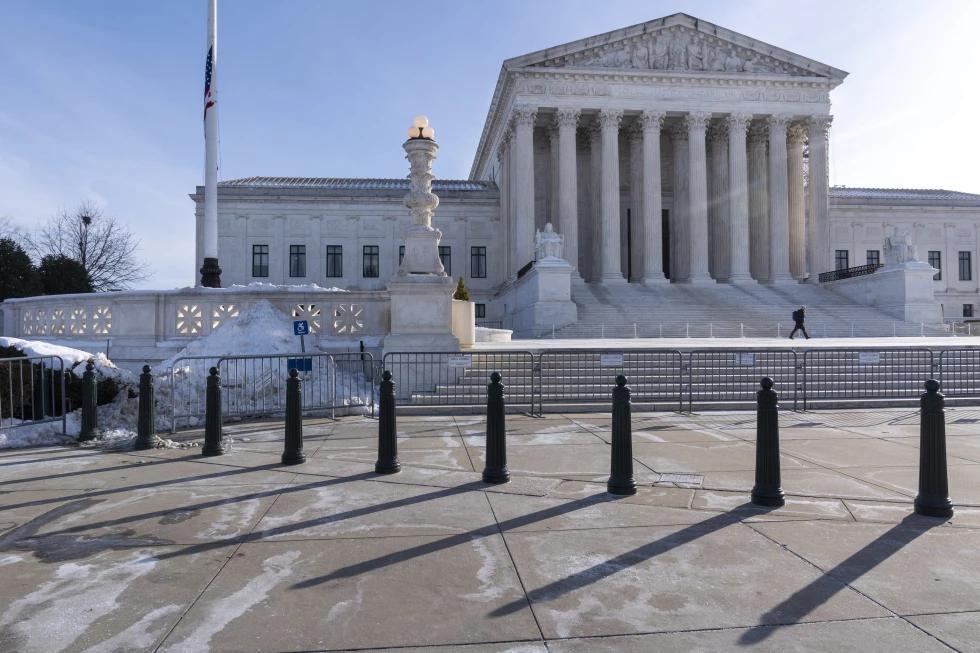
In Trump’s latest victory at the top U.S. judicial body, the justices lifted San Francisco-based U.S. District Judge Susan Illston’s May 22 order that blocked large-scale federal layoffs called “reductions in force” affecting potentially hundreds of thousands of jobs, while litigation in the case proceeds.
Workforce reductions were planned at the U.S. Departments of Agriculture, Commerce, Health and Human Services, State, Treasury, Veterans Affairs and more than a dozen other agencies. The sweeping cuts represent a core element of Trump’s broader effort to fundamentally transform the federal bureaucracy and reduce government spending.
The Supreme Court in recent months has sided with Trump in several cases that were acted upon on an emergency basis since he returned to office in January, including clearing the way for implementation of some of his hardline immigration policies. In addition, Trump last week claimed the biggest legislative win of his second presidential term with congressional passage of a massive package of tax and spending cuts.
The court, in a brief unsigned order on Tuesday, said Trump’s administration was “likely to succeed on its argument that the executive order” and a memorandum implementing his order were lawful. The court said it was not assessing the legality of any specific plans for layoffs at federal agencies, leaving those determinations for lower courts to resolve as litigation continues.
Liberal Justice Ketanji Brown Jackson was the sole member of the nine-person court to publicly dissent from the decision. Jackson wrote that Illston’s “temporary, practical, harm-reducing preservation of the status quo was no match for this court’s demonstrated enthusiasm for greenlighting this president’s legally dubious actions in an emergency posture.”
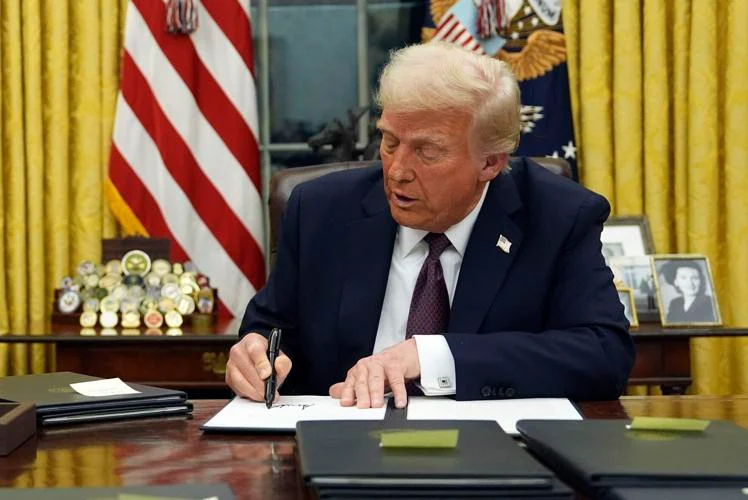
Trump in February announced “a critical transformation of the federal bureaucracy” in an executive order directing agencies to prepare for a government overhaul aimed at significantly reducing the federal workforce and gutting offices and programs opposed by his administration. The executive order represented one of the most ambitious attempts to restructure the federal government in decades.
A group of unions, non-profits and local governments that sued to block the administration’s mass layoffs said Tuesday’s Supreme Court ruling “dealt a serious blow to our democracy and puts services that the American people rely on in grave jeopardy.”
The plaintiffs warned that the decision would have far-reaching consequences for government services and constitutional governance. “This decision does not change the simple and clear fact that reorganizing government functions and laying off federal workers en masse haphazardly without any congressional approval is not allowed by our Constitution,” the plaintiffs said in a statement, adding that they would “continue to fight on behalf of the communities we represent.”
U.S. Attorney General Pam Bondi welcomed the court’s action, framing it as a restoration of presidential authority over federal personnel management. “Today, the Supreme Court stopped lawless lower courts from restricting President Trump’s authority over federal personnel,” Bondi wrote on social media. “Now, federal agencies can become more efficient than ever before.”
Illston had ruled that Trump exceeded his authority in ordering the government downsizing, establishing a significant legal precedent that challenged the administration’s restructuring efforts. “As history demonstrates, the president may broadly restructure federal agencies only when authorized by Congress,” Illston wrote in her comprehensive ruling.
The judge’s ruling was the broadest of its kind against the government overhaul being pursued by Trump and the Department of Government Efficiency, a key player in the Republican president’s drive to slash the federal workforce. The ruling had effectively halted the administration’s most ambitious government restructuring efforts until the Supreme Court’s intervention.
Formerly spearheaded by billionaire Elon Musk, DOGE has sought to eliminate federal jobs, shrink and reshape the U.S. government and root out what they see as wasteful spending. Musk formally ended his government work on May 30 and subsequently had a public falling out with Trump, leaving the efficiency initiative under different leadership.
The judge had blocked the agencies from carrying out mass layoffs and limited their ability to cut or overhaul federal programs. Illston also ordered the reinstatement of workers who had lost their jobs, though she delayed implementing this portion of her ruling while the appeals process plays out.
The San Francisco-based 9th U.S. Circuit Court of Appeals in a 2-1 ruling on May 30 denied the administration’s request to halt the judge’s ruling. That prompted the Justice Department’s June 2 emergency request to the Supreme Court to halt Illston’s order, setting up the constitutional showdown over presidential authority.
“The Constitution does not erect a presumption against presidential control of agency staffing, and the president does not need special permission from Congress to exercise core Article II powers,” the Justice Department told the court, referring to the constitution’s section delineating presidential authority.
The administration argued that the president’s constitutional powers include broad supervisory authority over executive branch personnel and operations. Justice Department lawyers contended that congressional authorization was not required for the president to exercise what they characterized as inherent executive powers over federal workforce management.
Allowing the Trump administration to move forward with its “breakneck reorganization,” the plaintiffs told the court, would mean that “programs, offices and functions across the federal government will be abolished, agencies will be radically downsized from what Congress authorized, critical government services will be lost and hundreds of thousands of federal employees will lose their jobs.”
The plaintiffs warned that the pace and scope of the proposed changes would disrupt essential government services and potentially violate statutory requirements for how federal agencies must operate. They argued that such comprehensive restructuring required congressional approval and could not be accomplished through executive action alone.
The Supreme Court in recent months has let Trump’s administration resume deporting migrants to countries other than their own without offering them a chance to show the harms they could face and end temporary legal status previously granted on humanitarian grounds to hundreds of thousands of migrants.
In addition, it has allowed Trump to implement his ban on transgender people in the U.S. military, blocked a judge’s order for the administration to rehire thousands of fired employees, twice sided with DOGE and curbed the power of federal judges to impose nationwide rulings impeding presidential policies.
The pattern of Supreme Court decisions suggests broad judicial deference to presidential authority in areas traditionally considered within executive branch control. The court’s willingness to intervene on an emergency basis to support Trump administration policies represents a significant shift in how the justices approach challenges to presidential power.
The ruling clears the way for what could be the most significant reduction in federal workforce in modern American history, with implications for government services ranging from food safety inspection to veterans’ benefits processing. The ultimate scope and implementation of the layoffs will depend on ongoing litigation and the administration’s specific plans for each affected agency.
Reuters





