

MAIDUGURI, Nigeria — The Nigerian Air Force eliminated several terrorists and destroyed their logistics hub during a precision air interdiction operation in Borno State on Sunday, while separately in Plateau State, Nigeria, Army troops neutralized a suspected kidnapper and arrested three alleged informants, demonstrating coordinated military pressure against criminal networks across Nigeria’s volatile regions.
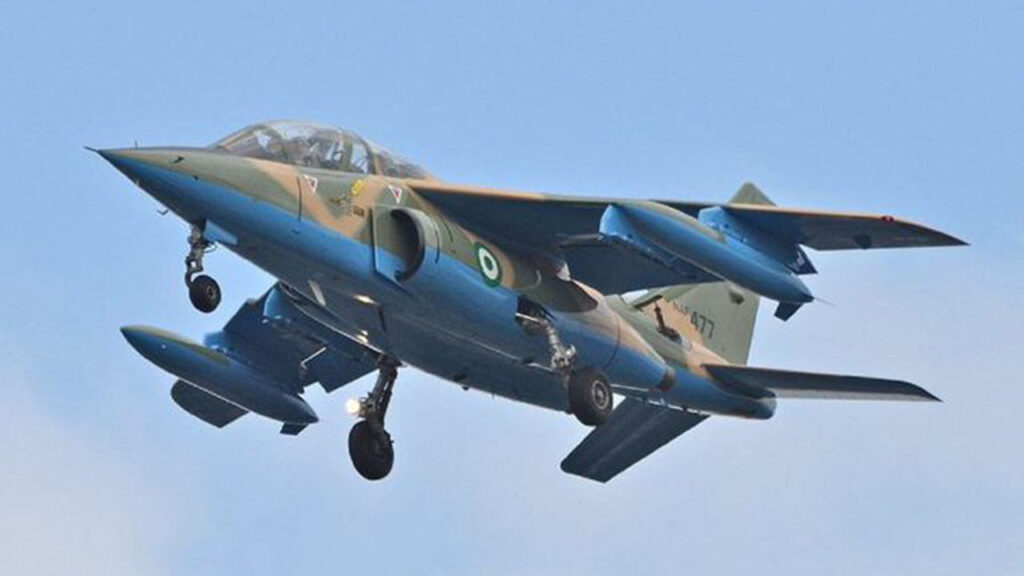
The air operation was executed at Dabar Masara, a known terrorist enclave in the Southern Tumbuns area, as part of ongoing efforts to disrupt terrorist activities and supply networks that sustain insurgent operations in the Northeast. The strikes represent the latest phase in sustained counterterrorism campaigns targeting the infrastructure that enables militant groups to maintain their presence and operational capabilities.
The Director of Public Relations and Information of the NAF, Air Commodore Ehimen Ejodame, detailed in a statement that the strikes followed credible intelligence indicating the presence of a terrorist workshop and sustained movement of armed fighters in the area. The intelligence gathering process involved multiple surveillance missions that established pattern-of-life analysis before authorization for kinetic operations.
The Air Component of Operation Hadin Kai deployed an integrated force package to conduct coordinated intelligence, surveillance and reconnaissance missions alongside strike operations, Ejodame explained. This multi-layered approach ensures target validation before engagement, reducing risks of civilian casualties while maximizing effectiveness against legitimate terrorist targets.
Earlier surveillance had revealed repeated terrorist movement and a large number of vehicles concealed under vegetation, confirming the location functioned as an active logistics base supporting broader insurgent networks, Ejodame disclosed. The concealment tactics employed by the terrorists demonstrated awareness of aerial surveillance capabilities and attempts to evade detection through camouflage and dispersal techniques.
“On the day of the operation, further surveillance validated the earlier findings, with terrorists observed manoeuvring within the location and around the identified vehicles,” he noted, describing the final confirmation procedures before weapons release. The observation of active terrorist presence provided conclusive verification that the target remained operationally relevant at the time of engagement.
Following positive identification and in line with the rules of engagement, the targets were engaged with precision-guided munitions, he added. A post-operation battle damage assessment confirmed that the vehicles were destroyed and several terrorist elements neutralized, achieving the mission objectives without collateral damage to surrounding areas.
Ejodame emphasized that the operation highlights the NAF’s commitment to intelligence-driven and precise air operations aimed at degrading terrorist networks and improving security in affected areas. The systematic approach reflects evolved counterinsurgency doctrine that prioritizes actionable intelligence over indiscriminate aerial bombardment that characterized earlier phases of the conflict.
Meanwhile, Daily Post chronicled how troops of the Nigerian Army neutralized a suspected kidnapper and arrested three alleged informants during a security operation in Plateau State. The incident was detailed in a post shared on X on Monday by security analyst Zagazola Makama, who maintains close monitoring of military operations across Nigeria’s conflict zones.
The troops, drawn from 3 Division of the Nigerian Army and operating under the Joint Task Force Operation Enduring Peace, acted on reports of kidnapping incidents in Dong community, Jos North Local Government Area, in the early hours of Monday. The rapid response demonstrates the military’s commitment to addressing the kidnapping epidemic that has plagued Plateau State and surrounding regions.
The soldiers responded swiftly to distress calls from residents and made contact with the kidnappers during the operation, Makama documented. In the ensuing confrontation, one of the suspects was neutralized through kinetic engagement when he posed an immediate threat to the troops or hostages.
“Items recovered from the suspect included an AK-47 rifle, a magazine and four rounds of 7.62mm special ammunition,” Makama detailed, inventory that confirms the suspect’s armed status and validates the use of lethal force during the encounter. The weapon recovery prevents the firearm from circulating to other criminal elements.
Makama further disclosed that the neutralized suspect was later identified as a resident of the community, who allegedly worked with the kidnapping gang from within the area. This insider status enabled the criminal network to identify vulnerable targets, monitor security force movements, and exploit local knowledge to execute kidnappings with reduced detection risk.
During the operation, troops also arrested three people suspected to be informants who provided support and intelligence to the kidnappers, expanding the security forces’ understanding of the criminal network’s structure and operations. The informants’ local knowledge likely facilitated target selection and operational planning for kidnapping activities.
The arrested suspects, along with the recovered arms and ammunition, remain in custody pending investigation and prosecution, while troops have launched follow-up operations to track down other members of the gang who escaped during the initial encounter. The pursuit operations aim to capitalize on momentum and prevent the gang from reconstituting or relocating to alternative areas of operation.
The military reassured residents of Plateau State of its commitment to protecting lives and property, while encouraging members of the public to continue sharing timely and credible information with security agencies to support ongoing security efforts. Community cooperation provides crucial intelligence that enables preemptive action before kidnapping attempts succeed.
The twin operations in Borno and Plateau underscore the multifaceted security challenges confronting Nigerian military forces, who simultaneously combat insurgent terrorism in the Northeast while addressing criminal kidnapping networks in the Middle Belt region. The distinct operational environments require different tactical approaches but share common requirements for intelligence gathering, rapid response capabilities, and community engagement.
The Borno airstrike demonstrates how aerial assets provide unique advantages in counterterrorism operations, enabling forces to strike terrorist infrastructure in remote areas where ground operations face significant logistical challenges and ambush risks. The integration of reconnaissance and strike platforms creates persistent surveillance that denies terrorists freedom of movement and safe havens for logistics operations.
The destruction of vehicles at Dabar Masara likely disrupts terrorist mobility and supply chain operations critical for sustaining insurgent activities across Borno State. Logistics hubs serve as nodes where weapons, ammunition, food, fuel, and other supplies concentrate before distribution to terrorist cells, making them high-value targets that produce cascading effects when eliminated.
The Plateau operation illustrates persistent challenges posed by insider threats and local informant networks that enable criminal enterprises. The identification of the neutralized suspect as a community resident highlights how kidnapping gangs exploit social connections and local knowledge to conduct operations while evading security forces who may lack similar familiarity with terrain and population dynamics.
The recovery of military-grade weaponry from the kidnapper raises concerns about arms proliferation and potential connections between different criminal and terrorist groups operating across Nigeria. AK-47 rifles represent the predominant weapon choice for both insurgents and criminal gangs, with porous borders and corrupt officials enabling weapons to flow from conflict zones to criminal enterprises in other regions.
The arrest of three informants provides opportunities for intelligence gathering through interrogation that could reveal broader networks, financing mechanisms, and operational procedures employed by kidnapping gangs. Understanding these organizational aspects enables more effective disruption operations targeting multiple gang members simultaneously rather than reactive responses to individual incidents.
For communities in both Borno and Plateau, these military operations offer temporary relief but cannot substitute for comprehensive security sector reform, economic development, and governance improvements that address root causes enabling terrorist and criminal activity. Kinetic operations eliminate immediate threats but require complementary strategies addressing grievances, providing economic alternatives, and strengthening local institutions.
The Nigerian military’s emphasis on intelligence-driven operations reflects lessons learned from years of counterinsurgency campaigns where indiscriminate force alienated populations and enabled terrorist recruitment. The contemporary focus on precision, community engagement, and rules of engagement compliance aims to separate terrorists and criminals from populations while minimizing civilian casualties that undermine security force legitimacy.
As operations continue in both theaters, the Nigerian Armed Forces face resource constraints, personnel challenges, and operational tempo demands that strain capabilities across multiple fronts. Sustaining effectiveness requires continuous training, equipment modernization, intelligence infrastructure investment, and institutional reforms that professionalize forces while maintaining motivation despite difficult operational conditions and periodic setbacks.
DailyPost





