

SPRINGFIELD TOWNSHIP, Ohio — The body of Dr. Cletus Iwuagwu, a 71-year-old Nigerian-American geriatric physician and University of Toledo medical professor who vanished after being released from a hospital in late November, was discovered Christmas Day in an Ohio lake, with autopsy results confirming he died from drowning.
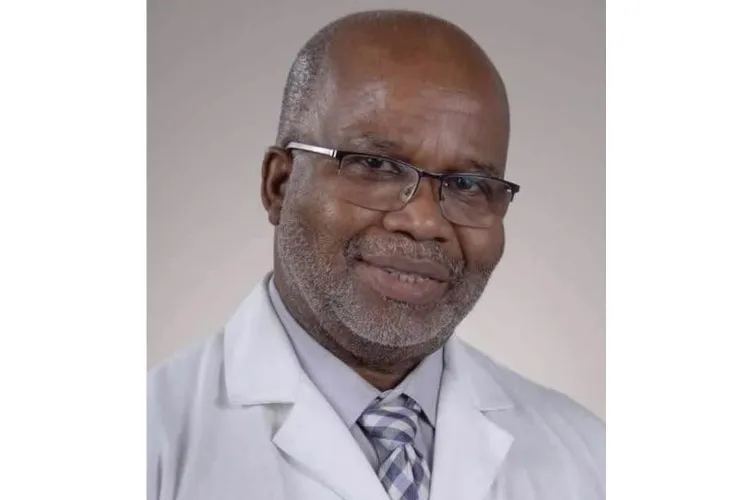
The Lucas County Sheriff’s Office found Iwuagwu’s body Thursday in Orchard Lake near Stone Oak Country Club, according to a Lucas County Coroner’s Office news release. The Springfield Fire Department retrieved the remains from the water, which were subsequently identified as the missing physician.
The coroner’s office announced Friday that autopsy investigation determined drowning as the cause of death. “There were no signs of trauma or foul play at autopsy,” the office stated, though officials emphasized “the circumstances surrounding this death are still being investigated.”
Iwuagwu was reported missing November 25 after his niece last saw him around 8 p.m. November 24, according to a Lucas County Sheriff’s Office report obtained by PEOPLE. His daughter filed the missing person report that day, triggering an extensive search involving drones, K-9 teams and dozens of volunteers over the subsequent month.
The physician had been discharged from a local hospital November 24 and returned home, a family member told responding officers. Surveillance footage captured him near his Holland residence around 2:15 a.m. November 25, marking the last confirmed sighting.
One of Iwuagwu’s daughters informed police she had been receiving location updates about her father through her phone. However, when officials investigated those locations, they were unable to locate him.
“It’s been like a cloud that has been over us because we somehow seemed to feel or know that he was there,” resident Dusty Foreman told WTOL. “Over the past month, I’ve been out there several times and this time, unfortunately, on Christmas, they did find the body.”
Iwuagwu served as a professor in the University of Toledo College of Medicine and Life Sciences, Department of Medicine, and practiced as a UToledo Health geriatric medicine physician, specializing in healthcare for elderly patients.
“He is a well-respected physician, and we share the community’s hope for his safe return as law enforcement continues to investigate his missing-person case,” a University of Toledo Medical Center spokesperson stated to ABC 13 before the body’s discovery.
The circumstances surrounding how Iwuagwu ended up in Orchard Lake remain unclear despite the autopsy findings. The gap between his last confirmed sighting at 2:15 a.m. near his home and his eventual discovery in the lake raises questions about his movements during those intervening hours and what led him to the water.
The timeline presents several puzzling elements. Iwuagwu disappeared just hours after hospital discharge, during early morning hours when most people are asleep. The location data his daughter received on her phone apparently led authorities to areas where they couldn’t find him, suggesting either technical limitations, delayed information, or that he was moving between locations.
The one-month interval between his disappearance and the discovery of his body in a lake that volunteers and official search teams had been investigating raises questions about search methodologies, water conditions that may have concealed the body, or whether the remains moved after death due to water currents or other factors.
The absence of trauma or evidence of foul play, as determined by autopsy, suggests Iwuagwu entered the water under circumstances that did not involve violence from another person. However, drowning can result from various scenarios including accidental falls, medical emergencies that incapacitate individuals near water, disorientation, or intentional entry.
For elderly individuals recently discharged from hospitals, several factors could contribute to disorientation or compromised judgment. These might include medication effects, underlying medical conditions that prompted hospitalization, cognitive impairment, or exhaustion. The coroner’s investigation may examine whether any of these factors played a role.
The discovery on Christmas Day adds a tragic dimension to the case, with first responders and investigators working on a major holiday to recover the body and begin determining what happened. For Iwuagwu’s family, the holiday will now forever be associated with the conclusion of their month-long search and confirmation of their worst fears.
The University of Toledo medical community has lost a respected colleague described as a well-regarded physician and educator. Geriatric medicine specialists like Iwuagwu play crucial roles in healthcare systems, providing specialized care for aging populations with complex medical needs. His absence will be felt by patients, students, and colleagues.
The Nigerian-American community in Ohio and beyond will also mourn Iwuagwu’s death. Nigerian physicians constitute a significant presence in American healthcare, with thousands practicing across specialties throughout the United States. Iwuagwu’s death at 71 suggests he dedicated decades to medical practice and education.
As investigators continue examining circumstances surrounding the death, questions persist about what occurred between Iwuagwu’s hospital discharge and his discovery in Orchard Lake. The ongoing investigation may seek to establish whether he went to the lake intentionally, became disoriented and wandered there, or whether other factors contributed to his presence at that location.
The case highlights challenges in locating missing persons even with modern technology. Despite phone location tracking, drone searches, K-9 teams, and volunteer efforts, Iwuagwu remained undiscovered for a month in a lake that searchers apparently investigated. This raises broader questions about search effectiveness, resource allocation, and technological limitations in missing person cases.
For the Toledo medical community and Iwuagwu’s family, the discovery brings a measure of closure while simultaneously raising new questions about the final hours of a respected physician’s life. As the investigation continues, authorities will work to piece together the sequence of events that led to this tragedy, though some answers may remain elusive.
People.com





