

Israeli airstrikes in eastern Lebanon killed eight members of the militant group Hezbollah, including several local commanders, group officials said Saturday, in one of the deadliest escalations since a fragile ceasefire curbed months of open warfare along the border.
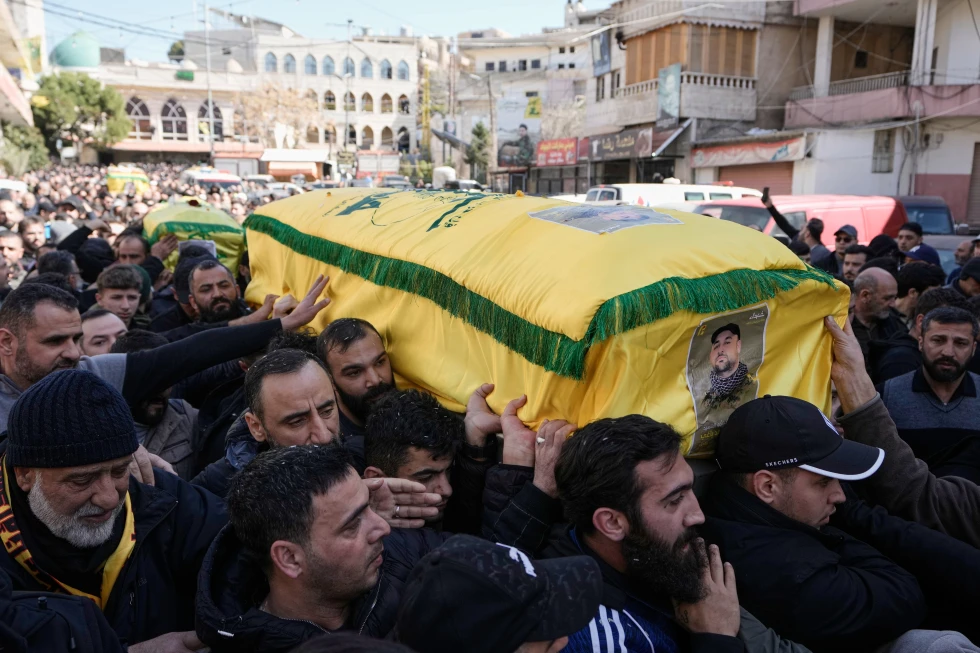
Two Hezbollah officials, speaking on condition of anonymity because they were not authorized to brief the media, told The Associated Press that the militants were killed late Friday near the village of Rayak in northeastern Lebanon. Among the dead were three local commanders identified as Ali al-Moussawi, Mohammed al-Moussawi and Hussein Yaghi, one of the officials said.
Lebanon’s Health Ministry announced that 10 people were killed and 24 others wounded in Israeli strikes across eastern Lebanon, including three children. The ministry did not distinguish between combatants and civilians.
An Associated Press crew that visited the strike site early Saturday observed that the upper level of a three-story residential building had been destroyed, its top floor sheared off and debris scattered across nearby streets. Rescue workers and residents combed through the rubble amid lingering smoke.
The Israeli military confirmed it conducted operations in the Baalbek region, stating that several members of Hezbollah’s missile unit were “eliminated” at three separate command centers. The army asserted that those targeted had been engaged in accelerating operational readiness and planning attacks toward Israel.
One Hezbollah official said that Hussein Yaghi was the son of Mohammed Yaghi, a prominent Hezbollah figure and founding member who died in 2023. The elder Yaghi had been a close associate of longtime Hezbollah leader Hassan Nasrallah, who was killed in an Israeli airstrike in September 2024.
Ali Abdullah, executive director of Rayak Hospital, told the AP that the bombardment occurred shortly after sunset. The hospital received 10 bodies and treated 21 wounded, he said. Among those killed were two non-Lebanese nationals — a Syrian man and an Ethiopian woman — while the injured included five Syrians and three Ethiopians. Many Ethiopians in Lebanon are employed as migrant domestic workers.
Funeral rites were held Saturday in the eastern village of Nabi Chit for two Hezbollah members killed in the strikes, as mourners gathered under heavy security.
The latest violence unfolds against the backdrop of heightened cross-border tensions that began after the Oct. 7, 2023, Hamas-led attack on Israel ignited war in Gaza. Shortly afterward, Hezbollah initiated rocket fire from Lebanon into northern Israel, describing its actions as solidarity with Palestinians in Gaza.
Israel responded with sustained airstrikes and artillery barrages. What began as limited exchanges escalated into full-scale war in September 2024 before a U.S.-brokered ceasefire two months later curbed the most intense fighting. Although large-scale hostilities subsided, sporadic strikes and retaliatory actions have persisted.
Since the truce, Israel has repeatedly accused Hezbollah of attempting to reconstitute its military infrastructure and missile stockpiles. Israeli forces have carried out near-daily strikes in Lebanon, asserting that the operations target militants and weapons facilities. Hezbollah has acknowledged at least one retaliatory strike into Israel since the ceasefire.
The death toll from Friday’s strikes was unusually high compared with recent incidents, underscoring the volatility of the current phase.
A day earlier, The Associated Press detailed additional Israeli strikes in Lebanon’s eastern Bekaa Valley that left at least 10 dead and 24 wounded, including three children, as cited by the Lebanese Health Ministry. Another Israeli strike on the Palestinian refugee camp of Ein el-Hilweh in the port city of Sidon killed two people.
The Israeli military said the Sidon strike targeted a Hamas command center within the camp. Hamas confirmed that two of its members were killed but dismissed Israel’s assertion about a command hub, describing it as unfounded. The group said the building struck belonged to a joint Palestinian security force responsible for maintaining order in the camp.
Television footage from the Bekaa region showed an apartment building ablaze, with emergency crews battling flames and sifting through debris for survivors.
The renewed escalation comes as tensions between Israel and Iran simmer over Tehran’s nuclear program. The United States has warned of possible military action against Iran should diplomatic negotiations collapse. Iran is a principal backer of both Hezbollah and Hamas.
During last year’s Israel-Iran confrontation, Hezbollah largely avoided direct involvement, a decision many analysts viewed as calculated restraint. Yet residents across Lebanon fear that any renewed Israel-Iran conflict could draw the country into another devastating war.
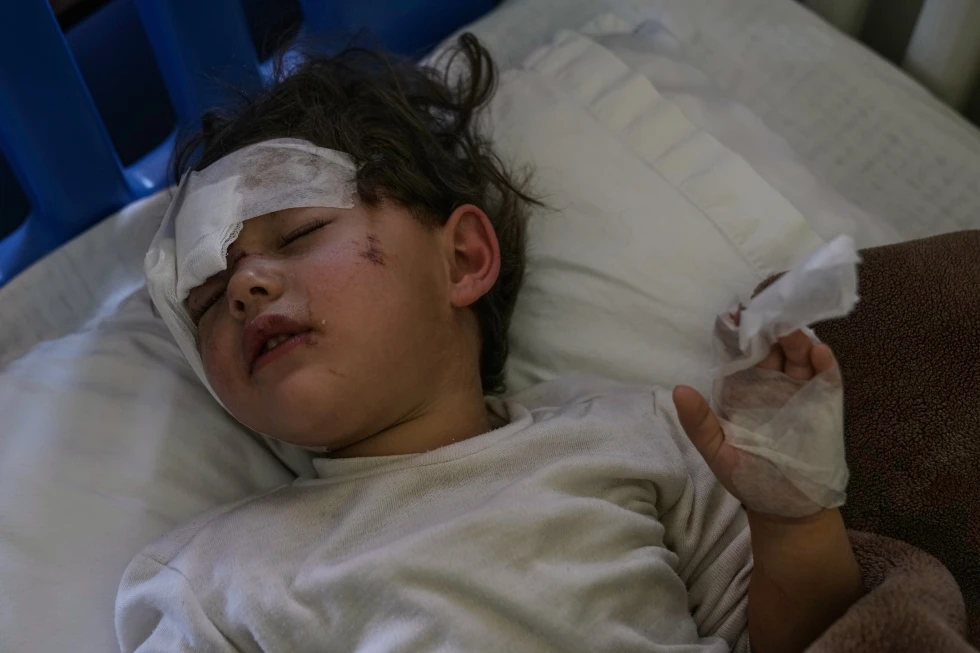
The Israel-Hezbollah war of 2024 inflicted widespread destruction across southern and eastern Lebanon and displaced tens of thousands of residents. Though the ceasefire reduced open warfare, reconstruction has been uneven, and economic pressures have compounded Lebanon’s ongoing financial crisis.
The Rayak strikes signal a shift toward more precise and high-profile targeting of Hezbollah’s mid-level command structure. By naming missile unit personnel and describing the sites as command centers, Israel appears intent on demonstrating that its intelligence apparatus remains active inside Lebanon despite the ceasefire.
Such strikes may aim to degrade Hezbollah’s capacity to rebuild its arsenal, particularly its missile infrastructure, which Israel regards as a strategic threat. However, the inclusion of civilian casualties — including migrant workers — underscores the difficulty of conducting military operations in densely populated or mixed-use areas.
The targeting of figures connected to Hezbollah’s founding generation also carries symbolic weight. The killing of Hussein Yaghi, linked to a senior historical figure within the movement, may resonate deeply among Hezbollah’s support base and could intensify calls for retaliation.
At the same time, Hezbollah’s relatively restrained response since the ceasefire suggests the group is balancing deterrence with caution. Lebanon’s fragile economy and political paralysis limit the country’s appetite for renewed full-scale conflict. A broader war would likely exacerbate already severe humanitarian and financial challenges.
The interplay between Israeli operations in Lebanon and U.S.-Iran tensions adds another layer of unpredictability. Should diplomatic efforts on Iran’s nuclear program falter, regional proxies could once again become conduits for escalation.
For now, the Rayak airstrikes illustrate how the Israel-Hezbollah confrontation has evolved from overt battlefield clashes into a shadow conflict marked by targeted operations and calibrated responses. Whether that dynamic holds — or unravels — may depend less on events in Rayak and more on decisions made in Jerusalem, Tehran and Washington in the weeks ahead.
AP





