

Iran has appointed a former Revolutionary Guard commander as the new secretary of its Supreme National Security Council, replacing a senior official killed in a recent airstrike, as tensions across the Middle East continue to escalate.
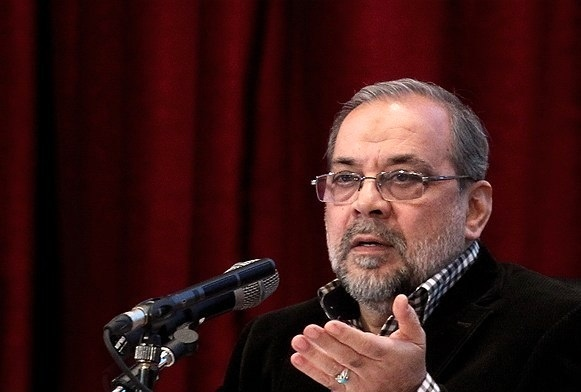
State media identified the new appointee as Mohammad Bagher Zolghadr, a brigadier general in the Islamic Revolutionary Guard Corps who previously served as secretary of the Expediency Council. He succeeds Ali Larijani, whose death in an airstrike marked a significant blow to Iran’s leadership during the ongoing conflict.
The appointment comes at a time of heightened military activity and political uncertainty in Iran, with questions lingering over decision-making within the country’s leadership structure.
Iran’s Supreme National Security Council plays a central role in shaping defense and foreign policy, making Zolghadr’s appointment a critical move as the country navigates intensifying hostilities with Israel and broader regional instability.
Uncertainty remains over the chain of command within Iran’s military and political leadership, particularly following reports that senior figures have been targeted in recent strikes.
In a separate development, Lebanon has ordered Iran’s ambassador to leave the country, declaring him persona non grata. Officials said the envoy must depart by the end of the week, though Iran’s embassy will continue operating under a lower-ranking diplomat.
Lebanese authorities have increasingly criticized Iran’s role in the country, accusing the Revolutionary Guard of supporting the Hezbollah militant group and contributing to instability.
Israel has previously said its strikes in Lebanon have targeted Iranian-linked operatives, further complicating the regional security landscape.
The leadership changes and diplomatic tensions come as fighting intensifies across multiple fronts in the Middle East.
Airstrikes struck Iran’s capital, while Iranian missiles and drones targeted Tel Aviv and other locations. Some projectiles penetrated air defenses, causing damage in urban areas and injuring civilians.
In neighboring Gulf countries, air defense systems were activated as Iranian drones and missile debris affected infrastructure. Saudi Arabia said it intercepted multiple drones targeting its eastern region, while other nations reported temporary disruptions.
Israel, meanwhile, continued strikes in Lebanon, including in Beirut’s southern suburbs, where officials said infrastructure linked to Hezbollah was targeted. Civilian casualties were reported, adding to mounting humanitarian concerns.
President Donald Trump said the United States is engaged in discussions with Iran aimed at ending the conflict, though Iranian officials have publicly downplayed the prospect of negotiations.
At the same time, thousands of U.S. Marines are being deployed to the Gulf region, raising concerns about a potential expansion of the conflict. Strategic locations tied to Iran’s oil exports have drawn particular attention amid speculation about possible military objectives.
Iran has warned it could take measures affecting key shipping routes if it perceives an imminent threat, a move that could disrupt global energy supplies.
Oil prices have surged since the conflict began, reflecting fears over supply disruptions, though brief optimism about possible talks led to temporary market stabilization.
Mixed messaging from both sides has added to uncertainty over whether diplomatic progress is possible.
While some Iranian officials have dismissed the idea of negotiations, the country’s foreign minister has been in contact with counterparts across several nations, suggesting ongoing diplomatic engagement behind the scenes.
Analysts say deep mistrust remains a major obstacle, particularly given past instances where military actions occurred alongside diplomatic efforts.
The conflict has resulted in significant casualties across the region.
Iranian authorities report more than 1,500 deaths, while Israeli officials say multiple fatalities have resulted from missile attacks. In Lebanon, ongoing strikes have killed hundreds and displaced large numbers of civilians.
Additional casualties have been reported among U.S. personnel and civilians in affected areas, underscoring the widening impact of the conflict.
Iran’s appointment of a new national security chief signals an effort to stabilize its leadership structure amid sustained military and political pressure. Replacing a senior figure killed in an airstrike is not only a matter of continuity but also a strategic move to maintain command and control during a volatile period.
Zolghadr’s background in the Revolutionary Guard suggests a security-focused approach, potentially reinforcing the influence of military institutions within Iran’s decision-making process. This could shape how the country responds to both external threats and internal challenges.
The simultaneous expulsion of Iran’s ambassador from Lebanon highlights the growing strain in regional alliances. Lebanon’s move reflects increasing domestic pressure and concerns over being drawn deeper into conflict due to external actors operating within its borders.
At the same time, the broader regional situation remains highly unstable. The convergence of military escalation, economic pressure and uncertain diplomacy creates a complex environment where miscalculation could lead to further expansion of hostilities.
The involvement of global powers, particularly the United States, adds another layer of complexity. Military deployments alongside tentative diplomatic outreach suggest a dual-track strategy, though its effectiveness remains uncertain.
Ultimately, the developments underscore the fragile balance between conflict and negotiation in the region. Leadership changes, shifting alliances and ongoing military actions will likely continue to shape the trajectory of the crisis in the days ahead.





