

President Donald Trump on Monday warned of sweeping military strikes on Iran’s energy and infrastructure facilities if a deal to end the ongoing conflict is not reached soon, as fighting across the region intensified.
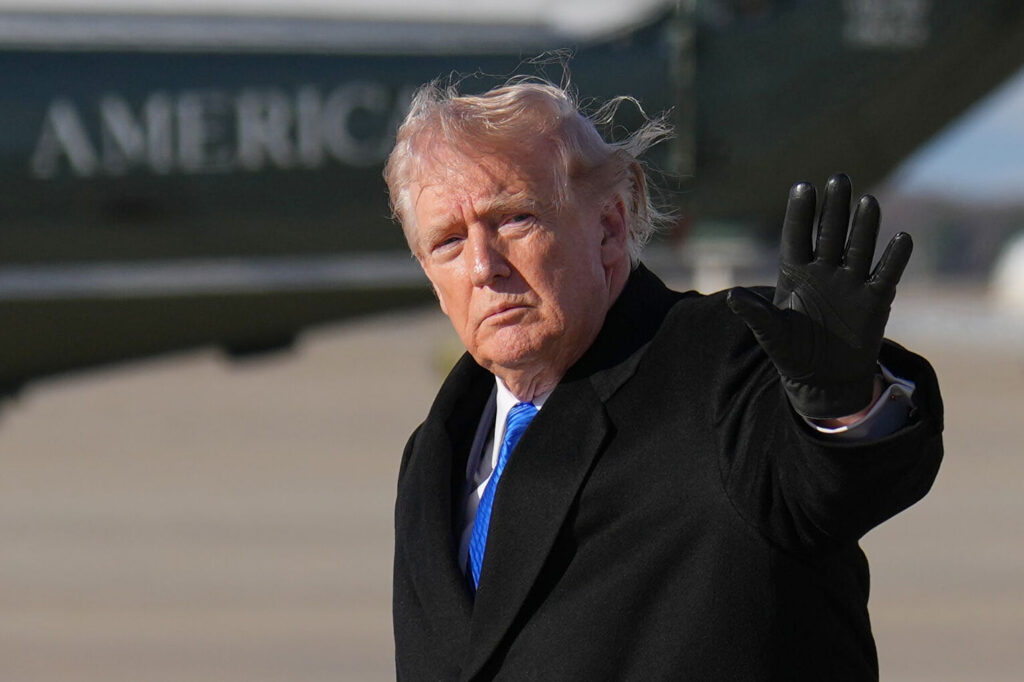
In a social media post, Trump said progress was being made in talks but cautioned that failure to reach an agreement quickly could result in the United States expanding its military campaign to target power plants, oil facilities and other critical infrastructure.
The warning came as hostilities continued across the Middle East, with Iran launching attacks on regional energy sites and the United States and Israel carrying out new strikes inside Iran.
Trump also suggested earlier that U.S. forces could move to seize key Iranian oil export facilities, while emphasizing that diplomatic efforts were ongoing. Iranian officials have denied that direct negotiations are taking place.
The Strait of Hormuz, a vital shipping route for global oil supplies, remains a central point of tension. Trump said the waterway must be reopened immediately, warning that further disruption could trigger broader military action.
Iran rejected U.S. demands, calling them unrealistic and excessive, and warned of severe consequences if American forces enter its territory. Iranian officials also signaled readiness to escalate the conflict, raising fears of a wider regional war.
Across the region, attacks continued. Air defenses intercepted missiles over several Gulf countries, while a strike in Kuwait hit a power and water facility, killing one worker and injuring others. In Israel, air raid sirens sounded near sensitive sites as incoming threats were detected.
Meanwhile, Israeli forces carried out additional strikes targeting what they described as military infrastructure in Iran, with explosions reported in several areas, including near the capital and in northern industrial zones.
The conflict has also spilled into neighboring countries. In southern Lebanon, the United Nations said three peacekeepers were killed within a 24-hour period amid ongoing clashes. An airstrike in a suburb of Beirut left one person dead and multiple others injured, including children.
Casualty figures have continued to rise across the region. Iranian authorities say more than 1,900 people have been killed, while Israel has reported at least 19 deaths. Additional fatalities have been reported in Gulf countries and surrounding areas, along with widespread displacement.
The escalating violence has raised concerns about global energy supplies. Attacks on oil and gas infrastructure, along with disruptions to key shipping routes, have driven oil prices sharply higher. International benchmark crude was trading around $115 a barrel, a significant increase since the conflict began.
Trump has previously warned Iran of even stronger military action if an agreement is not reached, linking recent U.S. naval deployments in the region to stalled negotiations over Iran’s nuclear program.
Despite the threats, U.S. officials maintain that diplomatic channels remain open. Iranian leaders, however, insist that negotiations cannot proceed under military pressure and have called for talks based on mutual respect.
The latest exchange of threats underscores the fragile balance between diplomacy and military escalation in the region. While both sides publicly reference negotiations, their actions suggest preparations for a prolonged conflict.
Targeting energy infrastructure carries significant global implications, as the region plays a critical role in supplying oil and natural gas. Disruptions to production or shipping routes can quickly impact international markets, leading to higher prices and economic uncertainty.
The Strait of Hormuz remains a key flashpoint, as any prolonged closure or instability in the area could severely restrict global energy flows. Military activity near the waterway increases the risk of broader confrontation involving multiple countries.
As the situation evolves, the outcome of diplomatic efforts will likely determine whether the conflict expands further or moves toward de-escalation. For now, the combination of ongoing strikes, rising casualties and economic pressures points to a volatile and uncertain path ahead.
AP





