

A fully loaded oil tanker flying the Kuwaiti flag was struck off the coast of Dubai early Tuesday, authorities said, in the latest escalation of a widening conflict that is disrupting global energy markets and raising fears of a broader regional war.
Dubai officials said emergency crews brought a fire aboard the vessel under control after what they described as a drone strike. Authorities confirmed there were no injuries among the crew and no oil spill, despite damage to the ship’s structure.
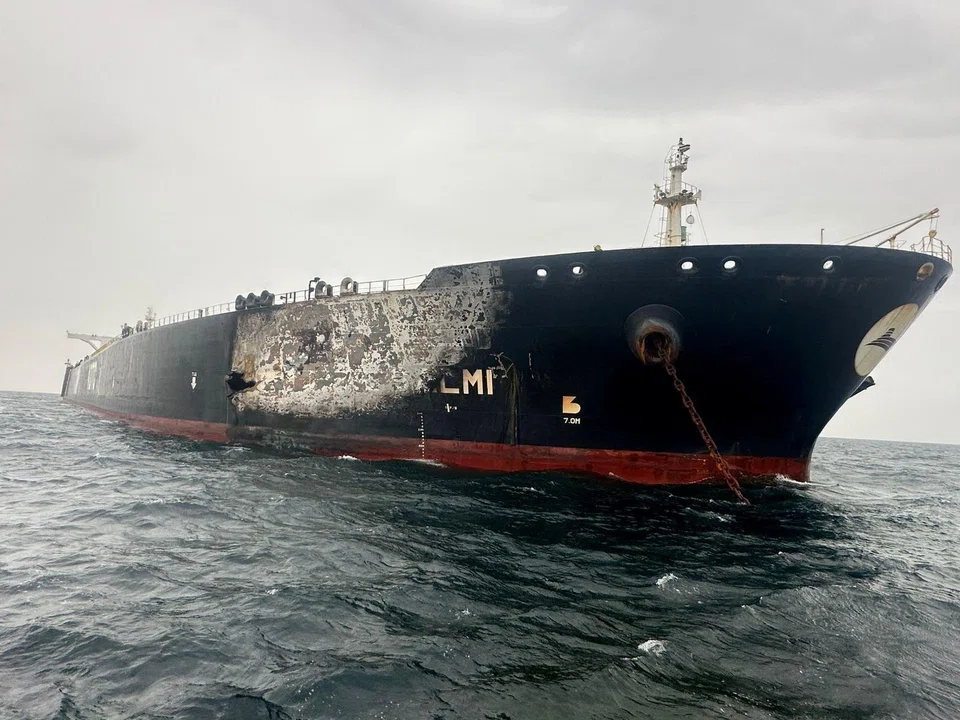
The vessel, identified by Reuters as the Al-Salmi, was carrying roughly 2 million barrels of crude oil at the time of the attack, underscoring the potential economic and environmental risks tied to the incident. Kuwait Petroleum Corp., which owns the tanker, said the strike caused a blaze and damage to the hull before it was contained.
The attack marks one of the most serious incidents involving commercial shipping since the conflict intensified following joint U.S. and Israeli strikes on Iran in late February. Since then, the Gulf region and nearby waters have seen repeated assaults on vessels using missiles and unmanned aircraft.
The latest developments come as President Donald Trump renewed warnings that the United States could target Iran’s energy infrastructure if an agreement to ease tensions is not reached soon. Trump has said reopening the Strait of Hormuz, a vital route for global oil shipments, remains a key demand.
The narrow waterway typically carries about one-fifth of the world’s oil and gas supplies, making it a critical chokepoint for global energy markets.
Oil prices surged following news of the tanker strike, with international benchmark crude climbing sharply amid fears of supply disruptions. Analysts say continued instability in the region could further drive up fuel costs worldwide.
At the same time, military operations across the region showed no signs of slowing. The United States and Israel launched a new round of strikes targeting sites in Iran, including areas near the capital and other locations believed to hold military assets. Video shared by President Trump appeared to show explosions near Isfahan, though Iranian authorities have not confirmed the extent of the damage.
In Iran, local media outlets reported explosions in parts of Tehran, with some neighborhoods experiencing power outages after the strikes. Emergency crews were deployed to restore electricity in affected areas, according to reports from Tasnim news agency.
The conflict has also spilled into neighboring countries. The United Nations said three peacekeepers were killed in southern Lebanon within a 24-hour period. The incidents, involving a projectile strike and an explosion, remain under investigation, and no group has claimed responsibility.
In the same region, the Israeli military said four of its soldiers were killed during operations, highlighting the growing toll on multiple sides of the conflict.
Iran’s military, in statements carried by state television, said recent missile and drone attacks targeted sites used by U.S. forces and Israeli positions across the region. Meanwhile, additional threats have emerged from allied groups, further expanding the scope of the conflict.
According to Reuters, thousands of U.S. troops, including elements of the 82nd Airborne Division, have begun deploying to the Middle East, a move that could broaden Washington’s military options even as diplomatic efforts continue.
White House press secretary Karoline Leavitt said discussions with Iranian officials were ongoing, though she acknowledged differences between public statements and private communications. Iran has indicated it received proposals through intermediaries following talks involving regional officials, but its foreign ministry described the terms as unrealistic and excessive.
Secretary of State Marco Rubio also signaled rising tensions with international partners, criticizing some allied nations for limiting support, including restrictions on U.S. military overflights.
Despite the continued violence, there are signs of mixed signals within the U.S. administration. While Trump has issued strong warnings about potential strikes on Iranian infrastructure, reports from The Wall Street Journal suggest he may be open to ending the military campaign under certain conditions, even if key shipping routes remain partially restricted.
The White House has maintained that ensuring access through the Strait of Hormuz remains a priority, with Rubio stating the passage would be reopened “one way or another.”
The economic impact of the conflict is already being felt. In the United States, average gasoline prices have risen above $4 per gallon for the first time in more than three years, according to GasBuddy. The surge in fuel costs has become a growing political concern ahead of upcoming elections, particularly as the administration had pledged to lower energy prices.
Globally, Brent crude has risen sharply in recent weeks, reflecting tightening supply and heightened risk in one of the world’s most important energy regions.
The strike on a major oil tanker near Dubai represents a critical escalation in the conflict, as it directly targets global energy infrastructure rather than military assets alone. Such actions increase the likelihood of widespread economic consequences, as even isolated attacks can disrupt supply chains and drive volatility in energy markets.
The Strait of Hormuz remains central to the crisis. Any sustained disruption in this corridor could have cascading effects on global trade, particularly for countries heavily dependent on imported energy. The recent surge in oil prices suggests that markets are already pricing in prolonged instability.
The deployment of additional U.S. troops signals preparation for a potential expansion of the conflict, even as diplomatic channels remain open. This dual approach reflects a broader strategy of applying pressure while keeping negotiation options alive, though it also raises the risk of miscalculation.
The involvement of multiple countries and groups underscores the complexity of the situation. What began as a direct confrontation has evolved into a wider regional conflict, with overlapping interests and alliances making de-escalation more difficult.
If attacks on commercial shipping continue, insurance costs, shipping routes and global supply chains could face long-term disruptions. Such developments would extend the impact of the conflict far beyond the region, affecting economies worldwide.
AP/Reuters





