

President Donald Trump declared Tuesday that the United States could conclude military attacks on Iran within two to three weeks and that Tehran does not need to accept a diplomatic agreement as a prerequisite for the conflict to wind down, underscoring the shifting and at times contradictory statements emanating from Washington about how the war—now in its fifth week—might terminate.
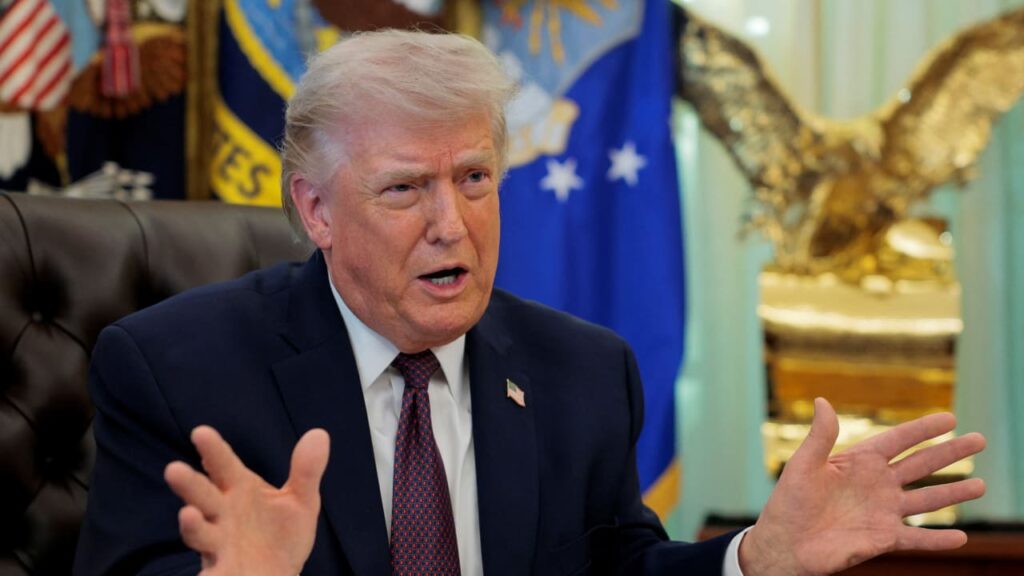
“We’ll be leaving very soon,” Trump told journalists at the White House on Tuesday, projecting the exit could occur “within two weeks, maybe two weeks, maybe three.” When questioned whether successful diplomacy with Iran represented a prerequisite for the U.S. to conclude what it has dubbed “Operation Epic Fury,” Trump emphatically rejected that formulation.
“Iran doesn’t have to make a deal, no,” he stated plainly. “No, they don’t have to make a deal with me.” The comments marked a dramatic reversal from previous administration rhetoric demanding Iranian capitulation to American terms as the price for cessation of hostilities.
The White House subsequently announced that Trump would address the nation “to provide an important update on Iran” at 9 p.m. EDT Wednesday, suggesting significant policy shifts or operational developments might be forthcoming regarding the conflict that has killed thousands, disrupted global energy supplies, and threatened to plunge the world economy into recession.
Washington previously threatened to intensify military operations if Tehran rejected a 15-point U.S. ceasefire framework whose core demands included Iranian commitments not to pursue nuclear weapons, halt all uranium enrichment activities, and fully reopen the Strait of Hormuz that Iran has kept partially closed since hostilities commenced. Trump’s Tuesday comments suggested those demands no longer constitute non-negotiable requirements.
Earlier Tuesday, U.S. Defense Secretary Pete Hegseth indicated Trump remained willing to negotiate an agreement with Iran to end the war that has spread across the region and generated political headaches for the administration as gasoline prices soar and public support for military operations erodes. Talks were ongoing and gaining strength, Hegseth maintained, though the U.S. remained prepared to continue warfare if Iran refused compliance with unspecified American demands.
“We have more and more options, and they have less … in only one month we set the terms, the upcoming days will be decisive,” Hegseth declared in Washington, employing language suggesting imminent resolution despite five weeks of combat producing no tangible progress toward ending hostilities.
Iranian Foreign Minister Abbas Araqchi disclosed he has been receiving direct messages from U.S. special envoy Steve Witkoff but emphasized they do not constitute “negotiations” in the formal diplomatic sense, Qatar’s Al Jazeera television cited him as conveying. The messages include threats or exchanged views delivered through intermediary “friends,” he elaborated, suggesting communication channels remain open despite absence of structured peace talks.
Iran’s Revolutionary Guards on Tuesday issued new threats against U.S. companies operating in the region, declaring that targets would be struck starting Wednesday at 8 p.m. Tehran time. When questioned whether he felt concerned about threats to American corporations, Trump dismissed the danger. “They don’t have much left to threaten,” he said of Iran, projecting confidence about the Islamic Republic’s degraded military capabilities.
Trump also criticized countries that have declined supporting the U.S. war effort, singling out Britain for particular condemnation. In a social media post, he declared that in response to global fuel shortages, these countries should purchase energy from the United States or find “some delayed courage, go to the strait and just TAKE IT”—language suggesting military seizure of petroleum resources.
France and Italy have pushed back against certain U.S.-Israeli military operations, sources disclosed, highlighting how divisions between NATO allies have been exposed by the war. The public disagreements among Western nations illustrate how the Iran conflict has strained alliance relationships and complicated coordinated responses to regional crises.
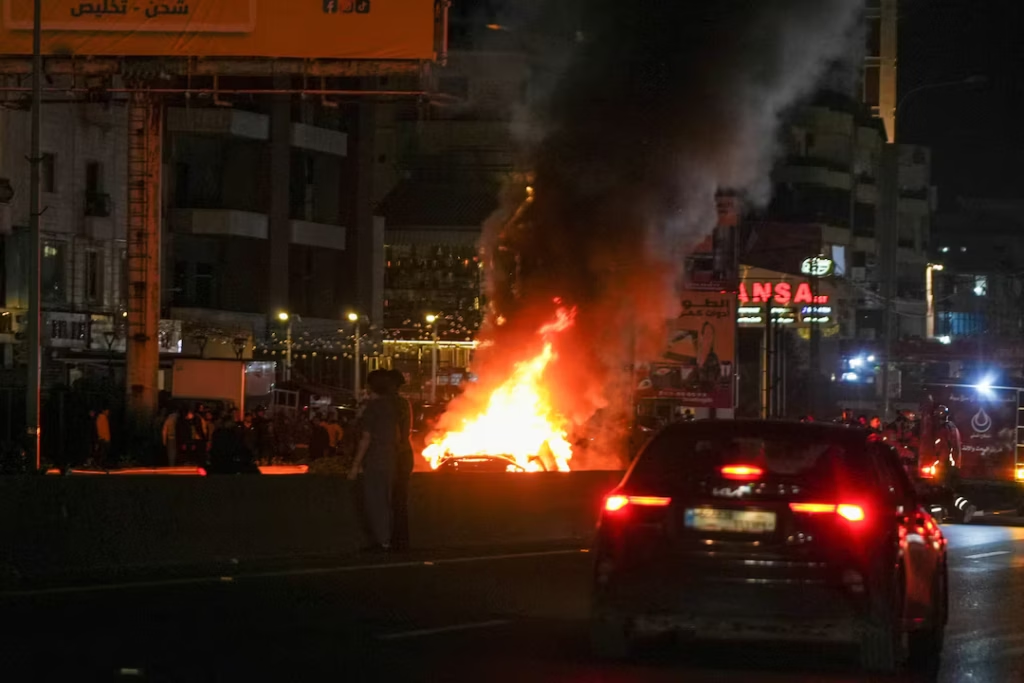
The war has revived conflict between Israel and the Iran-backed Lebanese organization Hezbollah. At least seven people were killed and 24 wounded in two Israeli strikes in the Beirut area, the Lebanese health ministry announced Wednesday, in attacks targeting vehicles in Beirut’s southern outskirts and in an area just south of the capital.
Israel’s military confirmed Wednesday it conducted two separate strikes targeting a senior Hezbollah commander and another senior member of the Iran-aligned group in the Beirut area. Israeli officials did not identify the targets or confirm whether they had been killed. There was no immediate comment from Hezbollah regarding the strikes.
With the conflict in the Middle East showing no signs of easing, Pakistan is seeking to mediate between combatants. The foreign ministers of China and Pakistan called Tuesday for immediate ceasefire, urging peace talks to commence as soon as possible following their meeting in Beijing. The diplomatic initiative reflects growing international concern that the war could expand further or produce uncontrollable escalation.
Iran has remained defiant despite heavy U.S. and Israeli attacks over the past month as neighboring countries have been drawn into the expanding conflict. Syrian state television confirmed that explosions heard in Damascus resulted from Israeli air defenses intercepting Iranian missiles—illustrating how the war has spread beyond Iran’s borders to involve regional powers.
A weather station’s radar and building in the Iranian port of Bushehr were disabled Tuesday after being struck twice in U.S.-Israeli attacks, a regional official told state media. The Mobarakeh steel plant in the central city of Isfahan was attacked for the second time in one week, according to the semi-official Tasnim news agency, while portions of the Sefiddasht Steel Complex in Borujen were targeted, Fars news agency conveyed. Reuters could not immediately verify the battlefield reports.
Higher oil and fuel prices have begun weighing heavily on U.S. household finances and constitute a political headache for Trump and his Republican Party before November midterm elections. The U.S. national average retail gasoline price crossed $4 per gallon for the first time in over three years on Monday, data from price-tracking service GasBuddy demonstrated—a threshold politically damaging for incumbents seeking reelection.
Two-thirds of Americans believe the U.S. should work to end its involvement in the Iran war quickly, even if that means not achieving goals set out by the Trump administration, a Reuters/Ipsos poll determined. The polling data suggests substantial public opposition to continuing military operations despite administration claims of strategic necessity.
According to the Associated Press, the president declared the military could end its offensive in two to three weeks and that the U.S. “will not have anything to do with” what happens next in the strait that has been closed by the Islamic Republic. Instead, he informed reporters, responsibility for keeping the vital waterway open will rest with countries that rely on it for petroleum imports.
There’s “no reason for us to do this,” Trump said after signing an executive order seeking to restrict mail-in voting. “That’s not for us. That’ll be for France. That’ll be for whoever’s using the strait.” The comments suggested Trump was attempting to shift burden for securing international shipping lanes to European and Asian nations whose economies depend on Persian Gulf oil and gas.
Trump lashed out at allies who have proven unwilling to do more supporting the U.S. war effort against Iran, telling them to “go get your own oil” and insisting it was not America’s job to secure the Strait of Hormuz. The harsh rhetoric toward traditional allies illustrated Trump’s transactional approach to international security relationships and his frustration that European nations have declined joining American military operations.
Al Jazeera confirmed that Trump said the United States could stop attacking Iran within two to three weeks and that a deal is not necessary to end a war that has disrupted energy supplies and shaken the global economy. His comments arrived as Iranian Foreign Minister Araqchi told Al Jazeera on Tuesday that no negotiations are occurring with Washington despite direct and indirect message exchanges, nearly five weeks after the U.S. and Israel commenced attacking Iran.
Trump, who previously claimed Iran was engaged in negotiations and “begging” for an agreement, appeared to reverse course Tuesday on the alleged diplomatic drive. “When we feel that they are, for a long period of time, put into the Stone Ages and they won’t be able to come up with a nuclear weapon, then we’ll leave,” he explained, articulating objectives focused on long-term Iranian weakness rather than diplomatic resolution.
Iran has consistently maintained its nuclear activities serve exclusively peaceful purposes and that it has never sought producing nuclear weapons—assertions Western intelligence agencies dispute while acknowledging Tehran has not yet made final decisions about weaponization.
Trita Parsi, a foreign policy expert on Iran at the Quincy Institute, told Al Jazeera that Trump’s statements should be treated cautiously. He noted it would not prove “as easy for Trump to just walk out” of a conflict that has spread across the region and killed thousands—mostly in Iran and Lebanon where Israel has launched ground invasion alongside aerial bombardment—including numerous civilians.
“Remember, at first they said that this war would be over in four days. Then, three weeks ago, they said it would take three weeks. Three weeks have passed, and now we hear that it’s two to three weeks,” Parsi observed. “The timeline just keeps on being extended because, at the end of the day, the United States is no longer in control of this war,” which has transformed into a “debacle,” he added.
“It would be much better for Trump to just end it as quickly as possible through real negotiations. Not these types of coercive measures that have been tried so far. Otherwise, three weeks from now, we’re likely going to hear that it’s going to take another three weeks,” Parsi predicted.
Trump’s comments arrived as domestic gasoline prices jumped past an average of $4 per gallon as a result of Iran’s attacks on Gulf petroleum facilities and its continued constricting of fuel supplies through the Strait of Hormuz—a vital waterway through which one-fifth of the world’s oil and liquified natural gas transits. The price increases threaten Trump’s political standing heading into midterm elections where economic issues traditionally dominate voter concerns.
With the war reaching new intensity levels, Trump has continued lashing out at allied countries that have refused calls for military assistance to secure freedom of navigation through the Strait of Hormuz. In a Truth Social post, the president targeted countries “like the United Kingdom” which have “refused to get involved in the decapitation of Iran,” instructing them to either purchase U.S. fuel or participate in the rapidly escalating war.
“You’ll have to start learning how to fight for yourself, the U.S.A. won’t be there to help you anymore, just like you weren’t there for us. Iran has been, essentially, decimated. The hard part is done. Go get your own oil!” he wrote, employing language suggesting permanent shifts in American security commitments to traditional allies.
Defense Secretary Hegseth also highlighted Britain’s reluctance about joining the war, observing that “last time I checked, there was supposed to be a big, bad Royal Navy that could be prepared to do things like that as well.” UK Defense Secretary John Healey addressed the criticism during a Qatar trip, insisting his country remained a key U.S. ally despite declining to participate in military operations against Iran.
In a separate Truth Social post, Trump attacked France for being “VERY UNHELPFUL,” particularly in refusing to allow “planes headed to Israel, loaded up with military supplies, fly over French territory.” President Emmanuel Macron’s office noted that its position—including not authorizing use of French bases for attacks on Iran—had been clear from the conflict’s commencement.
“We are surprised by this tweet. France has not changed its position since day one [of the conflict] and we confirm this decision,” the French statement declared, defending Paris’s sovereign right to determine which military operations it would support.
Parsi suggested Trump was “trying to create a narrative of success” by claiming that opening the Strait of Hormuz is not part of U.S. objectives in the Iran war. However, the president simultaneously demonstrated frustration that European countries remain unwilling helping him reopen the important waterway.
“The US has the largest and most powerful navy in the world. If the US cannot do it, what difference can the French make and other Europeans going in?” Parsi questioned, predicting Iran “will continue to control the Strait of Hormuz, and will probably continue to shoot at it.”
Parsi also noted Trump’s claim about sending Iranians back to the “Stone Age” represented “essentially the Israelisation of America’s war aims.” Israeli Prime Minister Benjamin Netanyahu—wanted by the International Criminal Court on war crimes charges over Israel’s operations in Gaza—argued during a Monday U.S. broadcaster interview that the Iran war was “definitely beyond the halfway point … in terms of missions, not necessarily in terms of time,” though he declined specifying timelines.
As Trump’s projected two-to-three week withdrawal timeline begins, fundamental questions persist about whether American forces can actually disengage from a conflict that has expanded far beyond initial expectations, whether Iran will accept implicit victory through American departure without formal agreement, and whether regional stability can be restored after weeks of devastating bombardment that killed thousands and crippled infrastructure across multiple countries.
Reuters/AP/Aljazeera





