

A deadly gang assault in Haiti’s central Artibonite region has left at least 70 people dead and about 30 others injured, according to the rights group Defenseurs Plus, a toll far higher than early official counts as violence continues to spiral beyond government control.
The attack unfolded in rural communities near Petite-Riviere, an area considered vital to the country’s food production. Residents and local authorities described a wave of violence that began before dawn Sunday and stretched into early Monday, with armed groups sweeping through villages, burning homes and forcing thousands to flee.
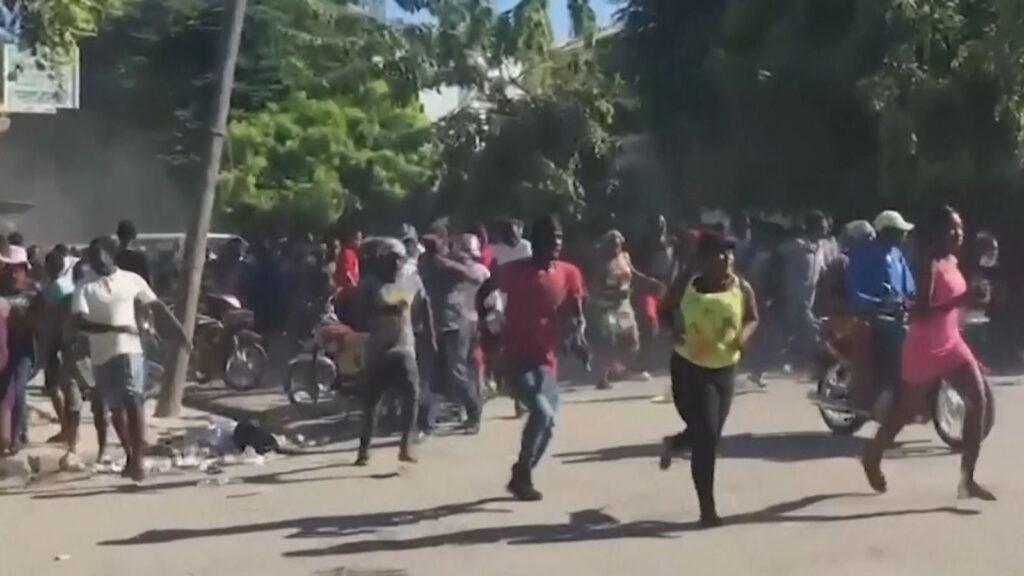
Defenseurs Plus, cited by Reuters through regional media coverage, estimated that around 6,000 people were displaced by the assault. The United Nations had already indicated that more than 2,000 residents had fled nearby areas in the days leading up to the attack following earlier raids by armed groups.
Initial figures from Haitian police placed the death toll at 16, with 10 injured. A preliminary assessment from civil protection officials listed 17 dead and 19 wounded, most of them men. However, a spokesperson for the United Nations secretary-general said during a briefing that casualty estimates varied widely, ranging from 10 to as many as 80 deaths, and called for a full investigation into the incident.
Defenseurs Plus sharply criticized the response by authorities, saying in a statement issued with the Collective to Save the Artibonite that the lack of effective security measures reflected a failure to protect civilians in one of the country’s most vulnerable regions.
“This situation shows a complete failure of responsibility by the authorities,” the group said, pointing to the growing influence of armed gangs across the region.
Accounts from residents described scenes of panic as attackers moved from house to house, setting buildings ablaze. Defenseurs Plus estimated that about 50 homes were destroyed in the violence.
An audio message circulating on social media was attributed to Luckson Elan, identified as a leader of the Gran Grif gang. In the recording, he appeared to describe the assault as retaliation for earlier attacks on the group’s stronghold in Savien by a rival faction. The authenticity of the message has not been independently verified.
The Artibonite region, long known as Haiti’s agricultural heartland, has increasingly become a center of conflict as armed groups expand their reach beyond the capital, Port-au-Prince. Despite promises of stronger policing and additional foreign support, violence has spread into rural areas, disrupting food production and deepening insecurity.
Haiti’s National Police said officers were deployed to the affected communities with three armored vehicles. Their movement was slowed by trenches dug into the roads by gang members, a tactic used to delay security forces. By the time officers arrived, officials said many attackers had already fled and numerous homes had been burned.
Authorities said the injured were transported to nearby hospitals, while victims were taken to local morgues. Police added that operations are underway to locate those responsible for the attack.
The latest violence adds to a mounting humanitarian crisis in Haiti, where armed groups have gained strength in recent years. A United Nations report estimates that nearly 20,000 people have been killed since 2021 as clashes between gangs, security forces and local defense groups have intensified.
Gran Grif, along with the Viv Ansanm coalition, has been identified by the United States as a terrorist organization. The groups have been accused of widespread abuses, including mass killings, sexual violence, arson and trafficking in weapons and drugs.
Earlier this month, the United States announced a reward of up to $3 million for information related to the financial operations of these groups, signaling growing international concern over their influence.
The attack over the weekend is the latest in a series of large-scale killings in the Artibonite region. In October 2024, an assault blamed on Gran Grif in the nearby town of Pont-Sonde left more than 100 people dead, with gunmen reportedly targeting residents in their homes.
The ongoing violence has forced more than 1.4 million people from their homes across Haiti, representing roughly 12 percent of the population. The mass displacement has worsened an already severe economic crisis and limited access to food, particularly in regions like Artibonite that are central to agricultural production.
The scale and brutality of the latest attack highlight the deepening collapse of security in Haiti, where armed groups now operate with little resistance in many parts of the country. The sharp difference between early official casualty figures and those reported by rights groups points to persistent challenges in gathering accurate information in areas largely controlled by gangs.
Artibonite’s importance as a food-producing region adds another layer of urgency. Continued violence there threatens not only local communities but also the country’s broader food supply, raising the risk of worsening hunger and instability.
The delayed arrival of security forces, hindered by road blockades set by attackers, underscores the tactical advantage gangs have developed. Their ability to control movement and territory suggests a level of organization that complicates efforts to restore order.
International involvement, including financial incentives offered by the United States, signals recognition that Haiti’s crisis has implications beyond its borders. However, without a sustained and coordinated approach to rebuilding security institutions, such measures may have limited immediate impact.
The attack also reflects a broader shift in the conflict, as violence spreads from urban centers into rural regions. This expansion increases the number of vulnerable communities and places additional strain on already limited humanitarian resources.
As the death toll rises and displacement grows, Haiti faces a critical moment. The absence of effective governance and security continues to allow armed groups to tighten their grip, leaving civilians exposed and the country’s future increasingly uncertain.
Aljazeera





