

Iran and the United States have received a draft proposal calling for a 45-day ceasefire and the reopening of the Strait of Hormuz as a potential pathway to ending the five-week war, two Middle East officials told The Associated Press, though Tehran immediately rejected any immediate compliance with President Donald Trump’s demands for unconditional surrender.
The proposal originates from Egyptian, Pakistani, and Turkish mediators working to halt the fighting, according to two officials who spoke on condition of anonymity to discuss private negotiations whose failure could mean continued warfare killing thousands and devastating regional economies. Mediators hope the 45-day window would provide sufficient time for extensive talks between the adversaries to reach permanent ceasefire terms.
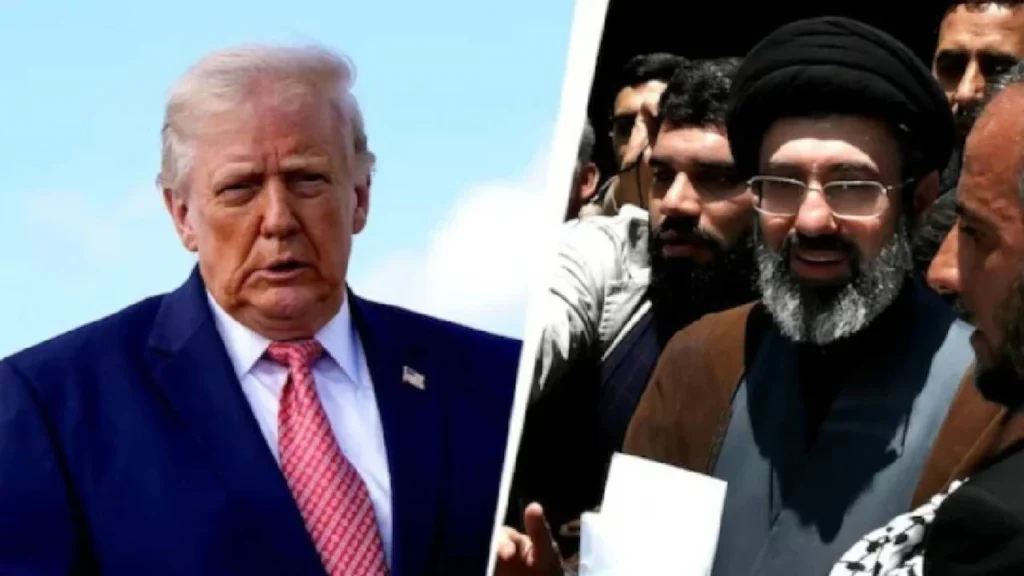
Iran and the United States have not formally responded to the proposal, which was transmitted late Sunday night to Iranian Foreign Minister Abbas Araqchi and U.S. Middle East envoy Steve Witkoff, the officials disclosed. It remains unclear whether the sides would agree to such terms given their contradictory public positions and maximalist demands that appear incompatible with compromise.
Iran has insisted it will continue fighting until it receives financial reparations for damages inflicted during five weeks of American and Israeli bombardment and obtains binding guarantees it will not be attacked again—conditions Trump has shown no willingness to accept. President Trump has threatened to bomb Iranian bridges and power stations this week if Tehran fails to capitulate, setting a specific Tuesday evening deadline for compliance.
The news website Axios first documented terms of the proposal in reporting Sunday that highlighted the urgent diplomatic efforts occurring as Trump’s deadline approaches. Reuters confirmed that with the U.S. ultimatum looming, the United States and Iran received the framework of a plan to end their conflict, though Tehran rejected any immediate move to reopen the Strait of Hormuz that Iran has kept partially closed since hostilities commenced.
Trump has threatened to unleash “hell” on Tehran if it fails to reach an agreement by the end of Tuesday that would allow traffic to resume moving through the vital route for global energy supplies. The strait handles approximately one-fifth of the world’s oil and liquefied natural gas shipments, making its closure economically catastrophic for petroleum-importing nations worldwide.
The Pakistani-brokered plan emerged from intense overnight contacts and proposes an immediate ceasefire followed by negotiations on a broader settlement to be concluded within 15 to 20 days, a source aware of the proposals disclosed Monday. Pakistan’s army chief, Field Marshal Asim Munir, maintained contact “all night long” with U.S. Vice President JD Vance, special envoy Steve Witkoff, and Iranian Foreign Minister Abbas Araqchi, the source revealed, illustrating the diplomatic intensity as the deadline approaches.
Iran’s foreign ministry confirmed Monday that Tehran had formulated positions and demands based on its interests and communicated them through intermediaries in response to ceasefire proposals. Ministry spokesperson Esmaeil Baghaei indicated details of the response would be announced in due time but added that negotiations were “incompatible with ultimatums and threats to commit war crimes.”
“Iran does not hesitate to clearly express what it considers its legitimate demands and doing so should not be interpreted as a sign of compromise, but rather as a reflection of its confidence in defending its positions,” Baghaei told a press conference, employing language suggesting Iran would not be intimidated by Trump’s threats into accepting unfavorable terms.
Baghaei noted that earlier U.S. demands—including a 15-point plan presented through Pakistani channels—were rejected for being excessive and one-sided. The plan reportedly demanded Iranian commitments to abandon nuclear enrichment, dismantle missile programs, and accept intrusive inspections without reciprocal American concessions.
Earlier Monday, a senior Iranian official told Reuters that Iran will not reopen the Strait as part of a temporary ceasefire, nor would it accept deadlines or pressure to reach a deal. Washington was not ready for a permanent ceasefire, the official charged, suggesting American objectives extend beyond merely reopening maritime traffic to include regime change or permanent military degradation.
Axios documented Sunday that the United States, Iran, and regional mediators were discussing a potential 45-day ceasefire as part of a two-phase deal that could lead to permanent war termination, citing U.S., Israeli, and regional sources. The first phase would involve immediate cessation of hostilities and strait reopening, while the second phase would address underlying issues including nuclear programs, regional influence, and reparations.
In a post laden with profanity on his Truth Social platform Sunday, Trump threatened further strikes on Iranian energy and transport infrastructure if Iran failed to reach agreement and reopen the Strait by Tuesday. Later Sunday, the president provided a more precise deadline in a follow-up post: “Tuesday, 8:00 P.M. Eastern Time! (Wednesday 0000 GMT)”—creating a specific moment when either diplomacy would succeed or military escalation would intensify.
Anwar Gargash, an adviser to the president of the United Arab Emirates, emphasized that any settlement must guarantee access through the Strait of Hormuz given its critical importance to global energy markets and regional economies. He warned that a deal failing to constrain Iran’s nuclear program and its missiles and drones would pave the way for “a more dangerous, more volatile Middle East” where Tehran could resume threatening behavior once American military pressure subsided.
Fresh strikes were documented across the region Monday, more than five weeks since the United States and Israel began pounding Iran in a war that has killed thousands and damaged economies by boosting oil prices to levels not seen in years. Iranian state media confirmed the head of the Revolutionary Guards’ intelligence organization, Majid Khademi, has died. Israel on Monday claimed responsibility for his death through targeted assassination.
Israel and the United States have systematically eliminated Iran’s leaders since the war’s commencement on February 28, killing several high-ranking members of the Iranian ruling system including Supreme Leader Ali Khamenei, who was replaced by his son Mojtaba in a succession that violated traditional clerical selection processes. The leadership decapitation strategy aims to cripple Iranian command and control while demoralizing the population.
A U.S.-Israeli attack struck the data center at Sharif University of Technology in Tehran, damaging infrastructure underpinning the country’s national platform for advanced computing and thousands of other services, Fars News Agency disclosed Sunday. The targeting of civilian educational and technological infrastructure raised concerns about war crimes prohibitions against attacking non-military objectives.
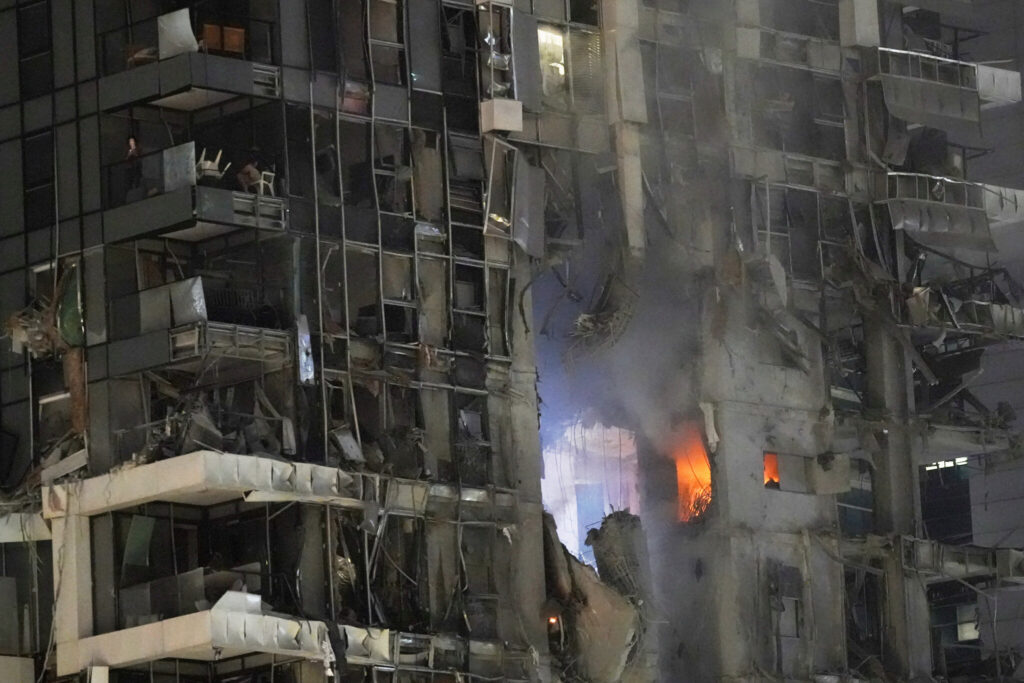
Israeli Defense Minister Israel Katz issued a statement Monday threatening to destroy Iran’s infrastructure and hunt down its leaders “one by one.” Trump has repeatedly warned Iran he could expand U.S. strikes to include civilian infrastructure including power plants and bridges—targets whose destruction could constitute war crimes under international humanitarian law.
Experts note such attacks could violate Geneva Conventions but the International Criminal Court lacks jurisdiction because the countries involved are not members of the court. The Geneva Conventions specify that parties involved in military conflict must distinguish between “civilian objects and military objectives,” and that attacks on civilian objects are forbidden except when they make effective contributions to military action.
Iranian weekend strikes on petrochemical facilities and an Israeli-linked vessel in Kuwait, Bahrain, and the United Arab Emirates underscored the country’s ability to fight back despite Trump’s repeated claims to have knocked out its missile and drone capabilities. The attacks demonstrated that Iran retains sufficient military capacity to threaten regional targets even after weeks of intensive bombardment.
Iran responded to attacks launched by the United States and Israel in February by effectively closing the Hormuz waterway—a conduit for approximately one-fifth of the world’s oil and natural gas supply—and attacking Israel, U.S. military bases, and energy infrastructure around the Gulf. The closure triggered petroleum price spikes that have strained global economies and contributed to inflation in energy-importing nations.
About 3,540 people have been killed in Iran since the war erupted, including at least 244 children, according to U.S.-based rights group HRANA. The casualty figures—which Iranian authorities dispute as inflated—illustrate the human cost of military operations that both sides claim are achieving strategic objectives despite mounting deaths.
At least four Israelis were killed in a missile attack on a residential building in Haifa in northern Israel overnight, Israeli emergency service MDA confirmed Monday, bringing the total number of Israeli civilian fatalities from Iranian and Hezbollah attacks to 23. The civilian deaths in Israel—while far fewer than Iranian casualties—have generated domestic political pressure on the government to achieve decisive military victory.
Israel has invaded southern Lebanon and struck Beirut in combat against Iran-backed Hezbollah militants that has become the most violent spillover of the U.S.-Israeli war on Iran. Lebanon’s heavy casualties include 1,461 killed, including at least 124 children, Lebanese authorities documented, representing a humanitarian catastrophe drawing international condemnation.
Thirteen U.S. service members have died and hundreds of others have sustained wounds during five weeks of combat operations, creating political challenges for Trump as American casualties mount without clear progress toward stated objectives. The deaths have prompted questions from congressional critics about the war’s legal authorization and strategic coherence.
As Tuesday’s 8:00 p.m. Eastern deadline approaches, the fundamental question remains whether mediators can bridge the gap between Iran’s demands for reparations and security guarantees and Trump’s insistence on unconditional Iranian capitulation. The 45-day ceasefire proposal represents a potential off-ramp from escalating violence, but only if both sides prove willing to compromise on positions they have publicly characterized as non-negotiable.
Whether Trump will follow through on threats to bomb civilian infrastructure if his deadline passes without Iranian compliance—and whether such attacks would constitute war crimes—could determine both the war’s trajectory and America’s international standing.
For millions across the Middle East living under bombardment or economic hardship from energy disruptions, the diplomacy’s success or failure will determine whether violence continues escalating or whether the region can begin recovering from five devastating weeks of warfare.
AP/Reuters





