

A NASA astronaut delivered a message of faith, unity and reflection as the Artemis II crew prepared to lose contact with Earth while passing behind the moon, marking a symbolic moment in the first crewed lunar flyby mission in more than 50 years.

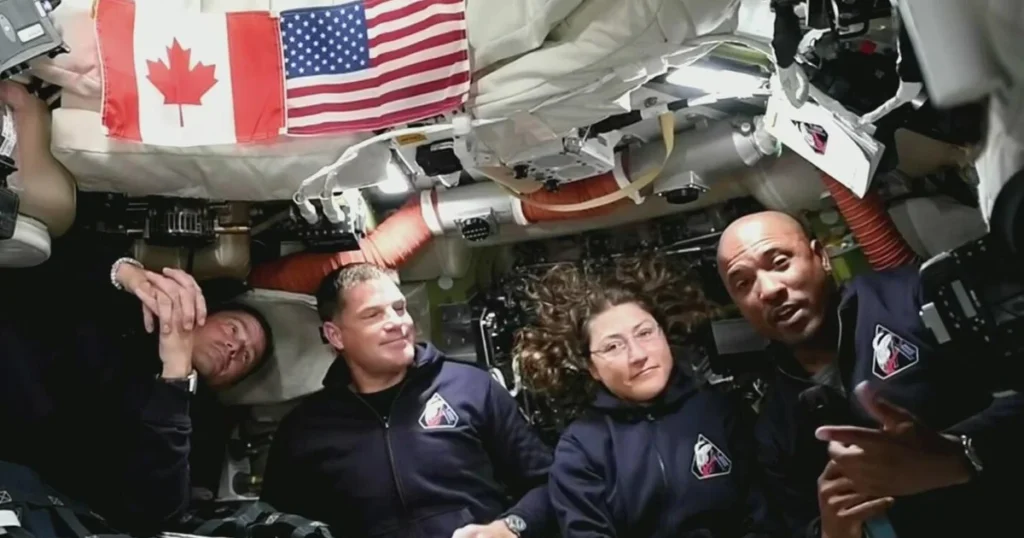
Astronaut Victor Glover, pilot of the Artemis II mission, spoke on Easter Sunday during an interview from aboard NASA’s Orion spacecraft, emphasizing shared humanity and the need for compassion at a time of global conflict.
“As we continue to unlock the mysteries of the cosmos,” Glover said, he hoped people would reflect on “where we are, who we are, and that we are the same thing, and that we’ve got to get through this together.”
The spacecraft launched April 1 from Kennedy Space Center in Florida and is carrying a four-person crew, including commander Reid Wiseman, mission specialist Christina Koch and Canadian astronaut Jeremy Hansen. The 10-day mission will take the crew around the moon and back, covering nearly 700,000 miles before a planned splashdown off the coast of California.
As Orion moves behind the moon, the crew is expected to experience a temporary communications blackout lasting about 40 minutes, a routine but significant phase of the mission when radio signals are blocked.
Ahead of that moment, Glover encouraged reflection and prayer, suggesting people use the period of silence as an opportunity to send positive thoughts and support to the crew.
“When we’re behind the moon, out of contact with everybody, let’s take that as an opportunity,” he said in a separate interview. “Let’s pray, hope, and send good thoughts.”
Glover, who has spoken publicly about his Christian faith, also reflected on the significance of Earth when viewed from space, describing it as a rare and shared home in an otherwise vast and empty universe.
“You’re on a spaceship called Earth that was created to give us a place to live,” he said, adding that while spaceflight may seem extraordinary, the conditions that sustain life on Earth are equally remarkable.
He described Earth as “this oasis, this beautiful place where we get to exist together,” urging people to recognize their shared responsibility to care for one another.
The mission comes at a time of heightened global tensions, and Glover’s remarks appeared to resonate beyond the scientific goals of the flight. While Artemis II is focused on advancing human space exploration and laying the groundwork for future missions to the lunar surface, the astronaut’s message underscored a broader theme of unity.
Glover also referenced the importance of love and compassion, echoing a central teaching of Christianity about loving one’s neighbor.
The moment drew comparisons to the Apollo 8 mission in 1968, when astronauts read from the Book of Genesis during a live broadcast from lunar orbit, one of the most widely watched events in television history.
Artemis II represents NASA’s first crewed mission to circle the moon since the Apollo era. The flight will test systems needed for deeper space exploration and is a key step toward establishing a sustained human presence on the lunar surface.
Victor Glover’s message highlights the intersection of science, faith and human perspective that often emerges during space exploration. While NASA missions are grounded in technical objectives, astronauts frequently use their platform to reflect on broader themes, particularly when viewing Earth from space.
The temporary loss of communication as Orion passes behind the moon adds a layer of symbolism, reinforcing the sense of isolation and vulnerability that comes with deep space travel. In that context, Glover’s call for unity and reflection carries added weight.
His remarks also reflect a long-standing tradition of astronauts sharing personal or philosophical insights during historic missions. From Apollo 8 to modern flights aboard the International Space Station, space exploration has often prompted reflections on humanity’s place in the universe.
At a time of global uncertainty, such messages can resonate widely, offering a reminder of shared existence beyond national or political divisions. Glover’s emphasis on Earth as a common home aligns with a broader narrative often described by astronauts who experience the “overview effect,” a shift in perspective that highlights the planet’s fragility and interconnectedness.
As Artemis II continues its journey, the mission stands not only as a technological milestone but also as a moment of reflection, bridging exploration with deeper questions about humanity’s future and its responsibilities both on Earth and beyond.





