

Benin’s finance minister, Romuald Wadagni, secured a commanding victory in the country’s presidential election, taking more than 94% of the vote in a result that underscores the dominance of the ruling political establishment and signals continuity in economic policy and governance.
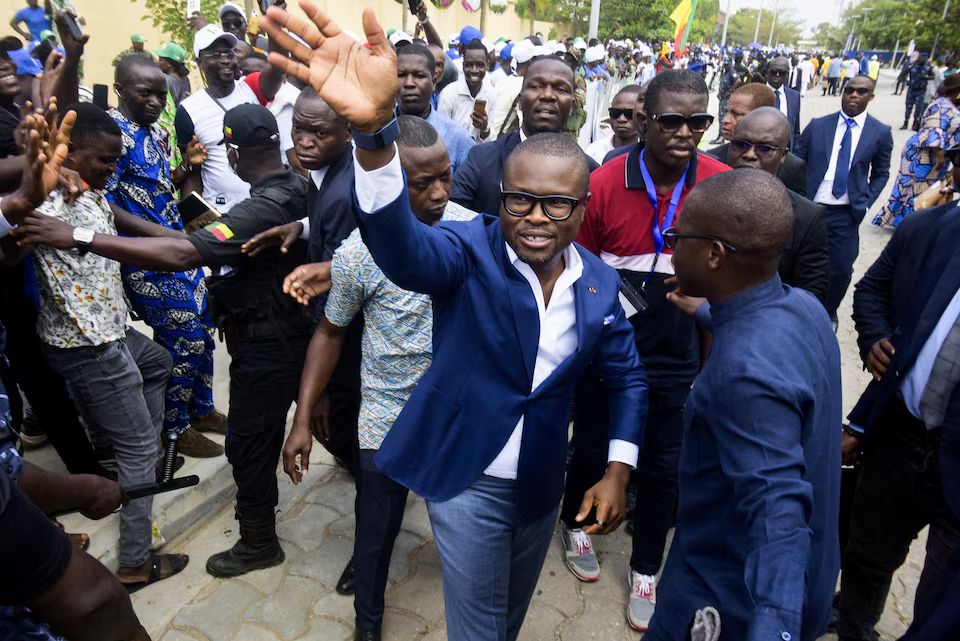
Provisional figures released by the national electoral commission showed Wadagni with an overwhelming lead after more than 90% of ballots were counted. The commission’s chairman, Sacca Lafia, announced the results on national television, noting that voter turnout reached nearly 59%, reflecting moderate participation in a race widely viewed as lacking strong competition.
Wadagni’s only challenger, opposition figure Paul Hounkpe, conceded defeat early Monday, effectively confirming the outcome before final certification by the Constitutional Court. The margin of victory, one of the largest in the country’s democratic history, highlights the imbalance in political influence between the ruling coalition and a fragmented opposition.
Coverage by The Africa Report, citing AFP, indicated Wadagni captured approximately 94.05% of the vote, while Hounkpe received just under 6%. The report emphasized that the result had been anticipated by many observers due to the absence of major opposition forces and the strong backing Wadagni received from the outgoing administration.
Wadagni is set to succeed President Patrice Talon, who is stepping down after completing two constitutionally mandated terms. During Talon’s tenure, Benin experienced sustained economic growth driven by fiscal reforms, infrastructure investment, and improved public finance management. However, the period was also marked by criticism over restrictions on political freedoms and growing security threats in the country’s northern regions.
Election officials described the vote as calm and orderly nationwide. Regional observers from the Economic Community of West African States commended what they characterized as a peaceful atmosphere and efficient administration of the ballot. At the same time, a civil society monitoring group documented irregularities, including early openings of polling stations and isolated claims of pre-filled ballot boxes, raising questions about electoral transparency.
Turnout appeared uneven, with stronger participation in rural areas than in major urban centers such as Cotonou and Porto-Novo. Analysts noted that urban voter apathy may reflect skepticism about the competitiveness of the race, as the main opposition party was unable to field a candidate after failing to meet endorsement requirements.
Wadagni’s ascent to the presidency marks the culmination of a decade-long tenure as finance minister, where he played a central role in reshaping Benin’s economic framework. Appointed in 2016, he oversaw efforts to reduce the fiscal deficit, expand infrastructure development, and attract foreign investment. Economic growth averaged above 6% annually during this period, positioning Benin as a relative success story in the region.
Born in 1976 in Lokossa, Wadagni comes from a family with strong academic and professional credentials. His father was a noted economist, and his mother an entrepreneur. He studied finance in France and later trained at Harvard before building a career at Deloitte, where he became a partner involved in African operations. His return to public service marked a shift from the private sector to government leadership at a relatively young age.
Throughout the campaign, Wadagni sought to broaden his public image beyond that of a technocrat. He traveled extensively across the country, holding multiple rallies each day and delivering speeches without prepared notes. Supporters described him as approachable and pragmatic, traits they argue helped bridge the gap between policy expertise and voter engagement.
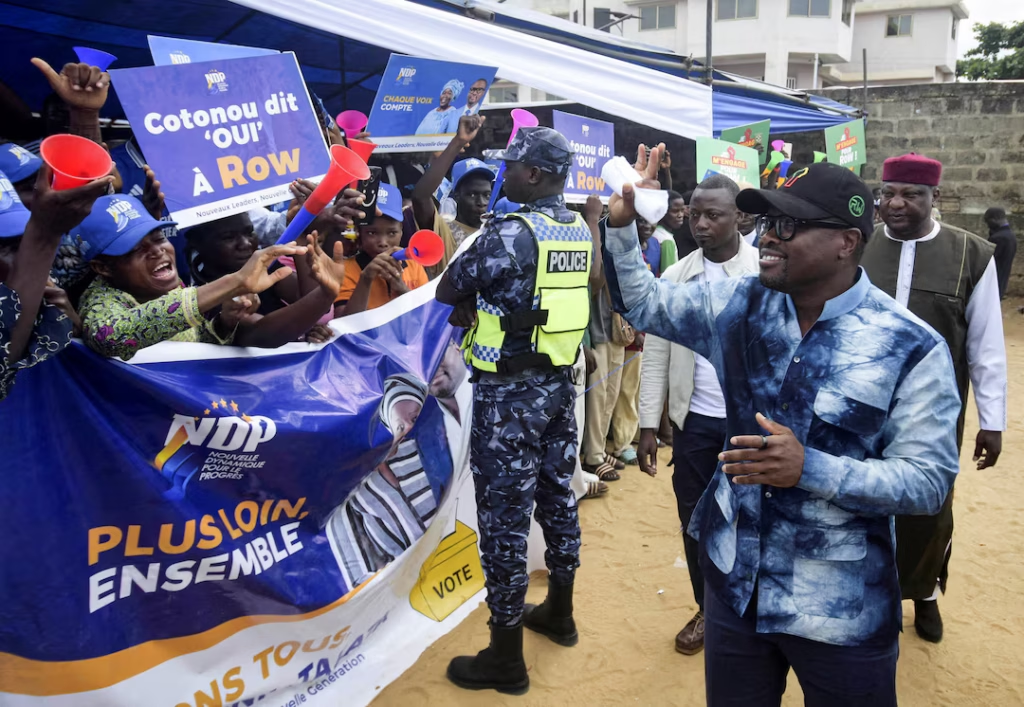
Despite his strong mandate, Wadagni faces a complex set of challenges as he prepares to take office. Security concerns remain a pressing issue, particularly in the north, where armed groups have intensified attacks in recent years. The expansion of violence into previously stable areas has strained the military and raised concerns about regional stability.
Economic sustainability will also test the incoming administration. While growth has been robust, maintaining momentum amid global uncertainties and domestic pressures will require careful management. Analysts suggest that Wadagni is likely to continue policies focused on fiscal discipline and investment, though expectations for broader social inclusion and job creation are rising.
Political reform is another area drawing scrutiny. Critics argue that recent years have seen a narrowing of democratic space, including legal actions against opposition figures and tighter controls on political participation. Whether Wadagni will maintain or ease these policies remains an open question that could shape his legacy.
Diplomatically, continuity is expected. Wadagni has signaled support for existing international partnerships while expressing interest in improving relations with neighboring countries facing political tensions. His approach may be tested as regional dynamics evolve, particularly in areas affected by instability and shifting alliances.
The scale of Wadagni’s victory, while decisive, also underscores the structural challenges facing Benin’s democracy. The absence of a strong opposition candidate and the concentration of political power raise concerns about the competitiveness of future elections and the resilience of democratic institutions.
Wadagni’s landslide win reflects more than electoral success; it signals a consolidation of power within Benin’s ruling establishment. While stability and policy continuity may reassure investors and international partners, the lack of competitive political alternatives could deepen concerns about governance and accountability.
The election also highlights a broader trend in parts of West Africa, where economic reform agendas often coincide with tighter political control. In Benin’s case, the balance between growth and democratic openness will likely define the next phase of its development.
Security risks add another layer of complexity. As violence spreads southward from the Sahel, Benin’s ability to maintain internal stability while pursuing economic ambitions will be closely watched. Wadagni’s experience in fiscal management may not directly translate to security leadership, making this a critical test of his presidency.
At the same time, his technocratic background could prove advantageous in navigating economic shocks and maintaining investor confidence. If paired with meaningful political reforms, his administration could reinforce Benin’s reputation as a stable and growing economy in the region.
Ultimately, Wadagni’s presidency begins with a strong mandate but equally high expectations. The coming years will determine whether that mandate leads to inclusive progress or further centralization of power.
Reuters/TheAfricaReport





