

A gunman armed with an automatic weapon killed six people and injured at least 14 others in Ukraine’s capital on Saturday before police stormed a supermarket where he had taken hostages and shot him dead, officials said.
The attacker, identified by authorities as a 58-year-old man, carried out the shooting in a busy central district of Kyiv, leaving victims on a crowded street as people fled for safety. He later barricaded himself inside a nearby store with customers and employees before security forces intervened.
Volodymyr Zelenskyy said the suspect was born in Russia and had previously lived in eastern Ukraine’s Donetsk region. Authorities were still working to determine a motive for the violence.
“The assailant has been neutralized,” Zelenskyy said in a video message. He added that the attacker killed multiple people on the street and fatally shot one hostage inside the store. Another victim later died in a hospital from severe injuries.
Zelenskyy also said investigators believe the suspect set fire to an apartment before launching the attack. He noted that the man had a prior criminal record and legally possessed the weapon used in the shooting.
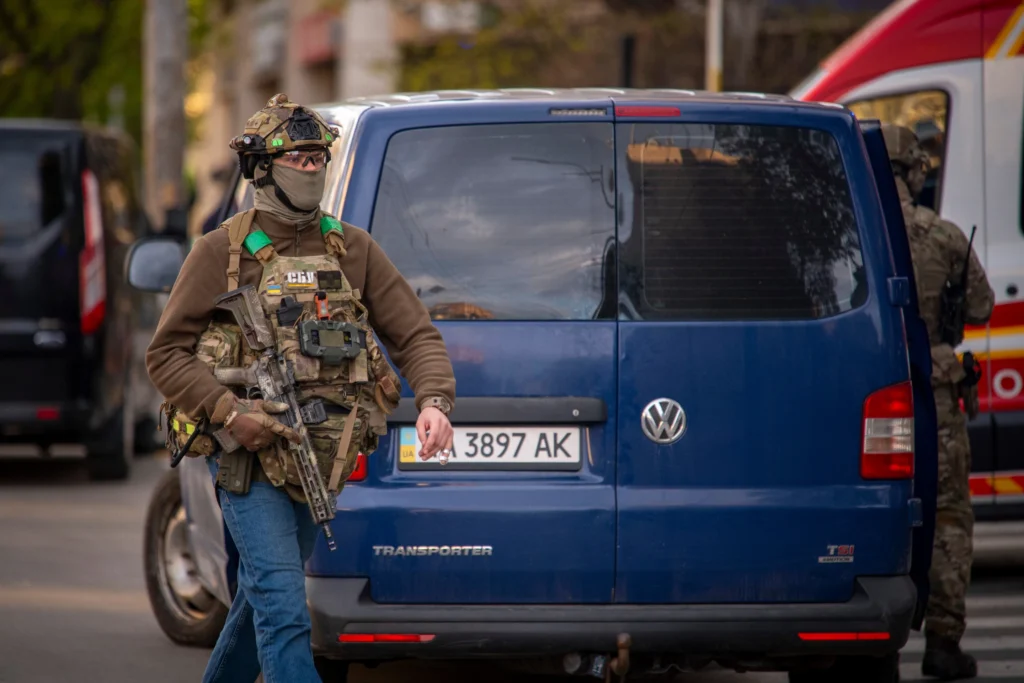
Interior Minister Ihor Klymenko said special police units moved in after attempts to negotiate with the gunman failed. Authorities had tried to establish contact and offered medical assistance for those believed to be wounded inside, but the suspect did not respond.
“We tried to persuade him, knowing that there was likely a wounded person inside,” Klymenko said. “Consequently, the order was given to neutralize him.”
During the standoff, which lasted about 40 minutes, a police negotiator used a loudspeaker from behind an armored vehicle to urge the gunman to release the hostages. “The people are not to blame for this. Please let them go, and we will talk with you,” the negotiator said, according to officials.
Ukraine’s security service classified the incident as an act of terrorism.
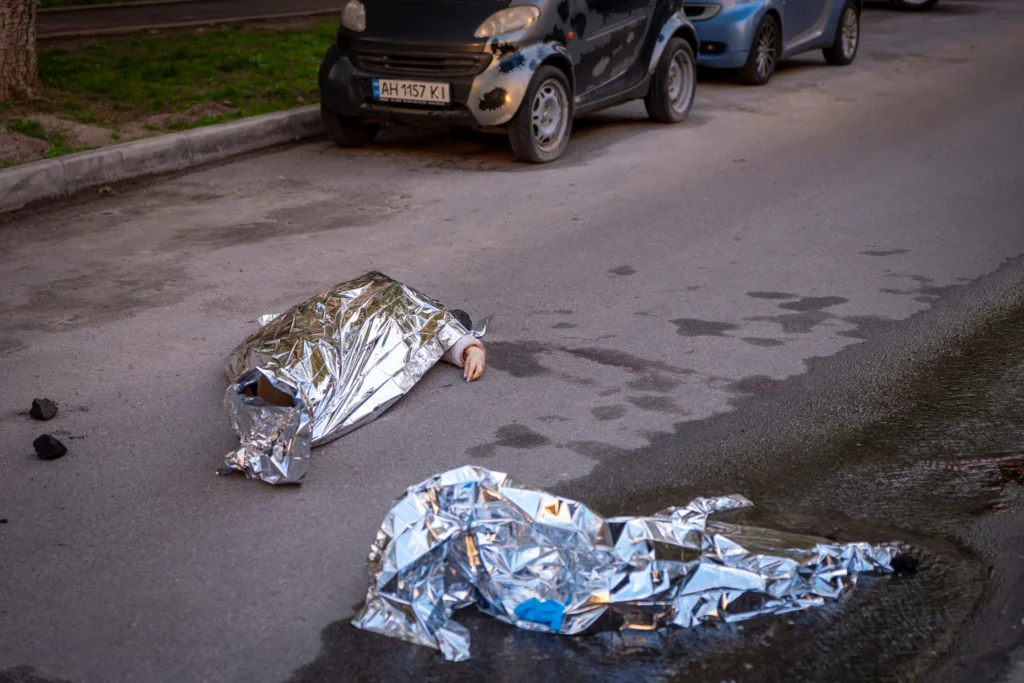
An Associated Press journalist at the scene saw emergency crews covering victims with blankets before removing the bodies. Witnesses described chaos as gunfire erupted in the area near residential buildings and a shopping center.
The attack took place in Kyiv’s Holosiivskyi district, where some residents said they recognized the suspect.
“I knew him by sight. He seemed like an educated, refined man,” said Hanna Kulyk, a 75-year-old resident who lived in the same building. “He didn’t socialize much with people — just a greeting and he’d be on his way. He lived alone.”
Mass shootings are rare in Kyiv, particularly since Russia’s full-scale invasion of Ukraine in 2022, which has shifted the country’s security focus toward external threats.
The shooting represents a striking and unusual episode of violence in Kyiv, where the primary security concern has been military attacks rather than internal incidents. The presence of a heavily armed individual carrying out a prolonged attack in a central district highlights vulnerabilities that are not typically associated with a city under wartime conditions.
One key aspect of the incident is the attacker’s apparent ability to legally obtain and carry a weapon. While Ukraine has tightened certain security measures during the conflict, the circulation of firearms has increased due to the war, raising concerns about access and control. This case may renew debate over how weapons are regulated in a country facing both external and internal security challenges.
The use of a hostage situation adds another layer of complexity. Law enforcement agencies are often trained to handle such scenarios through negotiation, but the limited response from the suspect forced authorities to act quickly. The decision to storm the building underscores the difficult balance between attempting to preserve life and preventing further casualties.
The classification of the incident as terrorism reflects the scale and nature of the attack, though investigators have not yet publicly established a clear ideological motive. This designation may influence how authorities approach the investigation and any related security measures moving forward.
The psychological impact on residents is also significant. In a city already affected by years of conflict, an incident of this nature can deepen anxiety and highlight the unpredictability of threats. Witness accounts describing the attacker as quiet and unremarkable further emphasize how difficult it can be to anticipate such acts.
From a broader perspective, the attack may prompt a reassessment of urban security in Kyiv and other major cities. While defenses have largely focused on air strikes and military threats, this event suggests a need to address risks posed by individuals acting independently.
As authorities continue their investigation, attention will likely focus on the attacker’s background, access to weapons and any warning signs that may have been missed. The findings could shape future policies aimed at preventing similar incidents.
AP





