

Police in Trinidad and Tobago have launched an investigation after 56 bodies, most of them infants, were discovered at a cemetery in the town of Cumuto, authorities said Saturday.
The remains were found at a burial site about 25 miles east of the capital, Port of Spain, prompting a large-scale forensic response and raising concerns about possible violations of handling procedures for human remains.
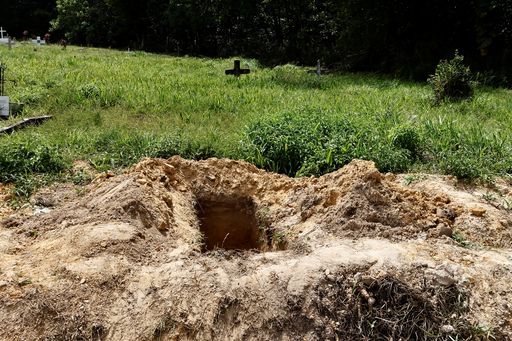
According to the Trinidad and Tobago Police Service, 50 of the bodies were infants, while the others included four adult men and two adult women. Investigators noted that most of the adult remains had identification tags typically used in morgues, and two showed signs consistent with prior post-mortem examinations. Authorities have not confirmed the identities of the deceased.
Police Commissioner Allister Guevarro described the discovery as deeply troubling and said the investigation would be handled with urgency and oversight.
“Every cadaver must be handled with dignity and lawful care,” Guevarro said in a statement. “Any individual or institution found to have violated that duty will be held fully accountable.”
Officers from the Cumuto Police Station secured the area after receiving information about the site, while forensic teams carried out a detailed examination of the remains. Specialized units, including homicide investigators and regional officers, have been assigned to the case under senior supervision.
Preliminary findings suggest the possibility that the remains may involve improperly handled or unclaimed bodies, though officials emphasized that the investigation remains ongoing. Authorities are working to determine how the bodies came to be at the location and whether any laws or procedures were breached.
Local outlet Trinidad and Tobago Guardian reported that the police service has classified the case as an urgent matter, with further forensic analysis underway to establish the origin and handling of the remains.
The discovery comes at a time when the country is grappling with rising crime, including gang-related violence, which has led officials to extend a state of emergency in recent weeks.
Police acknowledged public concern over the incident and urged calm as investigators continued their work. Authorities said updates will be provided as confirmed information becomes available and encouraged anyone with relevant information to come forward.
The discovery of such a large number of bodies, particularly infants, raises serious questions about oversight and accountability within systems responsible for handling human remains. If the preliminary assessment that the bodies may have been unclaimed proves accurate, it could point to gaps in record-keeping, storage capacity or regulatory enforcement.
The presence of identification tags on many of the adult bodies suggests that the remains may have passed through formal institutions, such as hospitals or morgues, before ending up at the cemetery. This raises the possibility that the issue is not solely criminal but may also involve administrative failures or breakdowns in procedure.
The situation also highlights broader challenges faced by countries with limited resources for managing public health and forensic systems. Proper handling of remains requires coordination among medical facilities, law enforcement and local authorities. When any part of that system fails, the consequences can be both legal and deeply emotional for affected families.
Public reaction is likely to be shaped by concerns about dignity and respect for the deceased. The discovery may prompt calls for reforms, including stricter monitoring of morgues, clearer protocols for unclaimed bodies and improved transparency in how such cases are handled.
The timing of the incident, amid heightened concerns about crime, adds another layer of complexity. While the discovery does not appear directly linked to violent crime, it contributes to a broader sense of unease and underscores the importance of institutional trust.
For investigators, the immediate priority will be identifying the remains and determining whether any criminal wrongdoing occurred. This process could take time, particularly if records are incomplete or if remains have been at the site for an extended period.
In the longer term, the case may serve as a catalyst for policy changes aimed at strengthening oversight and ensuring that all remains are treated with dignity and in accordance with the law.
Trinidad and Tobago Guardian/The Associated Press





