

Spirit Airlines is gone. Just like that, after 34 years of cheap tickets, bright yellow planes, and more bad press than most airlines survive in a decade, the carrier shut down Saturday and took 17,000 jobs with it.
No warning to most workers. No help rebooking stranded passengers. Just a website message saying flights were canceled and a company that, by sunrise, no longer existed.
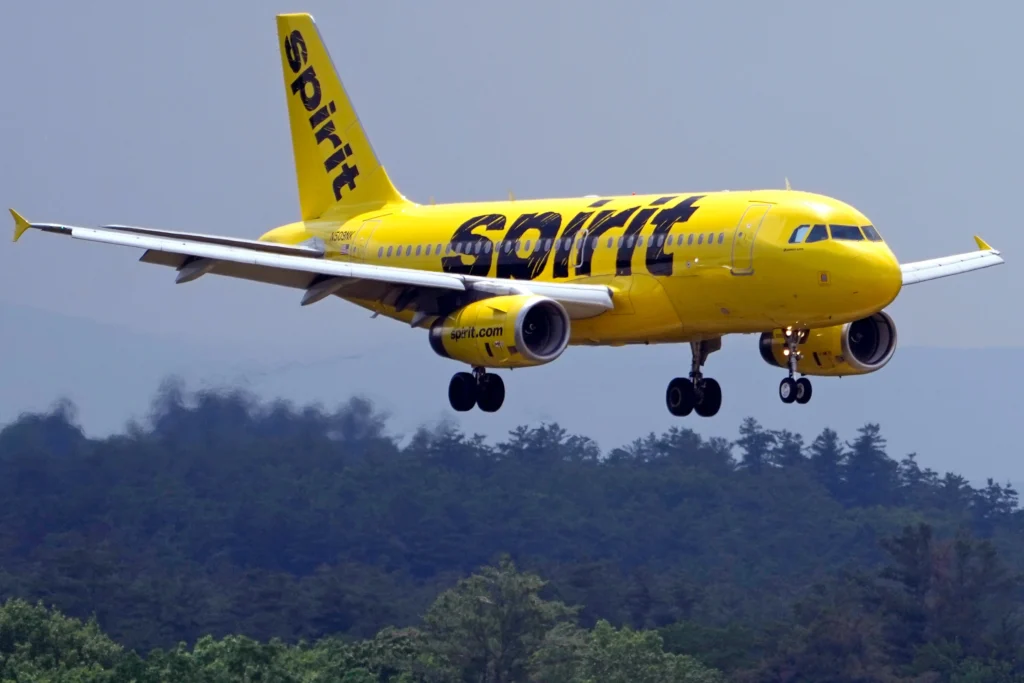
“If you have a flight scheduled with Spirit Airlines, don’t show up at the airport,” Transportation Secretary Sean Duffy said Saturday. “There will be no one here to assist you.”
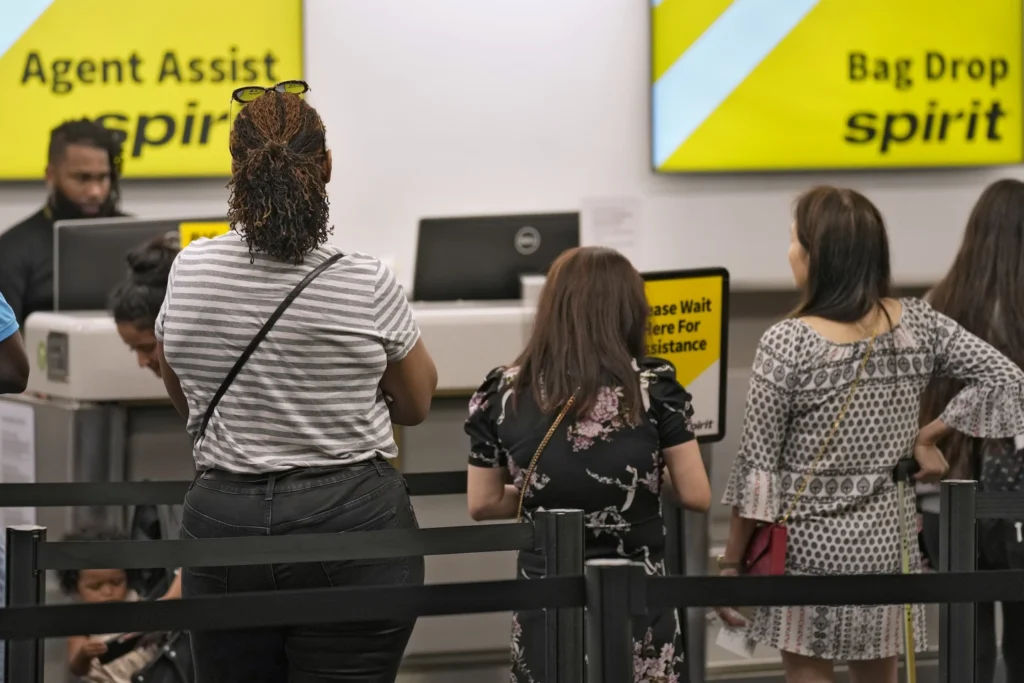
Some passengers got that message too late. At Atlanta’s airport, five Spirit flights were still flashing “on time” on the departure board Saturday morning. Taylor Nantang showed up anyway — with her husband and four kids, having driven down from Tennessee for a last-minute Miami vacation her husband booked the night before.
“What!?” she said when she found out. “So the whole airline at every airport is out of business? Oh my, that’s crazy.”
Joshua Sigler had bought his Miami ticket just the day before. He walked in, found out, and turned around. “I’m just going to go back home,” he said. Spirit had never given him a heads-up. “They get you there,” he said of the flights he’d taken before. “It was cheap.”
That was Spirit in two sentences.
The Last Flight
The final Spirit plane left Detroit and touched down at Dallas Fort Worth. More than 50,000 passengers had flown Spirit on its last day without knowing it. Over 1,300 crew members were scattered across the country, and the airline said it was working to get them home. Many of the 17,000 employees found out they were unemployed through news alerts on their phones, not from their own company.
Flight attendant Freddy Peterson, 60, was on one of those final flights — Detroit to Newark, arriving around 11 p.m. Friday. The plane was full. Nothing seemed off.
He went to bed and set an alarm for 3 a.m. He’d seen the rumors on social media. When he checked the website at 3 o’clock, it said Spirit flights were canceled.
Delta flew him back to Atlanta Saturday morning. He drove home to Shellman, in southwest Georgia, alone.
“I’ll probably do my boo-hoo crying and all that other stuff once I get in the car,” Peterson said.
He worked for Spirit a decade. Said it did wonders for him. Said the chaos reputation wasn’t fair. But he was angry about one thing — management canceled a promised town hall for employees in the final days and said nothing.
A Bailout That Went Nowhere
President Donald Trump floated a government rescue last week. As recently as Friday afternoon, he said the administration was looking at it and had handed Spirit a “final proposal” for a taxpayer-funded takeover.
It never happened. Duffy put it plainly Saturday: “We often times don’t have half a billion dollars laying around.”
The Iran war broke what was left of Spirit’s financial footing. The airline had fought through its first bankruptcy filing in November 2024, having lost more than $2.5 billion since the start of 2020. It filed again in August 2025 with $8.1 billion in debts against $8.6 billion in assets. It had struck a preliminary deal with lenders and thought it might emerge from bankruptcy by early summer.
Then the U.S. and Israel launched strikes on Iran. Crude oil prices shot above $100 a barrel. Jet fuel costs more than doubled in some markets. Spirit, already running on fumes, ran out of runway.
CEO Dave Davis said in a statement the outcome was “tremendously disappointing and not the outcome any of us wanted.”
Who Gets the Blame
The White House wasted no time pointing fingers at the Biden administration. Trump officials took to social media Saturday to argue that former President Joe Biden killed Spirit when his administration blocked a proposed merger between Spirit and JetBlue in 2023.
Duffy blamed Biden and his transportation secretary, Pete Buttigieg, directly. “Many at the time said that this was a disaster. This merger should have been allowed,” Duffy said.
Union leaders who had pushed for a rescue agreed the blocked merger hurt. They argued that a Spirit collapse would cost 17,000 Americans their jobs, cut competition, and push airfares higher — especially in cities like Las Vegas, Fort Lauderdale, and Orlando where Spirit flew heavily and kept prices down for working-class travelers.
Spirit attorney Marshall Huebner confirmed roughly 17,000 jobs were on the line.
Where Spirit Came From
The airline started in the early 1980s as Charter One Airlines, running vacation tour packages. It evolved into a no-frills carrier built around what the industry calls “unbundled” fares — strip everything out, charge for bags, charge for seat selection, charge for printing a boarding pass, and sell the base ticket at a price nobody else could touch.
For years, Ben Baldanza ran the place with an almost religious commitment to cheapness. He ordered his burgers plain because he didn’t want to pay for pickles he wasn’t going to eat. He sat in the same tight seats as his passengers. He told critics that Spirit wasn’t the problem — passengers just weren’t used to seeing every charge itemized. He wasn’t wrong, and he wasn’t apologetic.
The ads were something else entirely. After the Deepwater Horizon oil spill in 2010, Spirit ran a promotion called “Check Out the Oil on Our Beaches.” When Rep. Anthony Weiner got caught in a sexting scandal, Spirit launched a “Weiner Sale” with copy that read “fares just too hard to resist.” Then came the “MILF Sale” — officially standing for “Many Islands, Low Fares” — with a knowing wink at what else the acronym meant.
People loved to hate Spirit. But they kept buying the tickets.
And the joke was ultimately on the big carriers. Delta, United, and American spent years dismissing Spirit’s model. Then they copied it, cutting prices and rolling out their own bare-bones “basic economy” fares. Spirit helped reshape how Americans buy airline tickets. Then the industry it reshaped moved on without it.
Aviation analytics firm Cirium tracked Spirit carrying about 1.7 million domestic passengers in February — roughly 500,000 fewer than the same month a year earlier. Seat capacity had dropped by half compared to May 2024.
What Passengers Do Now
Duffy said United, Delta, JetBlue, and Southwest were offering $200 one-way fares to displaced Spirit passengers who could show a Spirit confirmation number and proof of purchase. Customers who booked directly through Spirit can expect refunds from a reserve fund the airline set up. Anyone who booked through a travel agent or third-party site needs to go back to whoever sold them the ticket.
Angelina Deruelle, a 23-year-old University of Houston student, was at Fort Lauderdale-Hollywood International Airport Friday when her Spirit flight to Texas was canceled. She was trying to figure out how to get home.
“I feel like Spirit is just affordable, simple, nothing too fancy,” she said. “It’s just like home.”
That home is gone now. And for the millions of travelers who counted on Spirit to get somewhere they couldn’t otherwise afford to go, the cheap seat just got a lot harder to find.
What This Means Going Forward
Spirit’s exit is not just a business story. It is a consumer story. Budget travelers — the ones choosing between flying and driving, the ones checking prices at midnight for a long weekend — they are the ones who lose the most here. Spirit was not glamorous. It was functional and accessible. And in a country where airline consolidation has steadily reduced competition and kept prices elevated, one fewer player at the bottom of the market means higher floors for everyone else.
The Iran war provided the final blow, but Spirit had been weakened for years by debt, COVID losses, and a business model that left no cushion for anything going wrong. The blocked JetBlue merger, whatever its merits as an antitrust call, denied Spirit the capital and scale it needed to survive a crisis.
The flight attendants union said it best in its farewell memo to members Saturday. “While the country has had a blast making Spirit the butt of the joke,” it read, “we’ve built a strength together that could withstand anything that anyone throws at us. And that is no joke.”
The yellow planes are grounded. The cheap seats are gone.
The Associated Press original





