

STRAIT OF HORMUZ — The U.S. and Iran traded missiles, drones, and conflicting claims across the Persian Gulf on Monday in the most volatile day of naval confrontation since their war began in February, as President Donald Trump’s attempt to force merchant ships through the world’s most critical energy chokepoint ended with an oil port on fire, six Iranian boats destroyed, and global shipping companies saying they would wait before risking the passage.
Trump called it “Project Freedom.” Iran’s foreign minister called it “Project Deadlock.” By the end of Monday, the evidence leaned toward Tehran’s characterization.
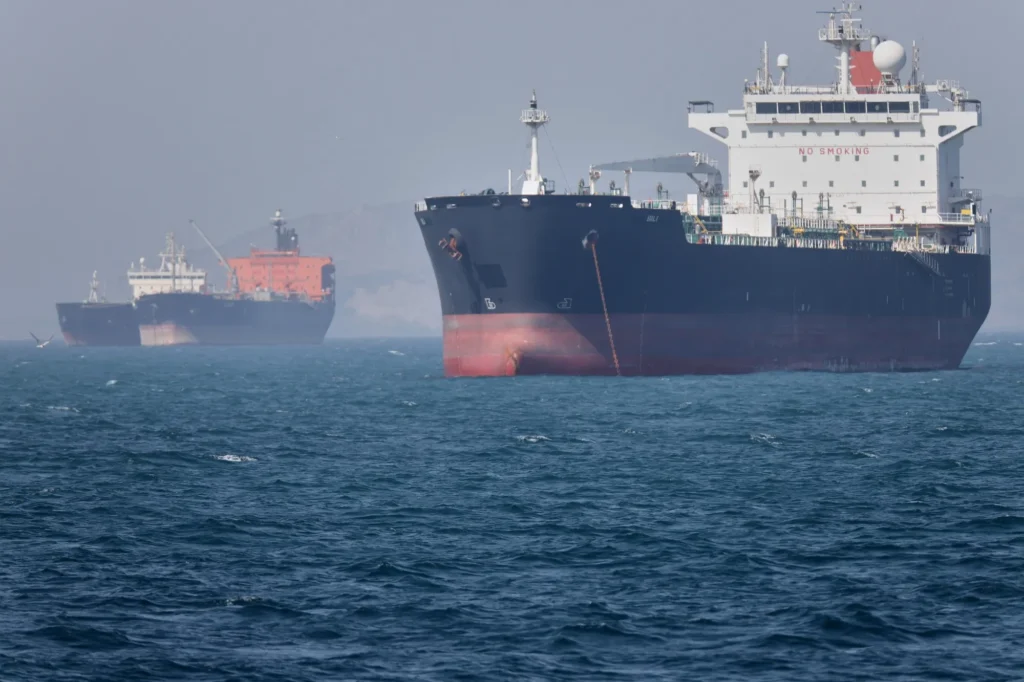
Explosions and fires were reported on several merchant vessels in the Gulf. Iranian missiles struck and set ablaze the port of Fujairah in the United Arab Emirates — one of the few oil export routes in the Middle East that bypasses the Strait of Hormuz entirely. The UAE, which hosts a large American military base, called the strikes a serious escalation and said it reserved the right to respond. The Emirati state oil company ADNOC confirmed one of its empty tankers was hit by Iranian drones. British maritime security agency UKMTO reported two additional ships struck off the UAE coast.
South Korea reported that one of its merchant vessels, the HMM Namu, suffered an explosion and fire in its engine room while transiting the strait. No crew members were hurt. A South Korean government spokesman said it remained unclear whether the fire resulted from an attack or started internally.
Oil prices surged more than 5 percent in volatile trading as the day’s events unfolded.
A Chokepoint That Won’t Open
The Strait of Hormuz has been effectively closed since the United States and Israel launched attacks on Iran in February — a war that has killed thousands of people across the region. Roughly a fifth of the world’s oil supply moves through the strait in normal times. Since February, almost none has. Shipping insurance costs have surged to levels that make most commercial transits economically prohibitive, and Iran’s Islamic Revolutionary Guard Corps has made clear that no vessel passes without its permission.
Trump announced “Project Freedom” on social media two days after a legal deadline passed requiring him to obtain congressional authorization for the war. He told Congress the war was “terminated” and the deadline no longer applied — a position disputed by lawmakers on both sides of the aisle. He provided few specifics about how the operation would work.
The U.S. military said two American merchant ships made it through the strait Monday with Navy guided-missile destroyer escorts. Maersk confirmed that its vessel Alliance Fairfax, a U.S.-flagged ship, exited the Gulf through the strait under American military escort. Iran denied any crossings had taken place.
U.S. Admiral Brad Cooper, commander of American forces in the region, said his fleet destroyed six small Iranian military boats during the operation and issued a direct warning to Iranian forces to stay clear of U.S. military assets. Iran denied the boats were destroyed.
The competing claims were impossible to independently verify. Reuters confirmed it could not independently establish the full picture of what happened in the strait Monday as both sides issued flatly contradictory accounts throughout the day.
Major shipping companies said that regardless of Monday’s reported crossings, they would not resume regular transits until a formal end to hostilities was agreed upon. Two ships getting through under destroyer escort is not a reopened shipping lane. It is a demonstration — and on Monday, it was a demonstration that came at a significant cost.
Iran Expands Its Map
Iranian authorities released a new map Monday showing an expanded maritime zone they claimed as under their control — stretching far beyond the strait to include long sections of the UAE’s coastline. The move was both a tactical statement and a political one, signaling that Tehran intended to contest American naval dominance across a broader stretch of Gulf waters than Washington had anticipated.
Iran also said it fired on a U.S. warship approaching the strait, forcing it to turn back. An initial Iranian report claimed the warship was struck. The U.S. denied it. Iranian officials subsequently walked back the claim, describing the fire as warning shots. The sequence illustrated the fog of contested information that has surrounded every significant event in this conflict since February.
Iranian Foreign Minister Abbas Araqchi said Monday’s violence only confirmed that there was no military path to resolving the crisis. He said peace talks were continuing through Pakistani mediation and warned the U.S. and the UAE against being drawn deeper into a conflict he said was being fueled by outside parties with their own agendas.
“Project Freedom is Project Deadlock,” Araqchi wrote on social media.
Peace Talks, Nuclear Standoff
The military confrontation is running parallel to halting diplomatic efforts that have so far produced one round of direct U.S.-Iran talks and little else. The U.S. and Israel suspended their bombing of Iran four weeks ago. Attempts to schedule further face-to-face meetings have broken down.
Iran submitted a 14-point proposal through Pakistani intermediaries. Iranian state media said Sunday that the U.S. had conveyed its response through the same channel and Tehran was reviewing it. Neither government disclosed the substance of either document.
The Iranian proposal would defer discussion of the country’s nuclear program until after a broader agreement ends the war and resolves the shipping standoff. Trump said over the weekend he was still reviewing the proposal but would probably reject it.
At the heart of the nuclear dimension is a straightforward but unresolved dispute. Trump wants Iran’s stockpiles of enriched uranium removed from the country to prevent further enrichment toward weapons-grade material. Iran insists its nuclear program is entirely civilian. U.S. intelligence assessments reviewed by Reuters showed limited damage to Iran’s nuclear infrastructure from the bombings conducted by the U.S. and Israel last year — meaning the program remains largely intact despite months of strikes.
A War With No Exit Ramp in Sight
Monday’s events illustrated the central dilemma facing both Washington and Tehran. Neither side can fully achieve its objectives through continued fighting, and neither has yet accepted the concessions that a negotiated settlement would require.
Trump’s decision to launch “Project Freedom” without congressional authorization, two days after the legal deadline for that authorization expired, creates a domestic political vulnerability that his opponents will press. More immediately, the operation’s mixed results — two ships through, an oil port on fire, insurance costs unchanged, major shippers still standing down — suggest that military force alone cannot reopen the strait against determined Iranian resistance.
For Iran, Monday’s strikes on the UAE represent a significant escalation that carries its own risks. The Emirates hosts American forces and has largely tried to stay out of the direct line of fire. Hitting Fujairah, which sits outside the strait and serves as an alternative oil export route, tells the region that Tehran is willing to expand the conflict’s geography when it feels pressured. That message will land in Riyadh, Abu Dhabi, and every other Gulf capital calculating its exposure.
The Pakistani mediation channel remains the most credible path to talks, but the 14-point Iranian proposal and the American response to it have not moved either side visibly closer to an agreement. With congressional pressure building in Washington, shipping markets in turmoil, and oil prices climbing on every new exchange of fire, the costs of continued stalemate are rising for everyone — including the two governments that appear most committed to staying in it.





