

President Donald Trump said he has no interest in committing U.S. forces to a distant conflict over Taiwan, signaling a cautious approach as tensions with China remain a central global flashpoint.
In an interview that aired Friday with Bret Baier on Fox News, Trump emphasized that he wants both China and Taiwan to ease tensions rather than escalate toward confrontation. He underscored the geographic distance involved, saying he is not inclined to send American forces thousands of miles into a potential conflict.
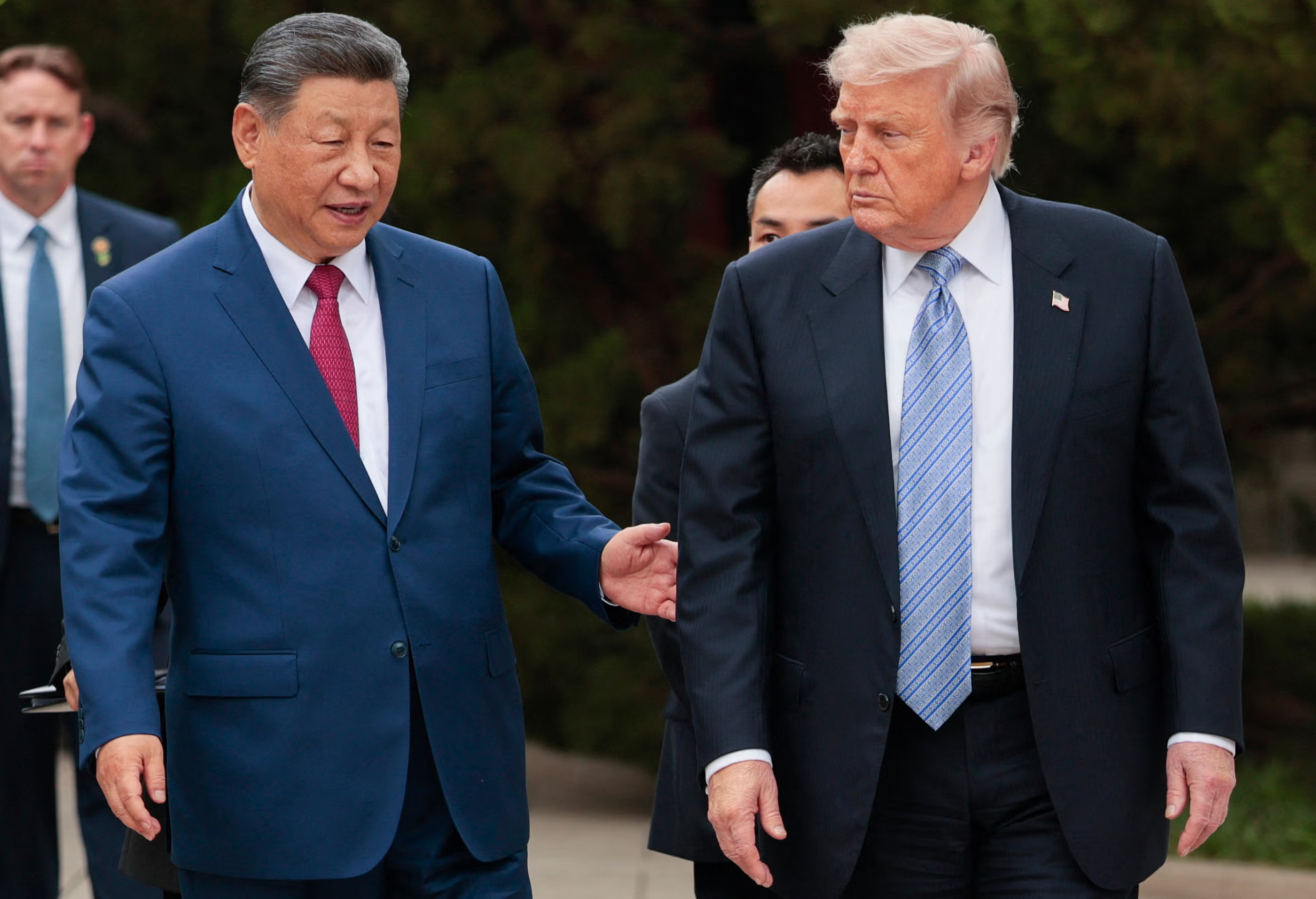
“I’m not looking to have somebody go independent and then we’re supposed to travel 9,500 miles to fight a war,” Trump said, adding that he wants “both sides to cool down.”
The remarks come amid renewed diplomatic engagement between Washington and Beijing, including recent talks between Trump and Chinese President Xi Jinping. Taiwan remains one of the most sensitive issues in relations between the two powers.
China considers Taiwan part of its territory and has long vowed eventual unification. Taiwan, however, operates as a self-governing democracy, with public opinion largely favoring continued autonomy. The United States maintains a long-standing policy that acknowledges Beijing as the government of China while providing Taiwan with defensive support under the Taiwan Relations Act.
Trump downplayed suggestions that Beijing had issued threats during recent exchanges, describing the issue as historically significant but not newly confrontational. He framed the dispute as one requiring restraint rather than military escalation.
“We’ll see what happens,” he said when asked about continued U.S. weapons support for Taiwan.
Statements from Beijing have reiterated that Taiwan remains the most important issue in bilateral relations, warning that mishandling it could destabilize ties between the two nations.
Trump’s comments highlight a broader shift toward strategic restraint in U.S. foreign policy debates, particularly regarding conflicts that could draw the country into large-scale wars far from its borders. His emphasis on distance and reluctance to intervene militarily reflects ongoing domestic concerns about the cost and risks of overseas engagements.
At the same time, his stance introduces uncertainty into long-standing U.S. commitments to Taiwan’s defense. While avoiding direct confrontation may reduce immediate tensions, it could also embolden Beijing to increase pressure on the island, testing the limits of American resolve.
The remarks also come as global attention is divided across multiple geopolitical hotspots, increasing the stakes of any miscalculation involving China and Taiwan. Analysts note that even rhetorical shifts from U.S. leadership can influence military planning and diplomatic signaling in the region.
Balancing deterrence with de-escalation remains a central challenge. Trump’s call for both sides to “cool down” suggests a preference for stability, but the absence of a clear red line could complicate efforts to maintain the status quo in one of the world’s most sensitive security environments.
theindependent





