

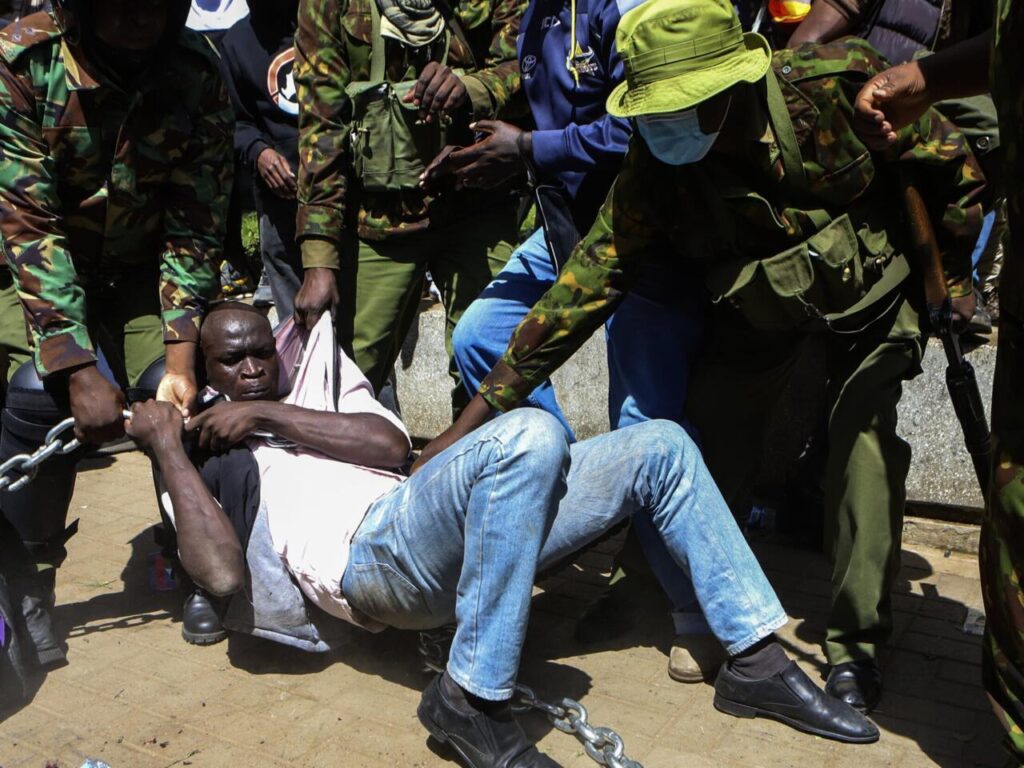
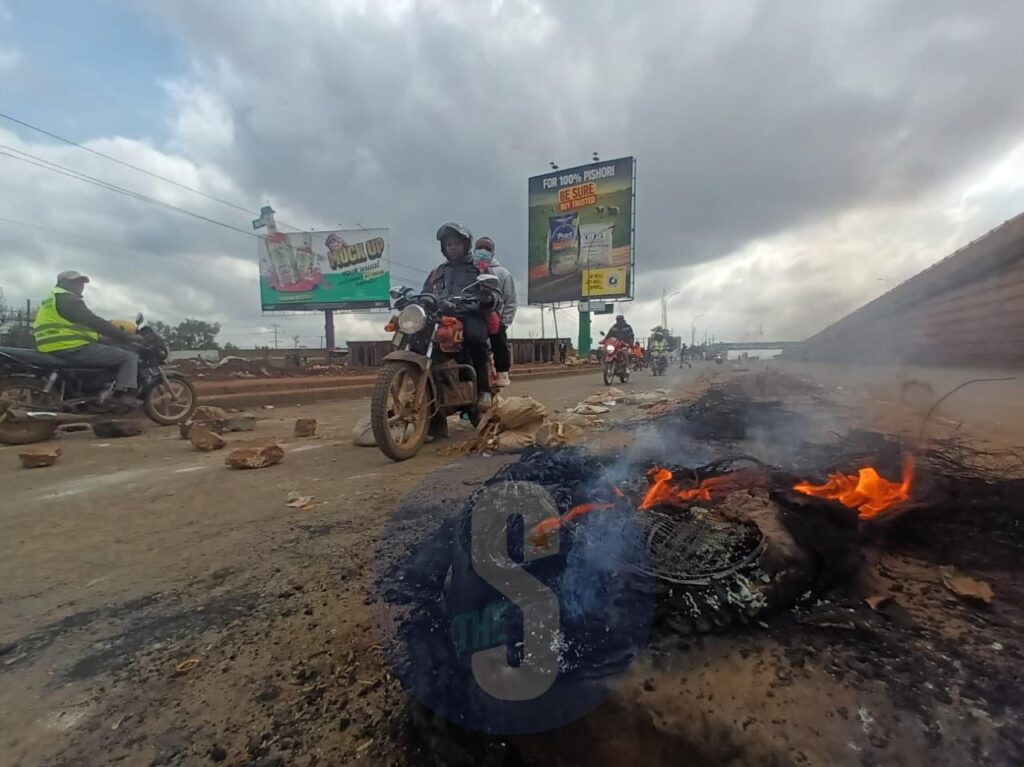
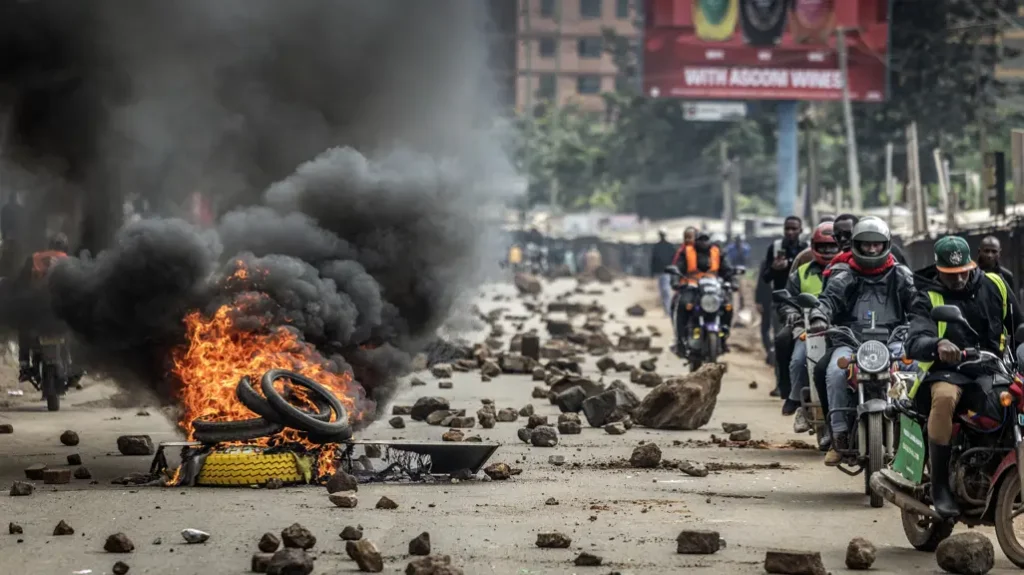
NAIROBI, Kenya — Fires burned on major roads, a car was set ablaze in traffic, guardrails were torn from highways, and hundreds of young protesters blocked streets across Kenya on Monday as a nationwide public transport strike over record fuel prices paralyzed Nairobi and other major cities, stranding thousands of commuters and forcing most businesses to shut their doors from dawn.
The Transport Sector Alliance had announced the strike Sunday evening, giving Kenyans overnight notice that matatus, buses, and other public service vehicles would not operate in protest of fuel price increases the government’s energy regulator imposed the previous Friday. The increases were steep. Diesel rose by 23.5 percent. Petrol climbed 8 percent. In Nairobi, a liter of petrol now costs 214.25 shillings. Diesel stands at 242.92 shillings per liter — levels that transport operators said had pushed their businesses to the breaking point.
By daybreak Monday, the streets told the story. Nairobi’s city center was largely deserted. Private motorists stayed home rather than navigate roads blocked by burning tires and stone barricades. Schools assessed the safety situation and most shifted to online learning, following guidance from the Kenya Association of Private Schools. Commuters in major suburbs faced the choice between walking long distances or paying sharply inflated fares from the handful of vehicles that did operate.
In Kitengela, a busy township in Kajiado county on the southern edge of Nairobi, the shutdown was total. Not a single shop, office, or business opened its doors Monday morning, The Star confirmed from the ground. Hundreds of young people sat in the road or camped in front of supermarkets and shops along Namanga Road, where protesters pulled down billboards and tore out guardrails. Police officers maintained their position without engaging the crowd despite being subjected to insults and taunts. There were no running battles in Kitengela as of the morning hours.
The situation was less contained elsewhere. On Thika Superhighway around Roysambu, youth protesters erected roadblocks using stones and burning tires, forcing motorists to reverse and find alternate routes. A black Mazda was set on fire in the middle of the road in Githurai, thick smoke rising above one of Nairobi’s busiest corridors as stunned commuters looked on. The circumstances that led to the burning car were not immediately established, and police had not confirmed by press time whether it was deliberately torched or caught in the surrounding disorder. No casualties from the vehicle fire were officially reported.
Running confrontations between demonstrators and police broke out in sections of Thika Road and along the Nairobi-Namanga Highway. The National Police Service had assured Kenyans of their safety early Monday and warned that disruptive conduct would be dealt with firmly under the law. The assurance did not calm the streets.
Transport stakeholders directed their anger specifically at the government and the Energy and Petroleum Regulatory Authority, known as EPRA, which sets Kenya’s fuel prices. Operators argued the government had ignored their repeated warnings that rising operational costs were making public transport unviable, and that the latest price adjustment was the tipping point many had been dreading.
The Numbers Behind the Anger
The Kenya National Chamber of Commerce and Industry put the fuel increase in stark perspective Friday when the new prices were announced. While global crude oil prices rose by roughly 10.7 percent between April and May, Kenya’s diesel price rose by 23.5 percent over the same period. The chamber pointed to domestic cost buildup as the primary driver of the gap between international oil prices and what Kenyans pay at the pump.
“The April-May comparison shows that while global crude oil prices increased by about 10.7%, Kenya’s diesel price rose by 23.5% over the same period. This points to the continued role of domestic cost buildup,” the chamber said in a statement.
President William Ruto was out of the country and had not commented on the new prices as of Monday. In the previous price review cycle in April, Ruto attributed fuel cost increases to the Iran war and reduced taxes to cushion the impact. No similar relief accompanied Friday’s announcement.
Former Deputy President Rigathi Gachagua, who was impeached and has since aligned himself with the political opposition, attributed the sharp increase to corruption and profit-seeking by fuel business interests rather than external cost pressures alone. He pointed to neighboring Uganda, a landlocked country that imports fuel through Kenyan ports, as evidence that lower prices were achievable. Uganda, despite paying transport costs to reach Mombasa and then road freight to its interior, is retailing fuel at prices below what Kenyans pay in Nairobi.
Kenya sits at the center of East Africa’s import supply chain. Its port of Mombasa is the primary entry point for goods reaching Uganda, Rwanda, eastern Congo, and South Sudan. When Kenyan fuel prices rise, the effect cascades across the region. When Kenyan transport operators go on strike, that regional supply chain locks up with them.
Kisumu and the Broader National Picture
The disruption was not limited to Nairobi. In Kisumu, Kenya’s third-largest city on the shores of Lake Victoria, a tense calm settled over the usually busy main bus terminus, which operated at a fraction of its normal capacity. Buses and matatus heading to western Kenya were largely absent from their usual stops. Passengers who needed to travel paid sharply higher fares to the limited vehicles that did operate, absorbing the cost of a crisis not of their making.
The pattern in Kisumu mirrored what played out in city after city across Kenya on Monday: nearly empty streets where normally packed public transport routes operate, passengers walking distances measured in kilometers, and an economic stillness that cost the country in ways that will be visible in business receipts and supply disruptions for days after the strike ends.
Fuel Prices as the Fuse Kenya Cannot Keep Defusing
Kenya has been through versions of this before. Fuel price protests are not new. Transport strikes are not new. But the combination of factors at play Monday carries a specific weight that distinguishes it from earlier cycles.
The Iran war has sent global oil prices higher and given the Kenyan government a ready external explanation for domestic price increases. But the chamber of commerce’s data cuts through that framing with precision. A 10.7 percent rise in global crude prices does not explain a 23.5 percent rise in Kenyan diesel prices. The difference lives in domestic policy choices, taxation, and what the chamber called cost buildup within the supply chain. Ruto’s government chose not to absorb those costs this time.
That choice landed on a population already squeezed by two years of cost-of-living pressure that stretches from food prices to utility bills to school fees. The fuel increase was not the only hardship Kenyans have been carrying. It was the one that finally hit the road in the most literal sense.
Gachagua’s intervention is also worth reading in context. His comparison to Ugandan fuel prices is politically pointed but substantively relevant. If landlocked Uganda, paying for sea freight to Mombasa and then road transport north, can retail fuel more cheaply than Nairobi does, the argument that global oil prices explain Kenya’s pump prices becomes harder to sustain in public debate.
What Monday demonstrated most clearly is that Kenya’s fuel pricing structure has accumulated enough public grievance to put thousands of people on the streets with very little notice. The Transport Sector Alliance announced the strike on a Sunday evening. By Monday morning, the country’s transport network was functionally paralyzed and guardrails were being pulled off highways.
President Ruto will return from travel to a set of choices that have no comfortable option. Reversing the price increase would cost the government revenue it has already committed. Sustaining it risks further protests in a country that has shown in recent years that street pressure can move policy faster than the legislative calendar. Finding a middle path between fiscal necessity and public anger is the governing challenge every Kenyan administration faces when fuel prices spike. This one is no exception.
AP/Star.co.ke





