

Pakistan has deployed thousands of troops, fighter aircraft and advanced air defense systems to Saudi Arabia under a mutual defense arrangement, expanding military cooperation as tensions linked to the war involving Iran continue to reverberate across the region.
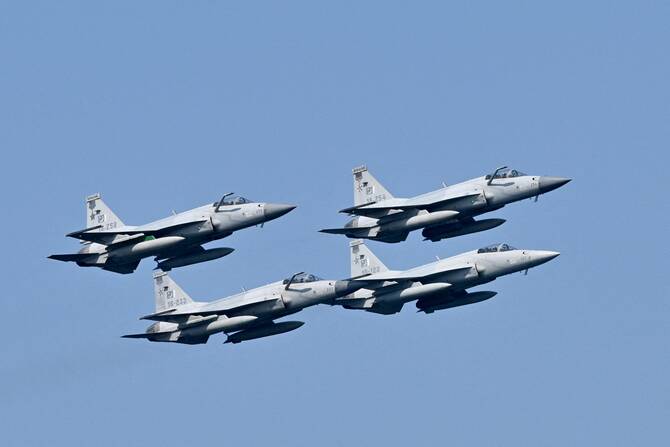
Security and government officials familiar with the matter described the deployment as a substantial, combat-ready force intended to support Saudi defenses if the kingdom faces further attacks. The contingent reportedly includes about 8,000 troops, a squadron of roughly 16 fighter jets, and air defense systems, alongside additional unmanned aerial platforms.
Neither Pakistan’s military nor its foreign ministry issued public comment, and Saudi authorities did not respond to inquiries about the scale or specifics of the deployment.
The reinforcement follows a defense pact signed last year between Islamabad and Riyadh, which commits both countries to assist one another in the event of an attack. Officials with knowledge of the agreement said its terms allow for a much larger deployment if required, potentially expanding to tens of thousands of personnel.
Sources indicated the aircraft deployed include JF-17 fighter jets, co-produced with China, and that the air defense system positioned in the kingdom is also of Chinese origin. The equipment is being operated by Pakistani personnel, with costs reportedly covered by Saudi Arabia.
Officials familiar with internal communications said the newly deployed forces will primarily support training and advisory roles during the ongoing conflict. However, the size and composition of the deployment suggest capabilities that go beyond a symbolic presence.
The latest move adds to an existing Pakistani military footprint in Saudi Arabia, where personnel have long been stationed under earlier agreements to assist with training and operational support.
The expanded presence comes as Pakistan plays a parallel diplomatic role, serving as a key intermediary in efforts to ease tensions between Washington and Tehran. Islamabad hosted earlier talks aimed at halting hostilities and has remained engaged in backchannel diplomacy despite limited progress in recent weeks.
The regional security landscape has grown increasingly volatile following strikes on critical infrastructure and retaliatory actions across multiple countries. Concerns persist that any escalation could draw additional states into a broader conflict.
Pakistan’s dual role—as both a military partner to Saudi Arabia and a diplomatic intermediary in the conflict—highlights the complexity of its strategic position. While Islamabad seeks to maintain neutrality in public messaging, its troop deployment signals a firm security commitment to Riyadh.
For Saudi Arabia, the presence of foreign forces strengthens its defensive posture at a time of heightened vulnerability, particularly given the risk of further strikes on energy infrastructure. The partnership also reflects long-standing ties in which military cooperation and financial support have been closely intertwined.
At the same time, the deployment carries broader geopolitical implications. It underscores the growing influence of external powers in the region’s defense architecture, particularly through equipment and systems sourced from China.
Pakistan’s involvement could also complicate its role as a mediator. While its diplomatic engagement aims to reduce tensions, its military posture may be viewed by some parties as aligning more closely with one side of the conflict.
The situation remains fluid, with the possibility of escalation still looming. The scale of Pakistan’s deployment suggests preparations for a range of scenarios, even as diplomatic efforts continue behind the scenes.
Reuters





