

Israel launched airstrikes in Gaza City late Tuesday, killing at least three people and injuring 12 others, hospital officials confirmed, as tensions surged on the eve of a major religious holiday.
In a joint statement, Israeli Prime Minister Benjamin Netanyahu and Defense Minister Israel Katz said the operation focused on a senior figure in Hamas. They identified the target as Mohammed Odeh, describing him as a key planner behind the October 7, 2023 attacks that ignited the ongoing conflict.
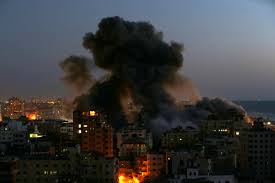
Medical staff at Shifa Hospital in Gaza City said the bodies of those killed were brought to the facility shortly after the strikes. There was no immediate response from Hamas regarding the claim that its newly appointed military leader had been targeted.
The latest attack came less than two weeks after Israel announced it had killed a previous commander of Hamas’ military wing, signaling an intensified campaign aimed at dismantling the group’s leadership structure.
The strikes unfolded just hours before Eid al Adha, a period traditionally marked by family gatherings and celebrations. In Gaza, however, the holiday has again been overshadowed by war. Large portions of the population remain displaced, with many families living in temporary shelters after months of destruction.
Despite a ceasefire agreement reached last October, violence has continued at a lower intensity. Palestinian health authorities say more than 880 people have been killed since the truce took effect, while Israel maintains that its actions respond to security threats and violations by Hamas. Israeli officials also confirm that four of their soldiers have died during the same period.
The war began after Hamas launched a cross border assault in October 2023 that killed about 1,200 people and led to the abduction of around 250 others. Since then, Gaza’s Health Ministry says more than 72,700 Palestinians have been killed in Israeli operations, though it does not distinguish between civilians and fighters.
Israel’s continued targeting of senior Hamas figures reflects a broader military strategy aimed at weakening the group’s command structure rather than relying solely on large scale ground offensives. While such strikes may disrupt leadership, they also risk prolonging instability by creating rapid leadership turnover rather than eliminating operational capacity.
The timing of the attack, just before a major holiday, underscores how deeply the conflict has reshaped daily life in Gaza. Repeated strikes during symbolic periods can heighten psychological strain on civilians and deepen humanitarian concerns already flagged by international observers.
At the same time, the fragile ceasefire appears increasingly strained. Continued exchanges of fire suggest that both sides are testing the limits of the agreement, raising concerns that a broader escalation could still emerge if targeted killings or retaliatory actions intensify.
From a geopolitical perspective, Israel’s focus on high value targets may also be intended to signal resolve to both domestic and international audiences, even as pressure grows for a more durable political solution to the conflict.
AP





