

A Canadian man accused of distributing lethal substances to vulnerable individuals worldwide is expected to enter a guilty plea to multiple charges of aiding suicide, bringing a closely watched international case toward resolution while sparking anger among victims’ families.
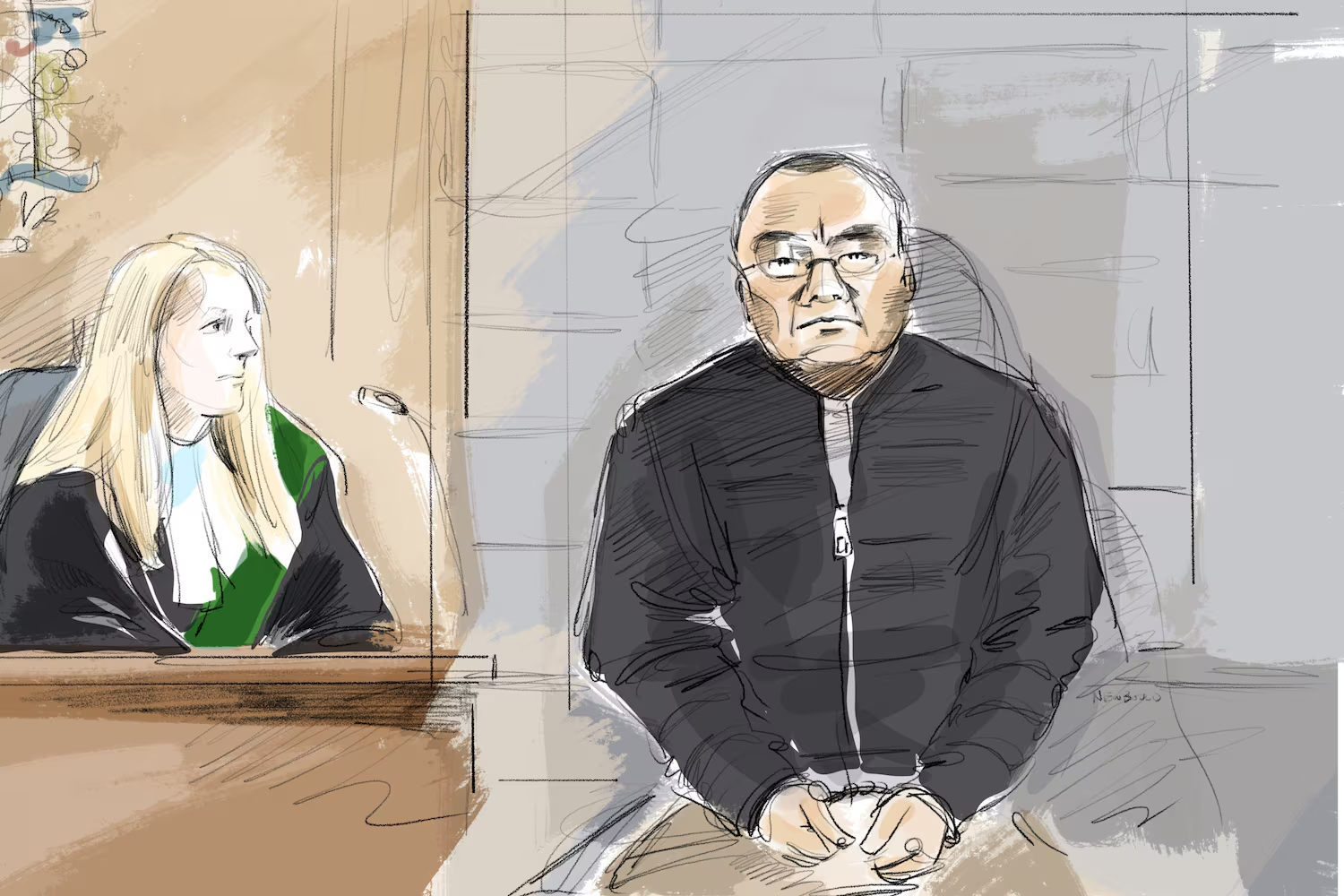
Kenneth Law, 60, is scheduled to appear in court to admit to 14 counts of counseling or assisting suicide, his defense lawyer confirmed. In exchange, prosecutors will withdraw second degree murder charges tied to the same cases, a decision that has drawn criticism from relatives of those who died.

The case centers on allegations that Law operated a network of websites that promoted methods of self harm and sold sodium nitrite, a chemical commonly used as a food preservative but potentially fatal in high doses. Authorities allege he shipped more than 1,200 packages to customers in over 40 countries.
Investigations across multiple jurisdictions have linked the online activity to more than 100 deaths globally. In Canada, the charges relate to 14 individuals in Ontario, ranging in age from teenagers to adults in their 30s.
Law has remained in custody since his arrest in 2023 at his home in Mississauga. Court filings indicate he used social media platforms and online forums to reach people experiencing distress, offering both access to the substance and detailed guidance on how to use it.
The Canadian Broadcasting Corporation first reported the expected plea arrangement. Officials with Ontario’s attorney general’s office confirmed that Law is due in court to formally enter his plea.
Authorities in several countries, including the United Kingdom, the United States and Australia, have conducted parallel investigations. Britain’s National Crime Agency said it identified hundreds of individuals who purchased products linked to the case, with dozens of deaths under review.
Families of victims have expressed sharply divided reactions to the plea deal. Some have welcomed the move as a step toward accountability, while others argue that dropping murder charges fails to reflect the severity of the alleged conduct.
One parent, whose son died after obtaining materials connected to the case, said the outcome falls short of justice, insisting the actions should be treated as homicide. Another family member described the court proceedings as part of a long and painful process toward closure.
Legal experts say the decision to withdraw murder charges may reflect uncertainty within Canadian law about how to prosecute cases involving assisted suicide. Under existing statutes, counseling or aiding suicide carries a maximum penalty of 14 years in prison, while a murder conviction would require proof of direct causation beyond reasonable doubt.
Professor Robert Currie of Dalhousie University noted that prosecutors may have opted for a more certain conviction rather than risk losing a complex legal argument at trial.
Law had previously been convicted in Canada in 2022 on related offenses and sentenced to 12 years in prison. Any new sentence in the current case could run concurrently or consecutively, a factor that will influence the total time he spends behind bars.
The case has also renewed debate over the regulation of online platforms and the sale of potentially dangerous substances. While assisted dying is legal in Canada under strict medical supervision, promoting or facilitating suicide outside that framework remains a criminal offense.
This case underscores a growing challenge for law enforcement in the digital age, where harmful activities can be conducted across borders with limited oversight. The scale of the alleged operation reveals how online anonymity and global shipping networks can enable individuals to reach vulnerable populations in ways that traditional safeguards struggle to prevent.
The legal outcome may set an important precedent, particularly in how courts interpret the line between free expression, criminal facilitation and direct responsibility for harm. The decision to drop murder charges suggests that current legal frameworks may not fully address the complexities of digital assisted suicide cases.
Beyond the courtroom, the case highlights gaps in mental health intervention systems. Many of those affected were reportedly young and experiencing distress, raising questions about whether earlier support or platform level interventions could have prevented access to harmful resources.
The international scope of the investigation also signals the need for coordinated regulation, especially around the sale and distribution of chemicals that have legitimate uses but can be misused. Without stronger cross border enforcement and clearer legal standards, similar cases could emerge.
CBS/AP





