

Kenya’s government is moving forward with plans to establish an Ebola quarantine and treatment facility in partnership with the United States, even as a High Court ruling temporarily halts the project pending legal review.
Health authorities said Saturday the proposed center, to be located at Laikipia Air Base north of Nairobi, is part of a broader effort to strengthen the country’s emergency response systems. The facility is intended primarily for American citizens exposed to Ebola in the Democratic Republic of Congo, where an outbreak has intensified in recent weeks.
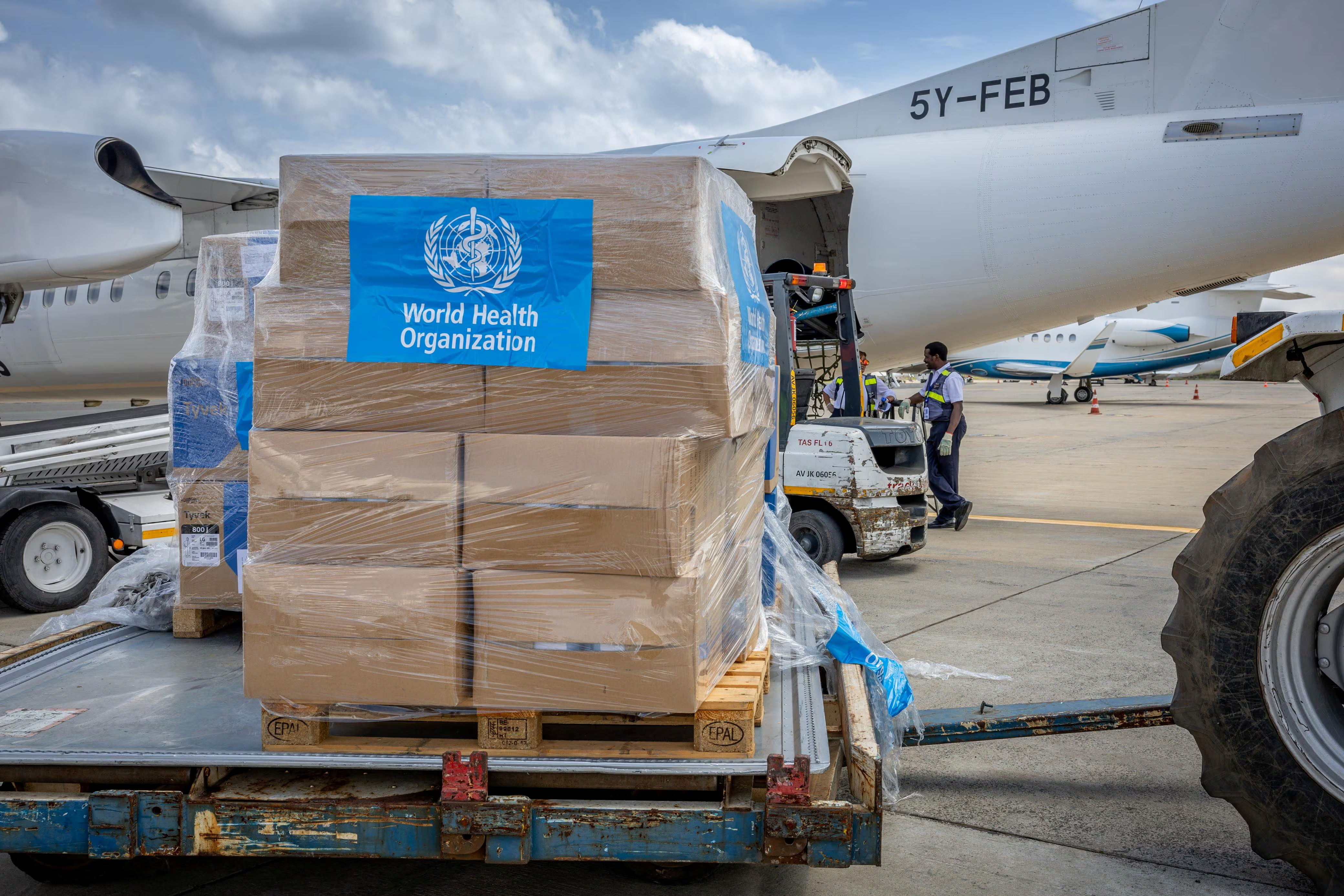
Officials in Kenya’s Ministry of Health said the initiative would bolster surveillance, isolation capacity, and rapid response readiness, adding that additional treatment units are being prepared at Kenyatta National Hospital and the Kenya National Police Hospital.
A source involved in the response confirmed to CNN that U.S. personnel assigned to support the operation arrived in Kenya over the weekend. The deployment is part of a coordinated effort involving multiple U.S. agencies, including the Department of Health and Human Services.
The move comes amid mounting legal and public resistance. High Court Judge Patricia Nyaundi issued an order late Thursday barring the government from admitting individuals exposed to or infected with Ebola under any foreign agreement until a constitutional challenge is resolved. The case is scheduled to return to court on June 2.
The plan has drawn criticism from civil society groups and medical professionals, who argue that Kenya risks becoming a containment site for a disease not currently present within its borders. The Katiba Institute, which filed the legal challenge, warned the arrangement raises serious constitutional and public health concerns.
Tensions escalated after U.S. Secretary of State Marco Rubio said Washington would not allow Ebola cases onto American soil, a stance that critics in Kenya say reflects a double standard. The U.S. proposal envisions a 50 bed quarantine unit for individuals who may have been exposed but are not yet showing symptoms. Those who develop the illness would be transferred to specialized facilities outside the United States.
The outbreak, first confirmed in mid May in the Democratic Republic of Congo, has been linked to the Bundibugyo strain of the virus, which currently has no approved vaccine or targeted treatment. Health officials have recorded more than 1,000 suspected cases and at least 220 deaths, though international agencies warn the true scale may be significantly higher due to delayed detection and limited contact tracing in conflict affected areas.
The virus has already spread into neighboring Uganda, where authorities have confirmed several cases and one death. While Kenya has not reported any infections, the country remains on alert due to its proximity and regional travel links.
Medical unions in Kenya have sharply criticized the government’s handling of the agreement, calling for greater transparency and warning of potential strain on an already stretched healthcare system. Union leaders have also questioned why Kenya was selected as the host country given the outbreak’s epicenter lies elsewhere.
Beyond Africa, isolated suspected cases have emerged in countries including Brazil, India, and Italy, though none have been confirmed as part of the current outbreak after testing. Health officials globally remain on high alert as cross border travel raises the risk of further spread.
The dispute over the Ebola facility underscores a broader geopolitical and public health dilemma. While the United States frames the plan as a logistical solution to protect its citizens abroad, critics argue it shifts risk onto a partner nation that may lack the same level of containment infrastructure.
Kenya’s willingness to proceed despite legal and public resistance reflects the complex interplay between international cooperation and domestic accountability. Financial support and strategic partnerships often influence such decisions, particularly in regions where healthcare systems rely on external funding.
At the same time, the backlash reveals deep public sensitivity to infectious disease threats, shaped by past outbreaks and concerns about government transparency. The legal challenge could set an important precedent for how cross border health interventions are negotiated and implemented.
As global health threats become more interconnected, the situation highlights the need for clearer international frameworks that balance rapid response with local consent and safety assurances. Without that balance, even well intentioned interventions risk fueling mistrust and resistance.
CNN/AP




