

Hezbollah rejected the latest ceasefire agreement between Israel and the Lebanese government on Thursday, with the group’s leader declaring the terms humiliating and vowing to continue fighting until Israeli forces leave Lebanese soil, while Israeli strikes killed at least four people in Lebanon and 10 more in Gaza as the violence persisted on multiple fronts regardless of what diplomats announced.
Hezbollah leader Naim Kassem, in a written statement read on television, characterized the negotiations as “absurd, humiliating and insulting” and said any demand that Hezbollah fighters withdraw from southern Lebanon under fire was equivalent to “surrender, defeat and achieving the enemy’s goals.”
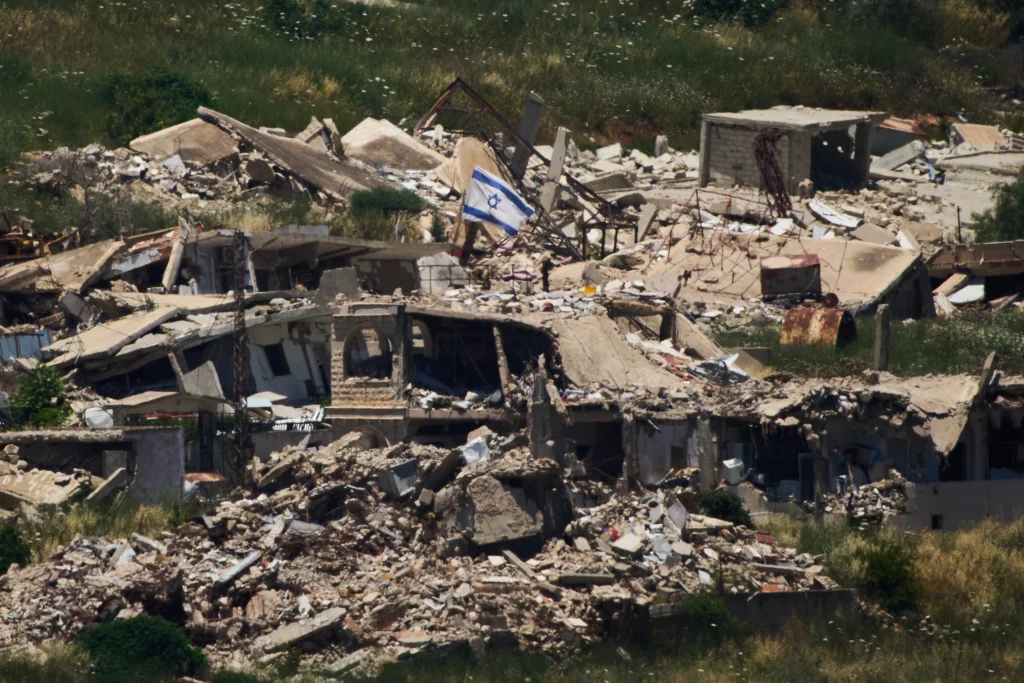
“What we are concerned about is an end to the aggression, ceasefire and Israel’s withdrawal,” Kassem said. “So long as our villages are not safe and are being bombed and destroyed and our people are killed,” northern Israel “will not be safe.”
The statement arrived hours after Lebanese President Joseph Aoun described the same agreement as “the last chance to enter a final and comprehensive ceasefire” and said Lebanon was ready to implement the deal once it received responses from relevant factions, including Hezbollah. Aoun told journalists that the United States and Trump himself would determine how and when any deal takes effect.
The agreement, brokered through U.S.-mediated talks between Israel and the Lebanese government, calls for Lebanese armed forces to take control of security zones in southern Lebanon from which Hezbollah fighters would be excluded. It designates Hezbollah as an enemy of Israel, the United States, and Lebanon, and calls for the group’s dismantling. Lebanon’s government has made similar commitments before and does not have the military capability to disarm Hezbollah by force.
Strikes While Talks Proceeded
The diplomacy unfolded against a backdrop of sustained killing. A Serbian United Nations peacekeeper was killed and two others were wounded when a mortar struck their position near Marjayoun, a southern Lebanese town that has seen heavy fighting in recent days, the U.N. mission in Lebanon known as UNIFIL confirmed, as did the Serbian Defense Ministry. Israel blamed Hezbollah for the fire that killed the peacekeeper without presenting evidence. Hezbollah and UNIFIL did not immediately say who fired the shells.
An Israeli military captain, 21 years old, was killed in southern Lebanon in combat Thursday. Lebanese state media reported a drone strike killed a motorcyclist and wounded four people in the village of Maaroub. The Israeli military said its forces killed an armed militant and later located a Hezbollah weapons cache containing guns, grenades, surface-to-air missiles, and other combat gear in the same area. Israeli forces also conducted strikes near the coastal city of Tyre and around the village of Shaqra. Three people were killed and others were wounded in a strike on the village of Sohmor in eastern Lebanon’s Bekaa Valley, Lebanese state media said.
Shortly after Kassem’s rejection statement, drone alert sirens sounded in several border communities in northern Israel, including the town of Shlomi, where Prime Minister Benjamin Netanyahu had been meeting with local officials minutes earlier. Netanyahu had left before the alerts sounded, his office confirmed. The Israeli military said the sirens were triggered by drone intercept attempts near soldiers in southern Lebanon and that no injuries were reported.
In what amounted to the first Israeli troop withdrawal from any area since the latest Lebanon war began three months ago, Israeli forces left the southern village of Dibbine Thursday afternoon. Lebanese troops began moving into the area in coordination with UNIFIL peacekeepers shortly after, state media reported.
Gaza: Killing Continues Under the Ceasefire
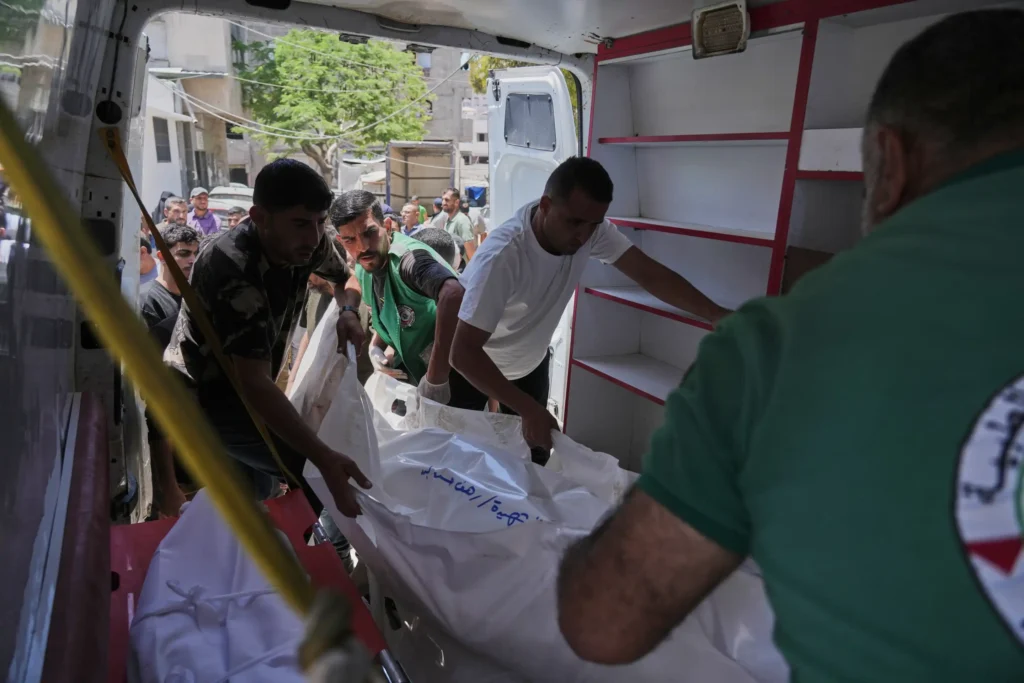
While Lebanon dominated international attention, Israeli strikes in Gaza killed at least 10 Palestinians on Thursday, hospitals confirmed.
Nine people died in at least four overnight strikes in Gaza City, according to Shifa Hospital, which received the bodies. Among the dead were two women and two children. A separate strike Thursday evening killed at least one person and wounded another, according to Saraya Field Hospital, operated by the Red Crescent.
Footage from one of the strikes showed a massive hole blown through an upper floor of what appeared to be a residential apartment building, with debris scattered across the rooms and onto the street below.
Walid Shbeir, the uncle of one of the men killed, mourned outside Shifa Hospital with other relatives and expressed the exhaustion that has settled over a population living through what was supposed to be a ceasefire.
“They say the war has stopped, but the war has not stopped,” Shbeir said. “Every night there is killing, and we have martyrs. Every night, in the morning, in the evening, and at night, this killing is continuous for us.”
The Israeli military said the overnight strikes in northern Gaza killed four Hamas militants it described as senior members of an apparatus responsible for protecting Hamas leadership and providing intelligence assessments. It said precise munitions and aerial surveillance were used to reduce civilian risk. The military did not immediately respond to a question about what the Thursday evening strike was targeting.
Since an October ceasefire took effect, Israeli forces have killed 936 Palestinians in Gaza, according to the territory’s Health Ministry, which is staffed by medical professionals and is generally considered reliable by United Nations agencies and independent experts. The ministry does not break down deaths between civilians and combatants. Four Israeli soldiers have been killed in Gaza during the same period.
Last week, Israel killed the top Hamas military leader, two weeks after strikes killed his predecessor. It was the fourth time since October 2023 that Israel killed the head of Hamas’s military wing.
Flotilla Activists Detained in Libya
Separately, at least 11 international activists who had been attempting to reach Gaza overland were being held in Libya after more than a week in detention, the Global Sumud Flotilla organization confirmed. A Tunisian national was arrested May 19 near the Libya-Tunisia border. Ten others were detained May 24 at a checkpoint near Sitre along the Libyan coast while trying to negotiate passage for their convoy. The activists come from Tunisia, Argentina, Portugal, Italy, the United States, Uruguay, Poland, and Spain.
Libyan authorities cited illegal entry and lack of permits. The Global Sumud organizers said all participants held valid visas and called the detentions unlawful and arbitrary. Their detention was extended by another 10 days Tuesday. The group’s maritime flotilla had been intercepted the previous month before reaching Gaza, and hundreds of its participants were deported through Israel and Greece.
More than 200 health workers and activists attempting a separate overland route to Gaza left Mauritania on May 15 and have been heading toward Egypt to enter through the Rafah crossing.
Trump, Netanyahu, and the War’s Wider Stakes
The fighting in Lebanon, where Israeli forces have now seized approximately a fifth of the country’s southern territory in their deepest incursion since the 1982 to 2000 occupation, is directly entangled with efforts to end the broader Iran war and reopen the Strait of Hormuz. Iran has insisted that any durable agreement with the United States must extend to Lebanon. Netanyahu, facing Israeli elections later this year, has said Israel will continue pressing its military campaign until Hezbollah no longer poses a threat.
Trump, addressing reporters, offered a description of the regional ceasefire environment that captured the gap between declared agreements and ground reality. In the Middle East, Trump said, “a ceasefire is when you’re shooting in a more moderate manner.”
Israeli military chief of staff Lt. Gen. Eyal Zamir acknowledged Thursday that the ongoing war was placing severe strain on northern Israeli communities living under continuous threat of Hezbollah fire. He said Israel’s operations in Iran and Lebanon had created “a new security reality” by degrading both adversaries “to an unprecedented degree.”
In the southern Lebanese city of Sidon, residents responded to Wednesday’s ceasefire announcement with the weary skepticism of a population that has been through this before.
“Every few days a ceasefire is announced, but people keep getting killed,” said Mayada Hijazi.
“It’s all talk and no action,” said Salah Nassab. “We keep going back to our homes, and then we get displaced again, back and forth. We’re very tired.”
More than 3,500 people have been killed in Lebanon since the latest conflict began. More than 1.2 million have been displaced. At least 28 Israeli soldiers and three civilians have been killed in the fighting.
The Architecture of Agreements That Do Not Hold
The sequence of declared and rejected ceasefires in Lebanon has now become its own feature of the conflict rather than a signal of its approaching end. Each new agreement is announced with diplomatic language about last chances and final opportunities. Each one meets either immediate rejection from Hezbollah or immediate violations on the ground, or both simultaneously. The pattern has repeated often enough that residents in Sidon can describe it from memory without prompting.
The structural problem is that the parties whose behavior determines whether a ceasefire holds are not fully aligned with the parties signing the agreements. The Lebanese government can agree to terms. It cannot compel Hezbollah to honor them. Israel can agree to halt strikes on Beirut. It has continued operations in southern Lebanon throughout every declared ceasefire, citing self-defense. Hezbollah can reject an agreement outright, as it did Thursday, and continue firing regardless of what Lebanon’s president has committed to in Washington-brokered talks.
Kassem’s rejection language Thursday was more pointed than the usual hedged communiques from Hezbollah. Calling the terms “absurd, humiliating and insulting” signals a leadership that is not merely expressing reservations but actively repudiating the negotiating framework itself. That language makes it harder for Hezbollah to quietly accept modified terms later without appearing to have capitulated after a public declaration of resistance.
What the rejection does not resolve is what Hezbollah does next. The group is fighting under conditions that its own chief of staff characterizes as unprecedented degradation. It has lost its top military commanders in rapid succession. Its weapons supplies from Iran have been disrupted by the broader war. Its ability to sustain the intensity of rocket fire it demonstrated in March has been visibly reduced. The question of whether continued rejection of any agreement is strategically sustainable for Hezbollah, or whether the group is playing a longer political game of maintaining its resistance identity while quietly accepting de facto limits on its activity, will shape the next phase of a war that shows no signs of ending on any terms currently being discussed.
The Associated Press original





