

Russian President Vladimir Putin on Friday dismissed a proposal by Ukrainian leader Volodymyr Zelenskyy for a face to face meeting to discuss ending the war in Ukraine, saying he sees no value in such talks under current conditions.
Speaking during a question session at the St. Petersburg International Economic Forum, Putin described Zelenskyy’s recent public letter inviting direct dialogue as inappropriate and counterproductive. He questioned whether the message was intended to encourage negotiations or to make meaningful engagement impossible.
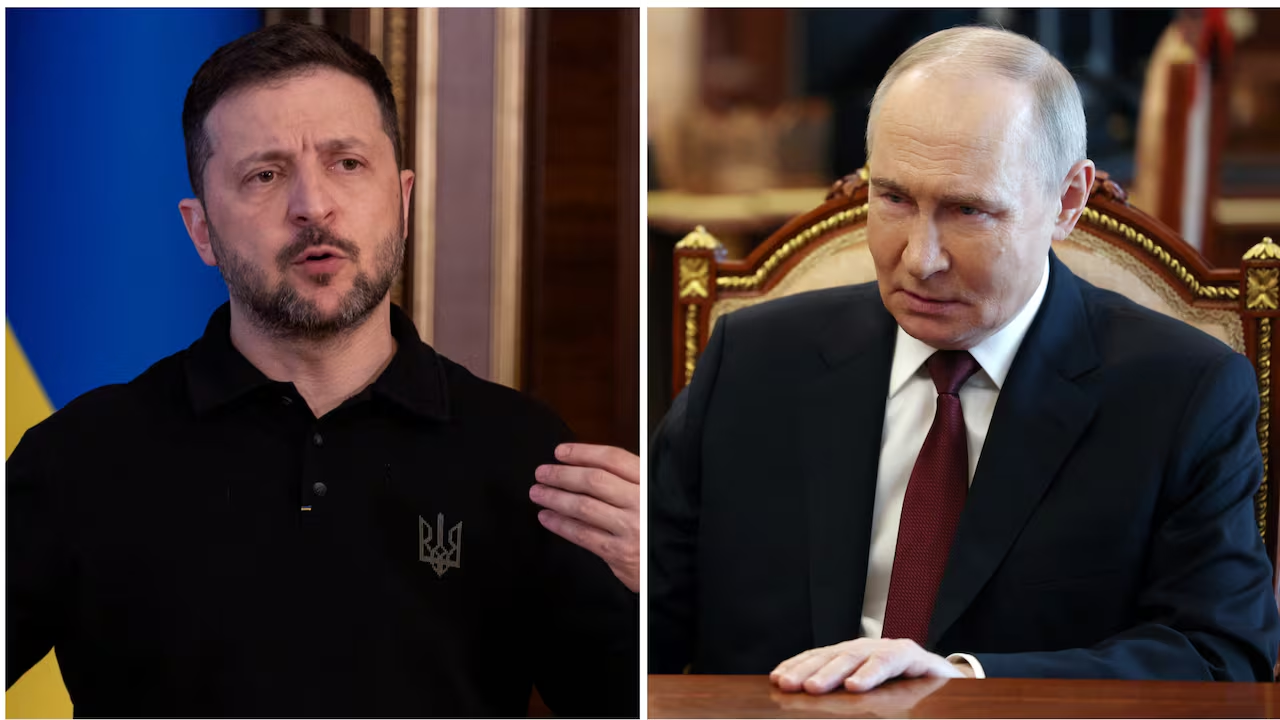
Putin indicated that informal channels had already conveyed Kyiv’s interest in a meeting, noting that a Russian businessman recently traveled to Ukraine to relay the proposal. Still, he said recent hostilities, including a drone strike in the Luhansk region that Moscow says caused multiple casualties, have further diminished prospects for direct talks.
The Kremlin leader reiterated that Moscow is not interested in a temporary ceasefire, arguing instead for a broader settlement that reflects earlier discussions with Donald Trump during talks in Alaska. Putin maintained that any agreement would require Ukraine to accept those terms, which Kyiv has repeatedly resisted.
Zelenskyy’s letter, published Thursday, marked his first public appeal directly addressed to Putin since Russia launched its full scale invasion in 2022. In it, he combined calls for renewed diplomacy with criticism of Putin’s decades in power, a tone that appeared to further strain already limited prospects for engagement.
In Washington, Trump signaled support for dialogue, saying a meeting between the two leaders would be beneficial. However, months of U.S. backed diplomatic efforts have yielded little progress, with both sides maintaining entrenched positions on territory, security guarantees, and ceasefire conditions.
Putin also used the forum to address broader geopolitical issues, criticizing Western sanctions and arguing they have weakened trust in global financial systems. He portrayed Russia as adapting to a shifting global order, emphasizing closer ties with non Western partners and advocating for a more multipolar world structure.
On Iran, Putin said Moscow remains in contact with multiple parties and expressed cautious optimism about a negotiated outcome, while rejecting claims that Russia has supplied Tehran with military support related to recent regional tensions.
Putin’s rejection of a direct meeting underscores the widening gap between symbolic diplomacy and practical negotiation in the Ukraine conflict. While Zelenskyy’s outreach may have been designed to signal openness to talks, particularly to Western allies, Moscow’s response suggests that conditions for meaningful engagement remain far from alignment.
The timing of the exchange is significant. Ukraine has sought to demonstrate resilience through continued strikes and diplomatic messaging, while Russia has leaned into long term positioning, both militarily and economically. By dismissing a meeting outright, Putin reinforces a strategy that prioritizes leverage on the battlefield over concessions at the negotiating table.
The reference to earlier discussions with Trump also highlights a competing framework for peace that bypasses Kyiv’s current stance. This creates a layered diplomatic landscape in which U.S. influence, Ukrainian sovereignty concerns, and Russian strategic goals intersect but rarely converge.
More broadly, the episode reflects a conflict entering a protracted phase, where public gestures such as letters and meeting offers carry political messaging value but do little to shift core realities on the ground. Until both sides see tangible incentives to compromise, direct leader level talks are likely to remain unlikely, even as international pressure for a resolution grows.
AP/Reuters





