

A journalist was shot and killed in Mexico’s eastern state of Veracruz on Thursday, authorities confirmed, in a case that underscores the persistent dangers faced by media workers in one of the world’s most hazardous environments for journalism.
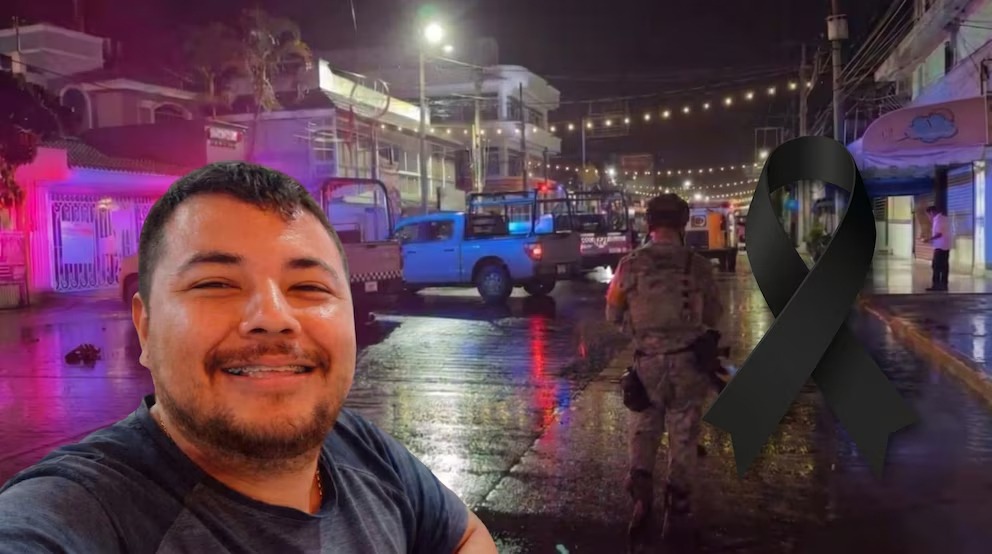
The victim, identified by state officials as Luis Ángel López Valdez, was attacked in the city of Poza Rica. Prosecutors said gunmen intercepted him on a public street and opened fire at close range before fleeing the scene.
López Valdez directed a local media outlet and contributed to the newspaper Vanguardia de Veracruz, focusing primarily on crime and security coverage.
What we know so far
The Veracruz prosecutor’s office confirmed the killing and said investigators are examining whether the attack was linked to the journalist’s work. No suspects have been arrested and a motive has not been publicly established.
A colleague, who spoke to The Associated Press under condition of anonymity for safety reasons, indicated that López Valdez had previously been placed under state protection measures. Authorities have not confirmed that detail.
In addition to his reporting work, López Valdez served as a deputy delegate with the emergency response organization Cruz Ámbar.
The killing marks the second journalist slain in Veracruz this year. In January, crime reporter Carlos Castro was killed in the same city, according to local media accounts.
Authorities are also continuing to search for missing journalist Roxana Guzmán Ramírez, who disappeared in early June in the southern municipality of Nanchital. President Claudia Sheinbaum has said both federal and state agencies are involved in the search.
Officials in Veracruz have pledged to pursue the investigation, with prosecutors noting that one line of inquiry centers on López Valdez’s reporting activities.
Press freedom organizations have renewed calls for stronger protections, pointing to longstanding patterns of violence against journalists in the region.
International bodies including the United Nations and the Committee to Protect Journalists have previously warned that reporters in Mexico face significant risks, particularly those covering organized crime and corruption.
Why this matters
Mexico continues to rank among the most dangerous countries for journalists outside active war zones. Veracruz, in particular, has been a focal point of violence, with advocacy group Article 19 documenting more than three dozen journalist killings in the state since 2000 that may be tied to their work.
The risks are especially acute for reporters covering public security and criminal activity, where organized crime networks and alleged corruption intersect.
The persistence of such attacks raises concerns about impunity, as many cases remain unresolved years after they occur.
Beyond its human toll, violence against journalists has broader implications for governance and economic stability. A weakened press environment can deter investment by reducing transparency and increasing perceived risk in affected regions.
Businesses often rely on accurate local reporting to assess security conditions. When journalists are targeted, information gaps can emerge, complicating decision making for investors and multinational firms.
Tourism and regional development may also be affected, particularly in areas where high profile incidents draw international attention.
Competitive and institutional landscape
Mexico’s federal protection mechanism for journalists, established in 2012, has provided emergency measures such as panic buttons and security escorts to hundreds of reporters. However, critics say the program has struggled to prevent attacks.
Past cases highlight these challenges. Journalists such as Rubén Pat, who had been enrolled in the protection program, were later killed, raising questions about its effectiveness.
Press organizations argue that deeper structural reforms are needed, including stronger law enforcement coordination and accountability for crimes against media workers.
What happens next
Investigators are expected to continue examining potential links between López Valdez’s reporting and the attack. Authorities have not announced a timeline for developments in the case.
Search efforts for Guzmán Ramírez remain ongoing, adding to pressure on officials to address journalist safety more broadly.
Advocacy groups are likely to intensify calls for reforms, including improved protection measures and faster prosecution of crimes against journalists.
The killing of López Valdez adds to a growing list of attacks that continue to challenge press freedom in Mexico. As investigations proceed, the case highlights the urgent need for effective protections and accountability in a country where reporting the news can carry life threatening risks.
LATimes/AP





