

The death toll from a powerful earthquake that struck western Colombia on Monday has climbed to at least 79, with one news agency reporting a figure as high as 82, as rescue crews continued searching collapsed buildings across several cities.
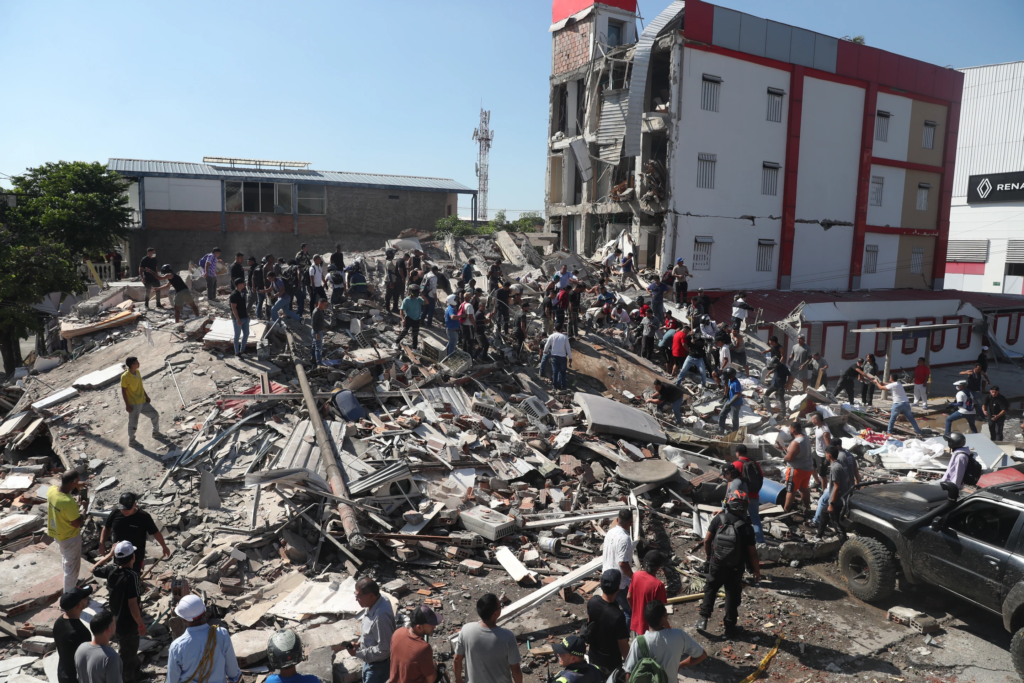
The magnitude 7.4 quake struck near San Jose del Palmar, a community of about 4,800 people in the Choco region roughly 250 miles west of Bogota, according to the U.S. Geological Survey and Colombia’s own geological service. The two agencies gave differing depth readings, with the USGS citing 66 miles and Colombia’s service later placing the depth at about 60 miles. The quake was felt as far away as Ecuador, Panama and Venezuela, though only minor damage was reported outside Colombia.
News agencies reported varying death tolls throughout the day as the disaster unfolded. The Associated Press put the confirmed count at 79, Reuters reported at least 82, and an earlier report citing Reuters put the figure at 73 before later revisions pushed it higher. The discrepancies reflect the fast moving nature of the disaster response rather than confirmed disagreement over the same data.
What We Know So Far
Regional death tolls varied by source and appeared to shift as officials issued updates. The Associated Press reported at least 40 deaths in the Risaralda region, home to the hard hit city of Pereira, while Reuters cited Risaralda Governor Juan Diego Patino reporting 42 fatalities in the province. Pereira’s mayor, Mauricio Salazar, separately told local radio that 18 people had died specifically within the city itself, a figure that may reflect a city level count distinct from the broader regional tolls reported elsewhere.
In the Valle del Cauca region, home to Colombia’s third largest city, Cali, officials confirmed 27 deaths, including at least three children, according to the regional governor. Choco, the province containing the quake’s epicenter, reported nine deaths. Two more deaths were confirmed in the Caldas region, which includes Manizales, though one report specified three deaths in Manizales itself. A 73 year old was killed in the Antioquia region, and one person died in Buenaventura, Colombia’s main Pacific port, after a building collapse trapped several people, according to the city’s mayor, Ligia del Carmen Cordoba.
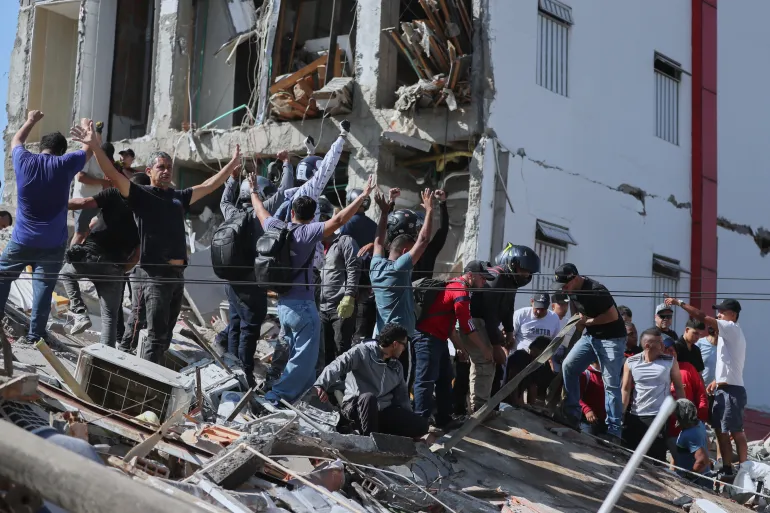
Cali Mayor Alejandro Eder said the city had at least 12 critical response points and 25 collapsed structures, with rescue teams working to free trapped residents. “At this point, two people have already been rescued alive, one elderly woman and one young girl. There are more people trapped,” Eder told Blu Radio. He said Cali had requested disaster response teams from Bogota and Medellin to assist.
In Manizales, one of the towers of the city’s neo Gothic cathedral collapsed onto the nave. Mayor Jorge Eduardo Rojas asked residents to remain outside in case of aftershocks. In Pereira, video and photos published by local media showed part of the airport ceiling collapsing on travelers as they took shelter and fled through the wreckage.
Choco Governor Nubia Carolina Cordoba Curi reported injuries and significant damage in the provincial capital, Quibdo, though officials there provided limited additional detail, a gap authorities attributed partly to the region’s remoteness. Much of Choco is reachable only by boat or plane, complicating efforts to assess the full scope of damage in outlying communities. Colombia’s disaster management agency said the quake was felt in nine departments and all 32 departmental capitals, and the country’s interior minister said more than 20 municipalities had been affected overall.
Colombia’s civil aviation authority suspended flights at airports in Pereira, Manizales, Quibdo, Armenia, Cartago and Buenaventura while inspectors checked for structural damage. The country’s geological service said the quake was Colombia’s strongest in the past decade and was followed by aftershocks measuring magnitude 2.8 and 4.8. The U.S. tsunami warning system said there was no tsunami threat.
What Authorities Are Saying
The U.S. Geological Survey warned that significant casualties and damage were likely and that the disaster was potentially widespread, given the quake’s location along the seismically active zone known as the Ring of Fire, which encircles the Pacific Ocean.
President Abelardo de la Espriella, sworn into office just days before the earthquake struck, said he was suspending planned activities to lead emergency coordination efforts from Bogota, according to a video he recorded while flying to the capital. “You are not alone. The state is present and taking action,” he said.
U.S. Secretary of State Marco Rubio said the Trump administration was closely monitoring the earthquake and stood ready to support Colombia and de la Espriella’s administration, urging American citizens in the country to register with the State Department’s travel program and follow the U.S. Embassy in Bogota for updates.
United Nations deputy spokesperson Farhan Haq said the organization was monitoring the situation and stood ready to help as needed, noting that limited connectivity in rural areas had made it difficult to gather full casualty and damage information, though reports of collapsed homes had emerged from several towns.
Cali taxi driver Jorge Moncayo, 64, described watching dust rise across the city as buildings gave way. “My entire house shook. I’ve never lived through such a powerful earthquake,” Moncayo said.
Why This Matters
The disaster represents the first major crisis facing de la Espriella, a right wing political newcomer and ally of President Trump who had never previously held elected office before being sworn in just days earlier. The scale and geographic spread of the damage, affecting cities across multiple regions simultaneously, presents an early and significant test of his administration’s emergency response capacity.
The quake’s epicenter lies within Colombia’s Pacific region, one of the country’s poorest and most rural areas, where much of Choco province remains accessible only by boat or plane. That isolation is likely to slow both immediate rescue efforts and the broader accounting of casualties and damage in outlying communities compared with more accessible urban centers like Cali and Pereira.
The disaster also lands within weeks of catastrophic twin earthquakes in neighboring Venezuela in late June, which killed more than 5,000 people according to some estimates and more than 6,000 according to others, destroying hundreds of buildings mainly along the coast near Caracas. Families there were still searching the rubble for victims of that disaster even as Colombia’s earthquake struck, compounding a broader sense of seismic vulnerability across the region.
Powerful earthquakes remain historically rare in Colombia despite frequent smaller tremors known locally as temblores. The last quake of comparable severity struck near Armenia in 1999, measuring magnitude 6.2 and killing more than 1,100 people, underscoring how unusual an earthquake of Monday’s magnitude and death toll is for the country.
What Happens Next
Search and rescue operations are continuing across affected cities, with Cali’s mayor describing an active, multi site rescue effort involving both local responders and outside disaster teams from Bogota and Medellin. Authorities have warned residents in several cities to remain cautious of aftershocks following the initial quake.
Given the wide range of death toll figures reported across news agencies and the communication difficulties in rural areas like Choco, the final confirmed toll is likely to continue shifting in the coming days as officials complete damage assessments and rural communities regain full connectivity. International aid offers are expected to continue arriving as the scale of the disaster becomes clearer.
Reporting drawn from the Associated Press, Reuters and Fox News, citing the U.S. Geological Survey, Colombia’s Geological Service, regional governors and mayors, Colombia’s civil aviation authority, Secretary of State Marco Rubio and United Nations spokesperson Farhan Haq.





