

Iran could attract up to $300 billion in reconstruction investment from the same Gulf states it struck with drones and missiles during more than three months of war, Vice President JD Vance said Monday, but only if Tehran meets a series of conditions tied to its nuclear program, its behavior as a regional actor, and its willingness to open itself to international scrutiny.
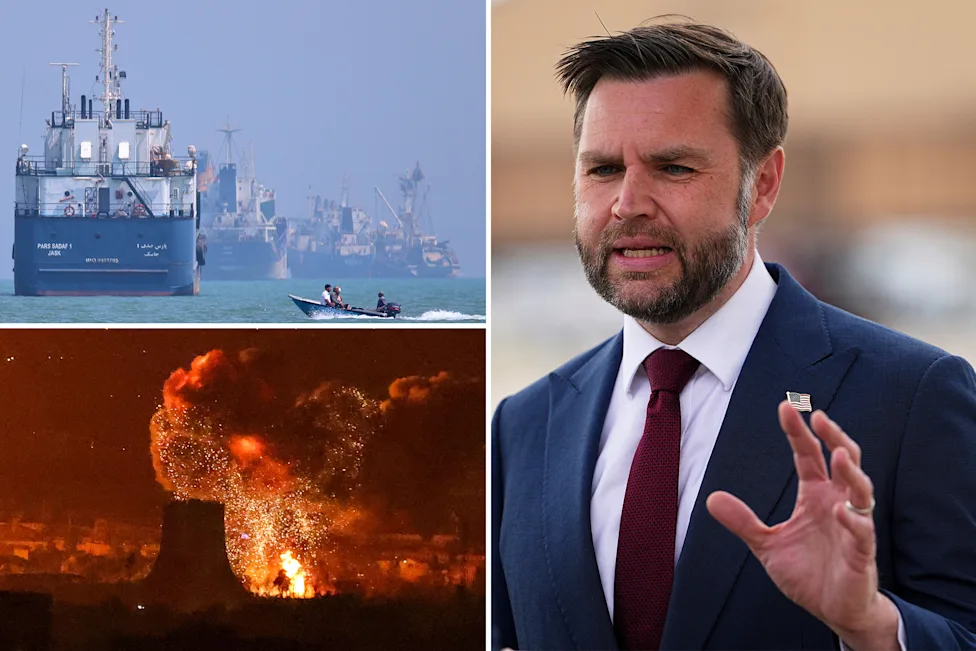
The figure represents one of the most significant economic incentives embedded in the memorandum of understanding electronically signed by U.S. and Iranian officials Sunday, though the full text of the agreement has not been released publicly, fueling widespread speculation and conflicting claims from both sides.
What We Know So Far
Vance confirmed the reconstruction fund figure during an appearance on CBS News Monday, describing it as conditional investment from Gulf Coalition nations rather than direct cash payments from Washington.
“That is the sort of thing they could have access to, funded by the Gulf Coast Coalition, so long as they honor their end of the obligation,” Vance said.
He spelled out the conditions clearly. Iran must end its nuclear program, dismantle its stockpile of enriched uranium, and accept an inspections and enforcement regime that gives the American people confidence Tehran will never develop a nuclear weapon, he said. “We absolutely are open to the Gulf Coast countries investing in the reconstruction of Iran, but only if Iran meets those conditions,” Vance added.
A second senior U.S. official, speaking to the New York Post on condition of anonymity, described the broader economic package in similarly conditional terms. Tehran stands to receive phased sanctions relief, a lifted naval blockade that would allow Iran to recover the roughly $14 billion per month it is currently losing, and the return of billions in frozen assets. But each element is tied to Tehran meeting undisclosed milestones that officials declined to enumerate specifically on Monday.
“The more they behave like a normal country, the more they show they are willing to be a good partner, then we are going to be extraordinarily generous in opening up their economy and opening up the sanctions relief that the deal contemplates,” the official said.
The $300 billion would not arrive as cash but as investment deals flowing through a gathering of Gulf nations facilitated by the United States, officials clarified. Iran will only be positioned to attract that investment if it makes itself, in the words of one official, investable, demonstrating that there is no risk of sanctions snapping back over nuclear activity or covert regional destabilization.
What Authorities Are Saying
Vance cautioned that Iranian state media was misrepresenting the agreement’s terms by emphasizing what Iran gains while obscuring what it must concede.
“The hard-liners in the Iranian system will overemphasize the benefits that Iran gets, while underemphasizing all the things that they have to concede, and all the things they have to provide, in order to get these benefits,” he said.
A second U.S. official echoed that concern, pointing to what he described as a broader misinformation environment surrounding the deal. “There is a lot of misinformation out there,” the official said. “The hardliners on both sides are obviously making a lot of noise, but all the details of the agreement have not been put out yet.”
Republican Senator Lindsey Graham of South Carolina, one of the most vocal critics within Trump’s own party, has made clear his reservations about the terms as they have been described. In a post on X on Friday, Graham compared the concept of a $300 billion reconstruction fund for Iran under its current leadership to a Marshall Plan for Germany with the Nazis still in power. By Monday, however, Graham softened his tone after speaking with administration officials, saying that if the memorandum says what the White House claims it says, “the proposal as envisioned by the Vice President and the Trump Administration to end the Iranian conflict would be transformative for the region and a major achievement, leading to broader peace.” He called on the administration to release the full text of the agreement so that lawmakers would not have to rely on what he called Iranian propaganda.
Iranian state media, for its part, portrayed the funds as a reconstruction payout owed to Tehran and made no reference to the conditions American officials say are attached, the New York Post noted.
The White House did not respond to questions about whether the memorandum includes provisions allowing Iran and Oman to charge ships fees for services after the 60-day negotiating period expires.
Why This Matters
The scale of the economic package being described, if it materializes, would represent one of the most significant financial reintegration efforts for a sanctioned nation since the post-Cold War era. Iran has been under cascading layers of American and international sanctions for decades, and the 63-day U.S. naval blockade imposed during the war has cost Tehran an estimated $500 million per day, or roughly $14 billion each month, according to U.S. administration figures.
The prospect of Gulf states investing in Iranian reconstruction carries its own geopolitical weight. During the war, Iran struck the United Arab Emirates, Qatar, Jordan, Kuwait, and Saudi Arabia, all of which host American military installations. That those same nations are now being positioned as potential financiers of Iran’s rebuilding effort reflects the extent to which Washington is attempting to use economic interdependence as a substitute for the military containment it exercised before the conflict began.
The blockade’s effectiveness as a coercive instrument was acknowledged directly by U.S. officials Monday. “The blockade was incredibly effective toward causing a financial stranglehold on them. Economic pressure was also incredibly effective, and we saw that all over,” one official said, adding that the financial pressure was ultimately what brought Tehran to the negotiating table.
That admission cuts both ways. It confirms that Washington achieved significant leverage through economic warfare but also signals that the United States is now choosing to release that leverage in exchange for Iranian commitments that remain, for now, largely unspecified in any publicly available document. The refusal of both Washington and Tehran to release the memorandum’s actual text has left analysts, lawmakers, and allied governments working from partial disclosures and competing interpretations, a situation that one senior official acknowledged had allowed the rumor mill to go wild.
The question of Iran’s Strait of Hormuz fee system adds another layer of uncertainty. Tehran originally sought to charge transit tolls through the strait, claiming sovereignty over the waterway, a position the Trump administration rejected as a violation of international law. Iran appears to have pivoted to a secondary approach, working with Oman to establish mandatory fees for services such as insurance and harbor access after the 60-day period concludes. Iranian Foreign Ministry spokesman Esmail Baghaei framed this as compensation for maintaining the shipping environment. Critics see it as a toll by another name, designed to extract revenue from global shipping while technically complying with the agreement’s anti-toll provisions.
What Happens Next
Technical discussions between U.S. and Iranian officials are expected to begin later this week ahead of the formal signing ceremony in Switzerland on Friday. Those talks will need to address the specific milestones Iran must meet before sanctions relief kicks in, the sequencing of asset unfreezing, and the framework for nuclear inspections.
Frozen asset releases are the element of the package most likely to provide Iran with near-immediate financial relief, U.S. officials said, because they can be processed far more quickly than the legislative and regulatory steps required to dismantle the sanctions architecture. Officials indicated that asset unfreezing could happen quickly once Tehran meets certain initial conditions, though those conditions have not been publicly defined.
Full restoration of shipping traffic through the Strait of Hormuz is expected to take weeks rather than days. One official explained that different vessels and crews carry different risk tolerances and that traffic levels will ramp up gradually rather than return overnight to their prewar volumes.
The central test of the entire framework remains Iran’s willingness to accept verifiable constraints on its nuclear program. Tehran currently holds 440.9 kilograms of uranium enriched to sixty percent purity, close to weapons-grade levels, stored beneath sites damaged by American strikes last year. Whether that material is destroyed, transferred, or diluted inside Iran is the question that will define whether the memorandum evolves into a durable agreement or becomes another chapter in the long history of failed attempts to resolve the Iranian nuclear standoff.
Source: The New York Post





